
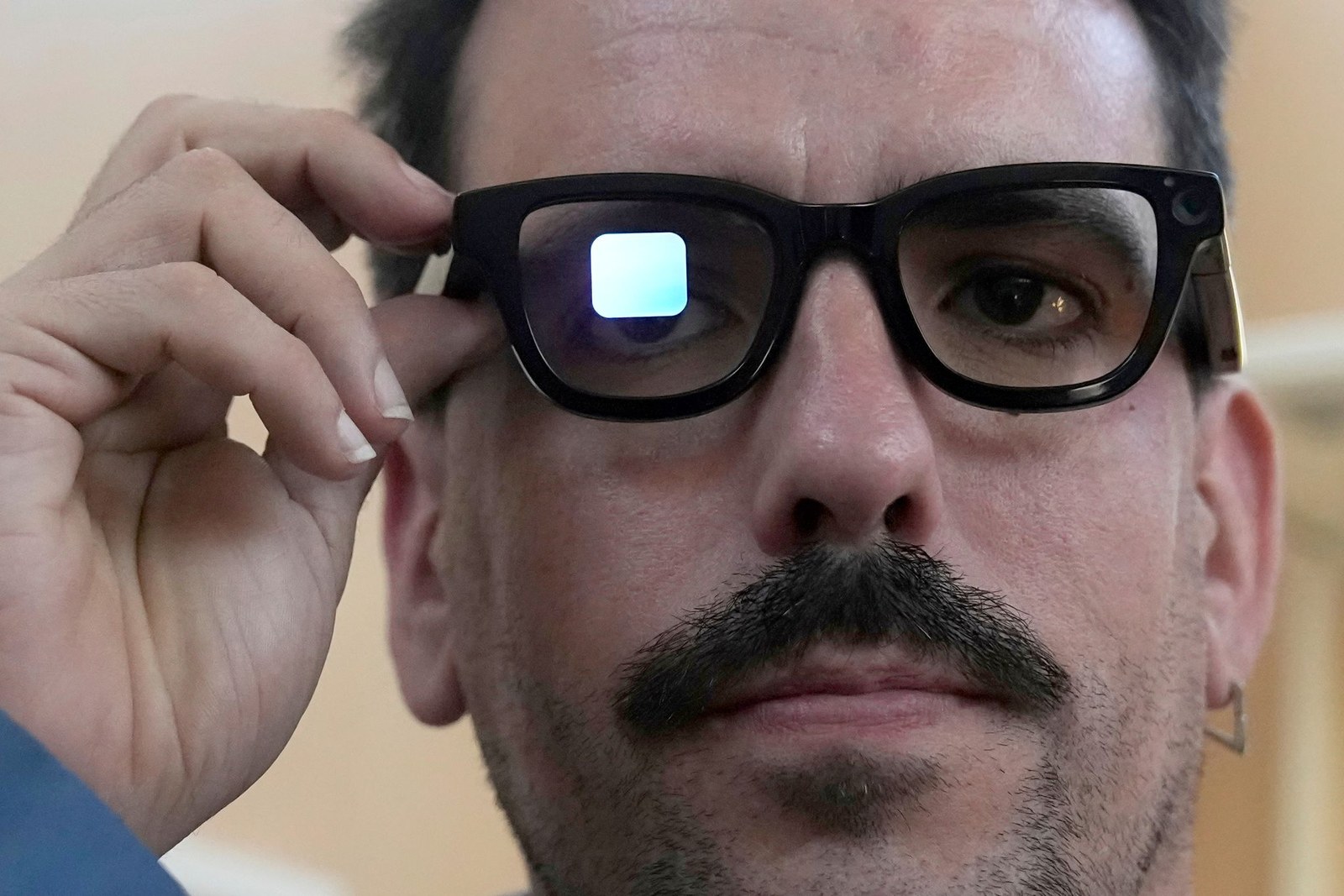
For months, the same question has trailed a small class of gadgets across Europe: what happens when a pair of glasses can see, record, and answer at once? Norway supplied an answer on October 5 that no other country has offered. The government proposed a temporary ban on wearing AI-equipped smart glasses in some public places, citing privacy concerns that it said are not easing.
The proposal targets a narrow but fast-growing category: glasses fitted with cameras and an AI assistant that can identify faces, translate signs, and hold a conversation. Reuters and the Financial Times reported that Norway is the first country to put forward a ban of this kind. The rule would apply only to specific locations, and only for a limited period, but its symbolic weight is larger than its immediate reach.
The devices at the center of the debate are no longer prototypes. Meta sells camera-equipped Ray-Ban glasses made with EssilorLuxottica, and several rivals have pushed similar products onto shelves. Those glasses record only when the wearer chooses, but regulators and privacy advocates have argued that the choice is easy for a bystander to miss. A small recording light, they contend, is not the same as consent from everyone in the room.
Norway’s concern is that recognition features raise the stakes further. A camera that can record a street scene is one thing; a camera wired to an assistant that can pull up a stranger’s name is another. The government framed the ban as a stopgap, a way to buy time while the technology matures and the legal questions around it are settled. That framing is deliberate: it sidesteps the harder argument about whether such devices should be restricted outright.
The move lands in a region that has already tangled with the devices. Privacy regulators in Europe have raised questions about how Meta’s glasses handle the data they collect, and the artificial-intelligence rules that took shape in Brussels are only beginning to be enforced. Norway is not a member of the European Union, but it belongs to the European Economic Area and tends to track EU digital rules closely. Its proposal is being read as an early signal of where enforcement is heading rather than as an outlier.
Analysts said the practical effect on Meta and its rivals may be limited. Norway is a small market, and the ban is temporary and place-specific. But the precedent is what industry lawyers are watching. If one country can ban a category of device in public on privacy grounds, others can follow, and each new restriction narrows the map of places where the glasses can be sold and worn without friction.
The devices have also generated friction of a different kind. Reports of surreptitious filming and harassment have followed camera glasses in several countries, and Meta’s products have been a particular focus of that coverage. The company has said its glasses include indicators meant to alert people nearby when recording is active. Whether those indicators satisfy regulators is now an open question in at least one European capital.
The privacy question cuts deeper than any single feature. Smart glasses collapse a boundary that ordinary phones maintain: a phone in a pocket signals nothing, while a pair of glasses points a camera wherever its wearer looks. The promise of the form factor, an assistant that sees what the wearer sees, is also the source of the unease. Norway’s ban is an attempt to draw a line around that unease, at least temporarily, and at least in the places where people gather.
The timing adds weight to the proposal. Meta and its rivals have made clear that glasses are the next front in the competition over who controls the assistant a person carries, and the companies are shipping devices faster than the law can be written. Norway’s move, small as it is, is the first attempt by a government to interrupt that momentum, to say that some places will stay off limits to the cameras even while the category is still taking shape.
Norway’s proposal still has to move through the political process, and the details of which places and which devices are covered have not been fixed. What is clear is the direction of travel. A category of device that promised to put computing directly in a person’s line of sight is now running into the first serious attempt to say where it may go.
For the companies building these glasses, the message is that privacy will be negotiated one country at a time. For the rest of Europe, Norway has done something harder than making a rule: it has made it thinkable to ban the glasses, if only for a while. That is the kind of precedent that outlives the temporary measure that set it.



