
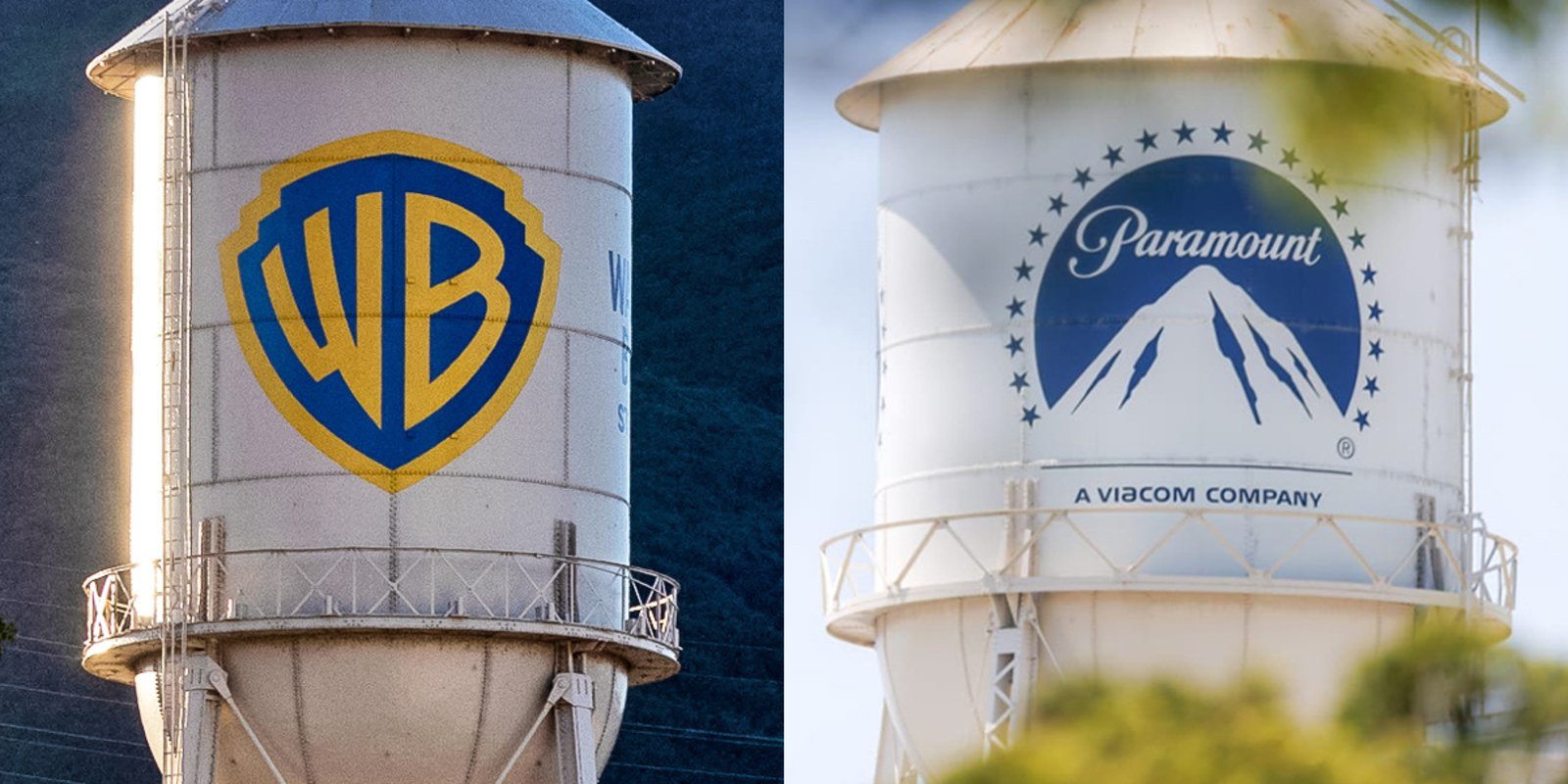
At the final bell on Tuesday, Warner Bros. Discovery shares stopped trading on the Nasdaq. By the time the new company opened on the New York Stock Exchange under the ticker SKYD, two century-old studios, a pair of rival streaming services, and a newsroom spanning both CBS News and CNN belonged to a single owner. The roughly $110 billion merger of Paramount and Warner Bros. Discovery closed Oct 6, creating a company called Skydance.
Warner Bros. Discovery shareholders received $31.01666668 in cash for each share, a precision that reflected terms hammered out months earlier. The combined company claims more than 200 million streaming subscribers, a library running from Top Gun and Harry Potter to The White Lotus and SpongeBob SquarePants, and nearly $70 billion in annual revenue. HBO and Max now sit under the same roof as Paramount+ and CBS, and the film divisions of two of Hollywood’s oldest rivals answer to one management team.
David Ellison, the chairman and chief executive, called the closing a historic day, and the word is hard to quarrel with. Ellison, who will run the company alongside co-CEO Ynon Kreiz, built the deal on the belief that only a company of this size can afford the content spending that keeps subscribers paying. The Ellison family, backed by the fortune of David’s father, the technology executive Larry Ellison, holds the largest equity stake.
The path to closing was anything but smooth. About a year ago, Paramount, then newly combined with Ellison’s Skydance Media, made an unsolicited bid for Warner Bros. Discovery. The overture was rebuffed, and it took more than a dozen approaches before the target’s board engaged. Along the way Warner struck, then abandoned, a deal to sell its streaming and studio assets to Netflix, which briefly made Netflix the company’s preferred suitor before Paramount sweetened its offer to buy the whole firm.
The transaction drew its share of opposition. In July, the attorneys general of 12 states filed suit to block the merger on antitrust grounds, joined by the Writers Guild of America. A federal judge eventually approved a settlement under which Skydance accepted a five-year consent decree, including a commitment to spend at least $300 million more a year on domestic production than in 2025 and a promise not to sell or close the Paramount or Warner studio lots.
The financing shows how much new money the deal required. The transaction included $47 billion of fresh equity in Class B shares priced at $12, led by the Ellison family, RedBird Capital, Saudi Arabia’s Public Investment Fund, Qatar’s Investment Authority, and LionTree. Debt financing was led by Bank of America, Citigroup, and Apollo. The combined company carries roughly $80 billion in net debt, a load it will have to service while integrating two competitors.
The bet is on scale in an industry that has been shrinking. Hollywood has spent the past decade consolidating in response to cord-cutting and the rise of Netflix, and the merger’s backers argue that a single company combining two studios, two streaming services, and a cable portfolio spanning CBS, HBO, CNN, and Discovery can spread its spending across enough franchises to survive. Management has set a target of at least $6 billion in run-rate cost savings within three years, drawn from technology, procurement, marketing, and real estate.
The merger arrives as the streaming business has turned from growth to profit. Subscriber numbers have flattened in the United States, and the companies that once spent freely to win users are now raising prices and bundling. Skydance’s pitch is that a library this deep, spanning the CBS and Warner film vaults plus two decades of prestige television, gives it the pricing power its smaller rivals lost. More than 200 million subscribers, the company argues, is a base large enough to carry the debt and the spending at once.
The price of that scale is debt and execution. The new Skydance must merge two streaming services into one over time, keep both studio lots running, and hold together a workforce that spent the past year watching two corporate cultures negotiate a shotgun wedding. The savings targets are precise; whether they arrive without gutting the creative engine the deal was meant to protect is the question no press release answers.
The merger also concentrates power in an industry already run by a handful of companies. Skydance joins Netflix, Disney, Amazon, and Comcast at the top of a business where distribution and content have fused into the same balance sheets. The consent decree spells out how much scrutiny that concentration invites, from state enforcers and from the writers and crews who fear consolidation squeezes the people who make the shows.
For Hollywood, Tuesday’s closing is less an ending than a test. The merger’s logic is arithmetic: fewer companies, bigger libraries, higher subscriber counts, and enough scale to rival Netflix on its own terms. Whether bigger still works in a medium where taste and attention are the only currencies that matter is a question the new Skydance will spend the next several years answering, one quarterly report at a time.



