
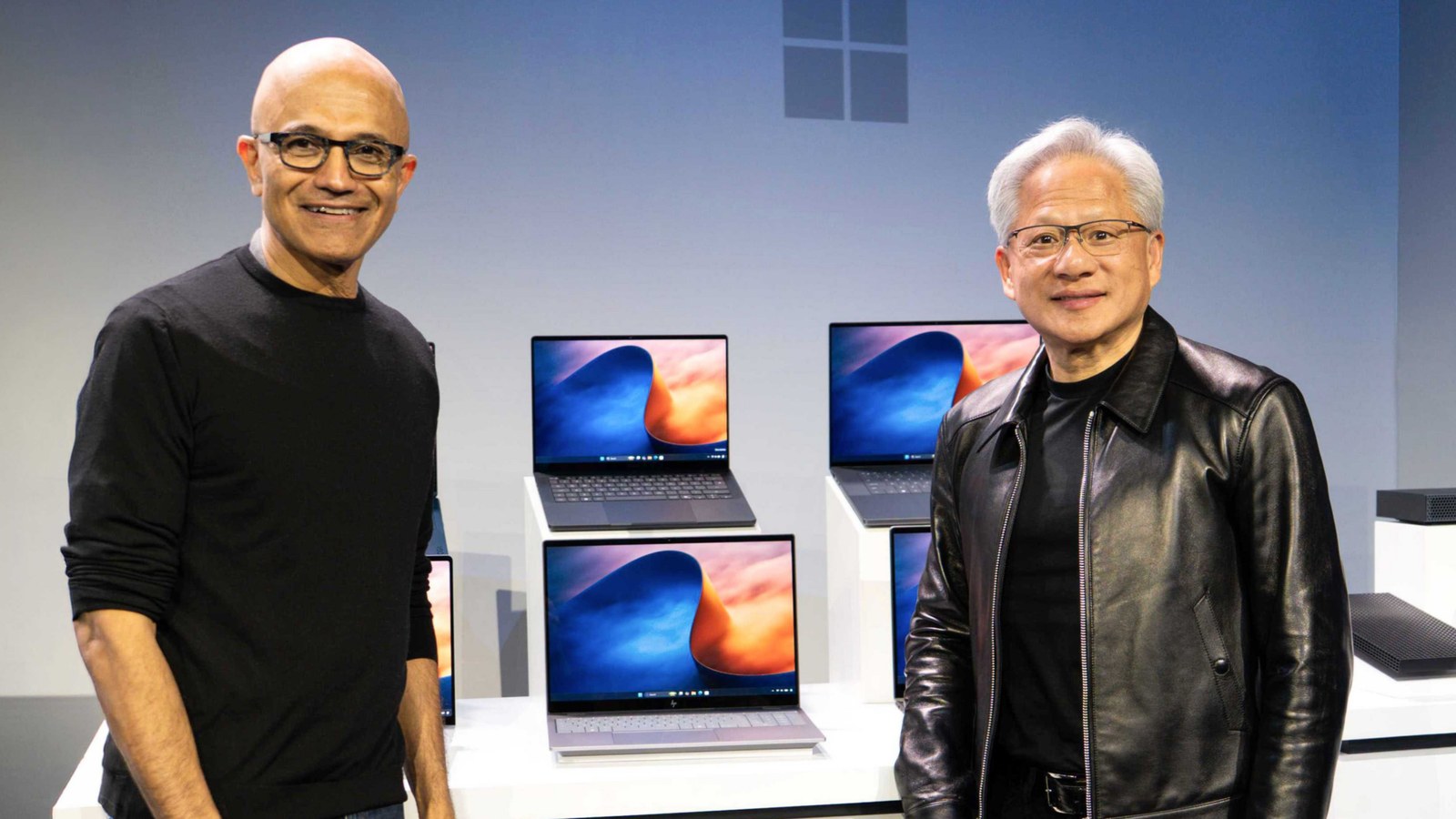
The box Nvidia showed off on October 7 looks, at first glance, like a workstation. The numbers attached to it tell a different story: 748 gigabytes of unified memory and 20 petaflops of computing power, a machine built to run large AI models on a desk rather than in a data center.
Nvidia and Microsoft began selling the RTX Spark desktop that day, starting at $2,599, and used the moment to bring Nvidia’s DGX Station into the Windows ecosystem. The DGX line has until now been the province of researchers and data centers; this is the push to put that class of hardware on the desktops of small teams and individual developers.
The pitch is straightforward. A developer who wants to run a large model locally, to fine-tune it, to test it, to build on it without sending data to a cloud, needs memory and compute that consumer PCs have never offered. The 748 gigabytes of unified memory means the entire model can sit in memory at once, and the 20 petaflops are enough to make it run.
Nvidia is not alone in the push. Asus, HP and other manufacturers are following with their own machines built on the same foundation, and the top configurations reach close to $7,000. The range of prices is the point: the market is being asked to choose how much local AI it wants to buy.
The timing matches a broader shift in the industry. For two years, the default answer to running AI has been the cloud, where the big models and the big clusters live. But the cost of renting that compute, and the desire to keep data private, has pushed a growing number of developers to ask what can run on a machine they own.
The answer is changing fast. Models that once required a data center are now compressed to run on a single workstation, and the companies that make the chips and the operating systems are racing to make that practical. Nvidia’s hardware and Microsoft’s Windows are converging on the same desk.
For Microsoft, the partnership matters because Windows needs a reason to matter in the AI era. The company has argued that local AI is a selling point for PCs, and a machine that can run a serious model offline is a concrete version of that argument. The Surface and the DGX-class desktops are both aimed at the same claim: AI belongs on the device, not just in the cloud.
For Nvidia, the move extends a franchise that already dominates the data center into a new price band. The company sells the chips that train and run the world’s largest models; putting a slice of that capability on a desktop opens a market that is smaller per machine but far larger in volume.
The $2,599 starting price is the entry point, and it is calibrated against Apple’s high-end Macs, which have become the default machine for many developers who work with AI. Nvidia is making the argument that Windows hardware can now do that work better, and the memory numbers are the headline of that argument.
Whether developers agree is the open question. The Mac has a decade of loyalty among the people who build software, and dislodging it will take more than a spec sheet. But the direction of travel is clear, and it points toward a market where serious AI compute is a normal feature of a personal computer.
The DGX Station name carries weight inside the industry. The original machines, sold from 2017, were turnkey systems for researchers who could not get time on a shared cluster, and they helped turn deep learning from a niche into the foundation of a new economy. The Windows version is aimed at a different buyer, a developer or a small team that wants the same capability without a data-center budget.
The economics of local AI have shifted enough to make the pitch plausible. Inference costs in the cloud have fallen, but they are recurring, and a developer who runs a model all day, every day, can reach the price of a workstation within a year. Companies that care about keeping proprietary data in-house have a second reason to buy hardware they control.
The software story is still catching up to the hardware. Running a large model well on a workstation requires tooling that is younger and rougher than what the cloud offers, and Nvidia’s bet is that the hardware will pull the tooling along. The company has done this before: sell the machine, and the ecosystem grows to meet it.
The machines are on sale now, and the real test is not what they can do in a demo but what developers build on them in the months ahead. Nvidia and Microsoft are betting that once the hardware is on the desk, the software will follow.



