
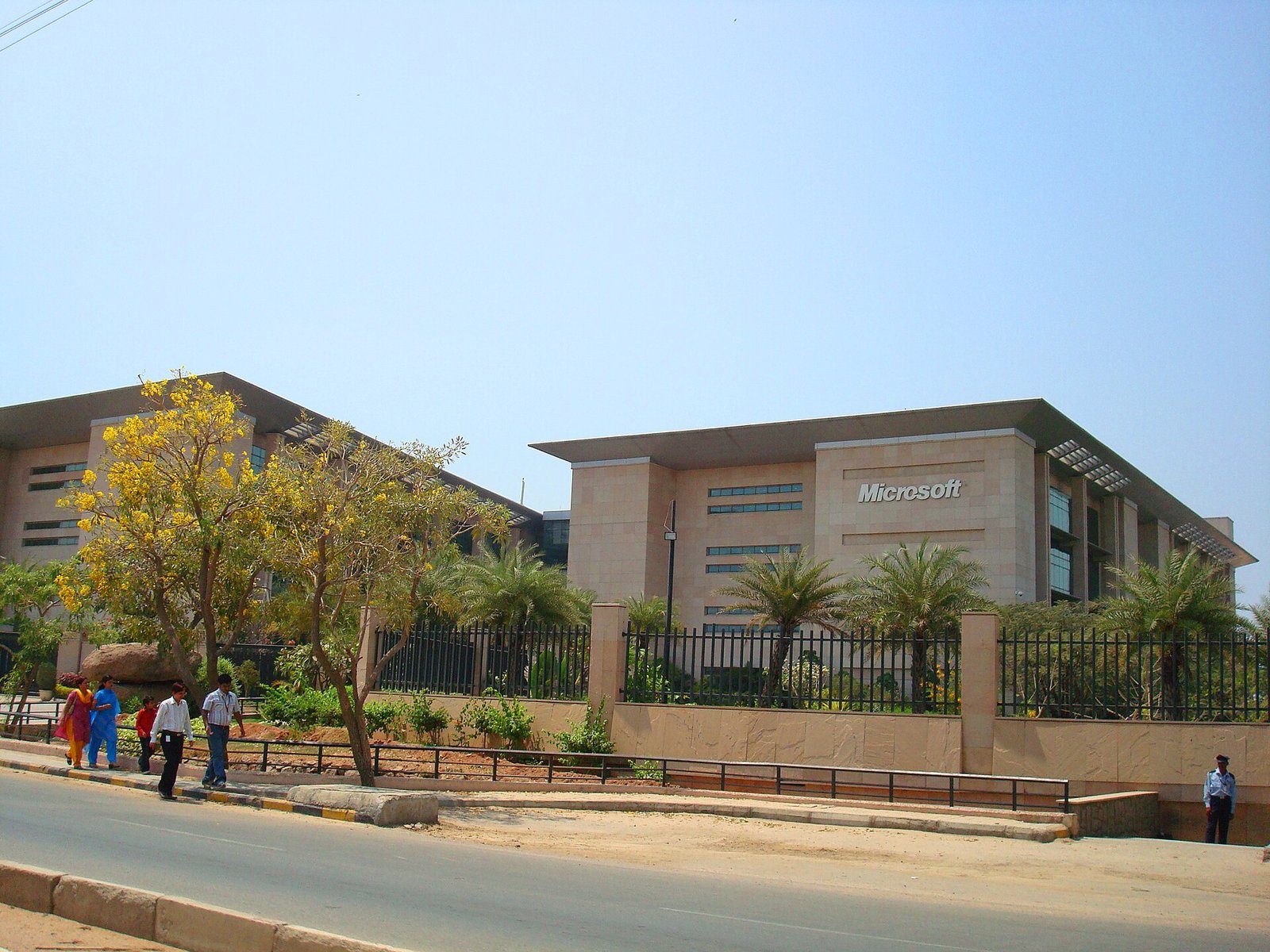
The newest piece of Microsoft’s Indian cloud network sits in Hyderabad, a city of technology parks and pharmaceutical plants that has become one of the subcontinent’s most important software hubs. Microsoft has switched on the facility, called India South Central, giving companies a fourth place inside the country to run cloud services without sending data abroad.
The launch was made at the company’s AI infrastructure summit in New Delhi, an event that doubled as a statement about where Microsoft thinks the next phase of demand will come from. The region rounds out a footprint that began with a single site and spread over the past decade. Microsoft’s three earlier regions sit in Pune, Chennai and Mumbai.
With Hyderabad running, the company says it operates the largest hyperscale cloud presence of any provider in India, a claim that carries weight in a market where Amazon and Google have also been spending freely. The new region runs on three availability zones, each with independent power, cooling and networking, so a failure in one does not take down the others.
The design uses air-cooled chillers, which Microsoft says means the site runs with effectively zero water for cooling, a pointed detail in a country where data centers have drawn scrutiny over water use. The company has said the region will let customers deploy sensitive workloads inside India, with controls meant to satisfy data-protection rules and sector regulators.
The opening is the latest draw on a commitment Microsoft has made to India’s digital economy. The company has pledged $20.5 billion to cloud and artificial-intelligence infrastructure, skills programs and local operations, a figure built from a $3 billion commitment announced in January 2025 and a further $17.5 billion announced that December. The Hyderabad region is where part of that money becomes concrete.
Puneet Chandok, the president of Microsoft India and South Asia, framed the launch in those terms. India South Central is the company’s fourth cloud region, built for advanced AI workloads and positioned as a hub for Asia and the Global South, he said, adding that leading Indian enterprises are already running on it.
Those early customers read like a short list of the country’s largest firms. Adani Group, Bajaj Finserv, HDFC Bank and PB Pay have signed on to use the new region, according to Microsoft, drawn in part by controls designed to meet India’s data-protection rules and the expectations of regulators such as the Reserve Bank of India.
The timing reflects a broader bet on Indian computing demand. Microsoft expects the country’s total data center capacity to climb from about two gigawatts today to between 12 and 14 gigawatts by 2035, a rise that would make India one of the fastest-growing cloud markets in the world. The company has signed power-purchase agreements for more than one gigawatt of renewable generation in the country, with roughly 630 megawatts already operating.
That growth is not theoretical. India’s public-cloud spending is forecast to reach $45.7 billion by 2030, growing at an annual rate of about 22%, according to industry estimates. Banks, manufacturers and government agencies have been moving workloads to the cloud in part because local data rules make in-country capacity a practical requirement rather than a preference.
Microsoft’s rivals have been moving in the same direction. Amazon Web Services and Google Cloud have each been expanding their Indian regions, and all three now compete for the banks, manufacturers and government agencies that must keep data inside the country. That competition has compressed prices and pushed each provider to promise more capacity, faster, in cities like Hyderabad, Mumbai and Chennai.
The Hyderabad site also gives Microsoft a platform for its AI push in the region. The company has positioned India South Central as a hub for Asia and the Global South, with infrastructure built to handle the compute-heavy workloads that large language models demand. Microsoft, OpenAI’s largest backer, has been racing to place that capacity close to where demand is growing fastest.
Brad Smith, Microsoft’s vice chair and president, said the new region would give organizations in India and across Asia more capacity, greater resilience and more choice. The framing is consistent with a company that has treated India as a place to build for export as well as domestic demand, with the Hyderabad site positioned to serve markets well beyond the subcontinent.
For Hyderabad, the region reinforces a status the city has spent decades building. It is already a major center for software services, and the state of Telangana, of which Hyderabad is the capital, has courted data center investment as a growth industry. Microsoft’s launch gives the city a name-brand anchor in a business that rewards early capacity.
The open question is how much of the promised capacity actually gets built, and how quickly. Cloud regions are expensive and can take years to reach full service. Microsoft has committed the money and switched on the lights; whether Indian enterprises fill the halls at the pace the company projects will determine whether the fourth region becomes the strategic hub Chandok describes, or a costly bet made a few years early.



