The complaint arrived in late September, with video attached. A petition filed with the National Highway Traffic Safety Administration alleged that Tesla’s robotaxis in Austin exceeded posted speed limits in active school zones. Regulators have not decided whether the claim warrants a formal investigation, but they have started evaluating it.
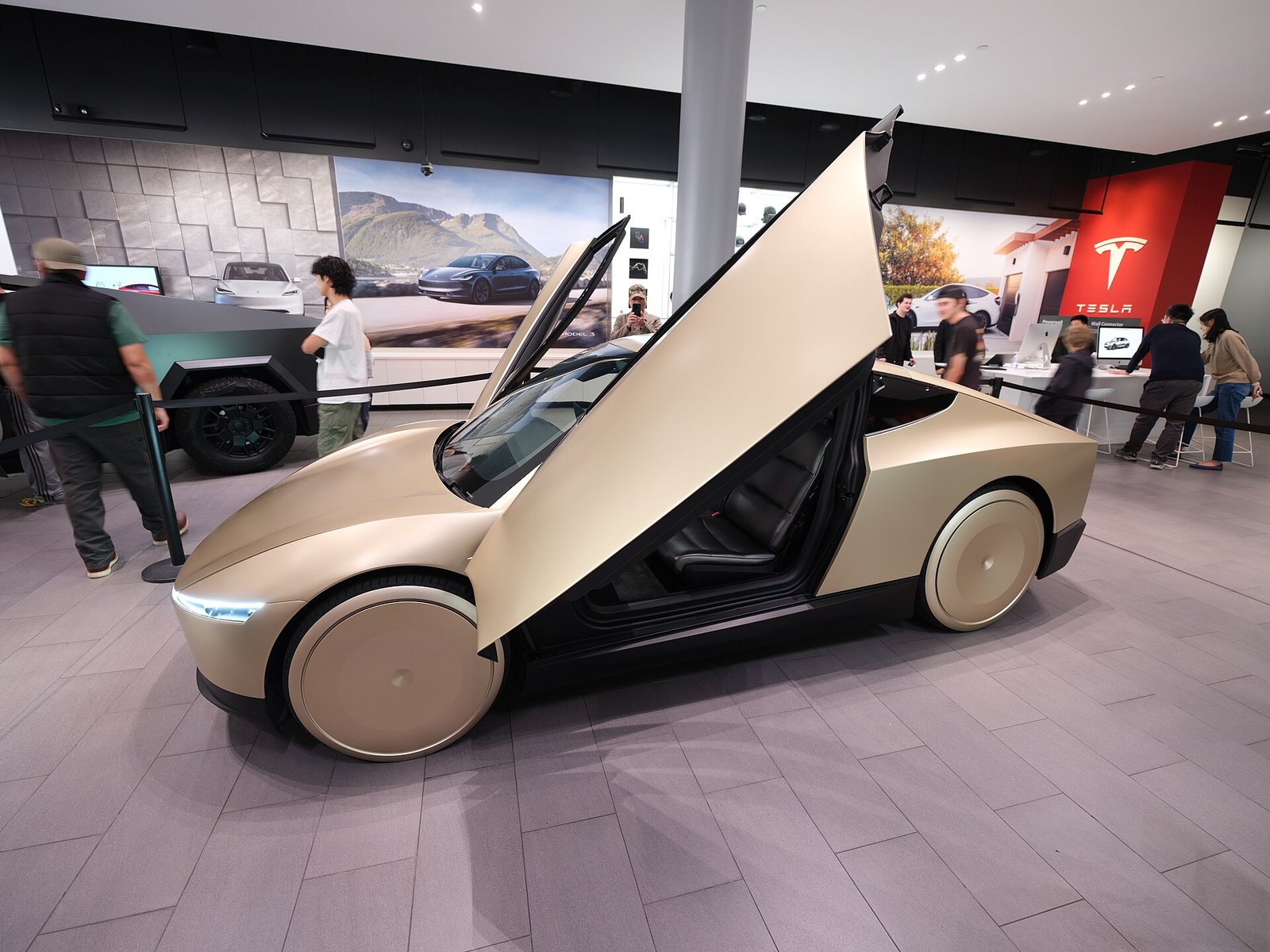
The petition, logged as DP26010, names two vehicles: the Model Y that Tesla has used for ride-hailing since June 2025, and the Cybercab, the purpose-built two-seater that joined the Austin fleet last month. The agency’s Office of Defects Investigation said it is assessing the allegations to determine whether to grant the petition. No crashes or injuries have been tied to the reported speeding. The review covers an estimated 1,000 vehicles; Tesla has 739 robotaxis registered in Texas.
Tesla’s Austin service has expanded quickly and been audited almost as often. The company launched it in June 2025 with a safety monitor in the front passenger seat, then removed the monitors. Regulators opened a separate audit shortly after the Cybercab arrived, examining Tesla’s certification that a vehicle without a steering wheel, pedals or mirrors meets federal safety standards. State records showed the service running on an expired ride-hailing license, which Tesla has since applied to renew.
School zones have become the sharpest test of automated driving, and the reason is not the speed limit. Limits are low there, the rules switch on and off by time of day, and a mistake carries the highest cost the system will ever face. In January, the National Transportation Safety Board opened an investigation into Waymo after its vehicles repeatedly failed to stop for school buses loading students in Austin. Investigators later found that on at least one occasion a human remote-assistance agent directed a Waymo to pass a stopped school bus illegally while students were boarding. Senator Edward Markey of Massachusetts opened his own inquiry into remote operators, asking Tesla, Waymo and others how tele-driving is authorized, how operators are screened and how often they intervene.
The regulatory machinery was written for human drivers. Federal motor vehicle safety standards assume a steering wheel and a person holding it, which is why the Cybercab must be judged through a certification process that is still being tested in public. Speed compliance has no special standard attached. It is simply a law the software has to follow, and one a camera can document.
That asymmetry explains why a modest allegation carries weight. A human driver who rolls through a school zone can be cited and, in the worst case, loses a license. A fleet that does the same presents the agency with a question about software behavior across thousands of vehicles, and the available remedies are blunt: demand a fix, or demand a recall.
Analysts said a defect petition is an early and narrow step. If the agency grants it, the office can open a formal investigation; if that finds an unreasonable risk, NHTSA can ask the manufacturer to recall the vehicles. Grants are uncommon relative to filings, and the process runs for months or longer. The petition’s video evidence will matter, several of them added, because a speed reading is easier to contest than a crash.
The speed question also sits inside a broader argument about how much of a driving task should be handled remotely. Tesla’s cars operate without an onboard monitor, while some competitors keep trained agents available to advise a vehicle that is unsure what to do. Those agents have already drawn federal attention, and how much authority they should hold is unresolved. A car that is told to proceed by someone watching a screen is making a different kind of decision than one acting alone, and regulators have not settled which set of rules applies.
Tesla is not waiting for the outcome. The company says more than 300 Cybercabs are serving Austin, and Ashok Elluswamy, who leads its AI work, posted that the cars are headed for another Texas metro, adding the words “Dallas soon.” The company has said it expects roughly 2,500 robotaxis on the road this year. Tesla did not respond to a request for comment on the speeding allegations.
The combination of a fleet that grows monthly and a rulebook that assumes a driver is where the pressure sits, and it is a problem the industry shares. Waymo, Amazon’s Zoox and a lengthening list of operators face the same mismatch between a technology that learns and a regulatory system that adjudicates after the fact. Cities have begun writing their own conditions, and state legislatures are drafting rules that federal standards do not cover.
For Tesla, the exposure is concentrated in the setting where public patience is thinnest. A speeding violation in a school zone is a small offense on its own. Repeated in front of parents at pickup time, recorded on video and forwarded to a regulator, it becomes a question about whether the company can be trusted with rules that exist for reasons software cannot weigh. The agency has not decided whether to answer that question. The petition has given it a reason to look.