
Oracle has proposed paying El Paso Electric $10 million a year for a decade and returning as much as $55 million a year to the utility’s customers for three years, part of an effort to hold down retail electricity prices at a data center campus that will draw more power than the cities around it.
The proposed energy service agreement, filed with the utility on October 13, covers construction power, initial commissioning and emergency backup for Project Jupiter, the artificial-intelligence campus Oracle is building with BorderPlex Digital Assets near Santa Teresa in Dona Ana County, New Mexico.
The credits would flow to residential and small-business customers for up to three years. El Paso Electric serves about 465,000 customers across roughly 10,000 square miles stretching from Hatch, New Mexico, to Van Horn, Texas, which puts the value of the offer in the hundreds of dollars per household at most over its term.
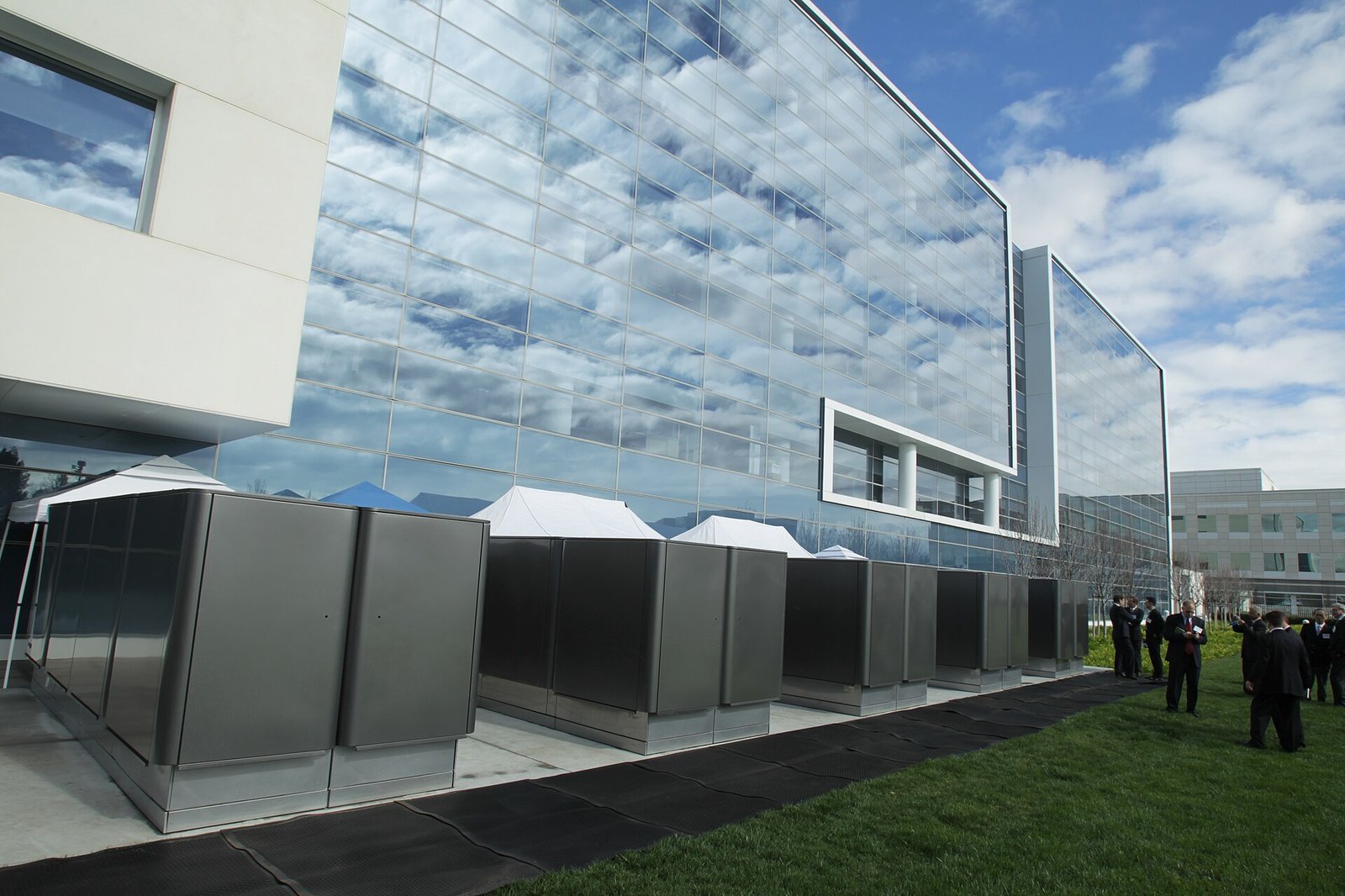
Power is the constraint that governs everything else. Project Jupiter will run on up to 2.45 gigawatts of Bloom Energy fuel cells, enough generating capacity to supply a large city, in a microgrid built behind the meter and paid for by Oracle. The company said in April that the fuel-cell design replaced an earlier plan for gas turbines and diesel generators and would cut nitrogen oxide emissions by about 92%.
Oracle’s head of infrastructure planning and sourcing, Julia Robin, wrote in a July blog post that the change followed questions from county residents about air quality, water, and who would ultimately pay for the electricity. Fuel cells produce power electrochemically rather than by combustion, though the system burns natural gas as its fuel source, a detail the company disclosed without dressing it up.
The project’s structure involves three parties. BorderPlex Digital Assets assembled the industrial land and is developing the campus, Oracle provides the cloud infrastructure and the customer demand, and El Paso Electric is the regulated utility whose wires and substations the site will lean on during construction. Doña Ana County has approved tax agreements with the developers that were negotiated alongside the energy plan.
The economics are large enough to explain the sensitivity. Project Jupiter is tied to a data center agreement with OpenAI valued in the tens of billions of dollars, and local officials and the company say the campus will generate hundreds of millions of dollars a year in direct economic output for the county. Oracle has said it will either fund grid upgrades or build its own generation so that its operations do not raise neighbors’ bills, and the rate-credit filing is meant to put that promise in writing.
The politics of data center power have turned hostile across much of the country. Utilities have proposed special tariffs for very large loads, state regulators have asked who pays for new transmission, and in several markets the arrival of a single campus has rewritten a utility’s entire load forecast. A company that can point to credits flowing back to households holds an argument its rivals do not.
Skepticism has not gone away. The air permit for the fuel-cell plant and a new natural gas pipeline to feed it have both met delays and permitting hurdles, and New Mexico Attorney General Raul Torrez has called a federal review of the pipeline inadequate. In September, El Paso Matters reported that Oracle had sent the developer a force majeure notice allowing it to defer some rent payments for up to three years if power was not ready, a hedge that suggests the schedule can slip. Oracle has also told county commissioners it could seek grid power if the air permit fails, a fallback that would put the campus back on the transmission system the credits are meant to protect.
Water has drawn similar scrutiny. Oracle said the campus will use a closed-loop cooling system and about 11 million gallons a year of recycled non-potable water, and in August it agreed to fund irrigation-efficiency work with the agricultural technology firm Arable in the watershed that supplies the region. Community groups have kept pressing on both fronts, publishing their own reading of the project’s water and power plans.
Regulators will now weigh the agreement. New Mexico’s Public Regulation Commission has taken testimony on the project’s power arrangements, and the utility must decide whether the credits are a genuine offset or a line item that expires just as the campus reaches full draw. Three years is a short period in the life of a facility built to run for decades, and ratepayer advocates have argued that any offset should last as long as the load does.
Oracle’s motives are not complicated. A data center that becomes the symbol of rising household bills invites litigation, legislation and delay, and delay is the one cost a hyperscaler cannot recover. Paying to be a welcome neighbor is cheaper than fighting rate cases in two states at once.
The sums remain modest against the build-out. Ten million dollars a year is a rounding error beside the capital cost of a campus that will consume gigawatts, and the bill credits are capped and temporary by design. What Oracle is buying with them is consent, and consent has become the scarcest input in this round of construction.



