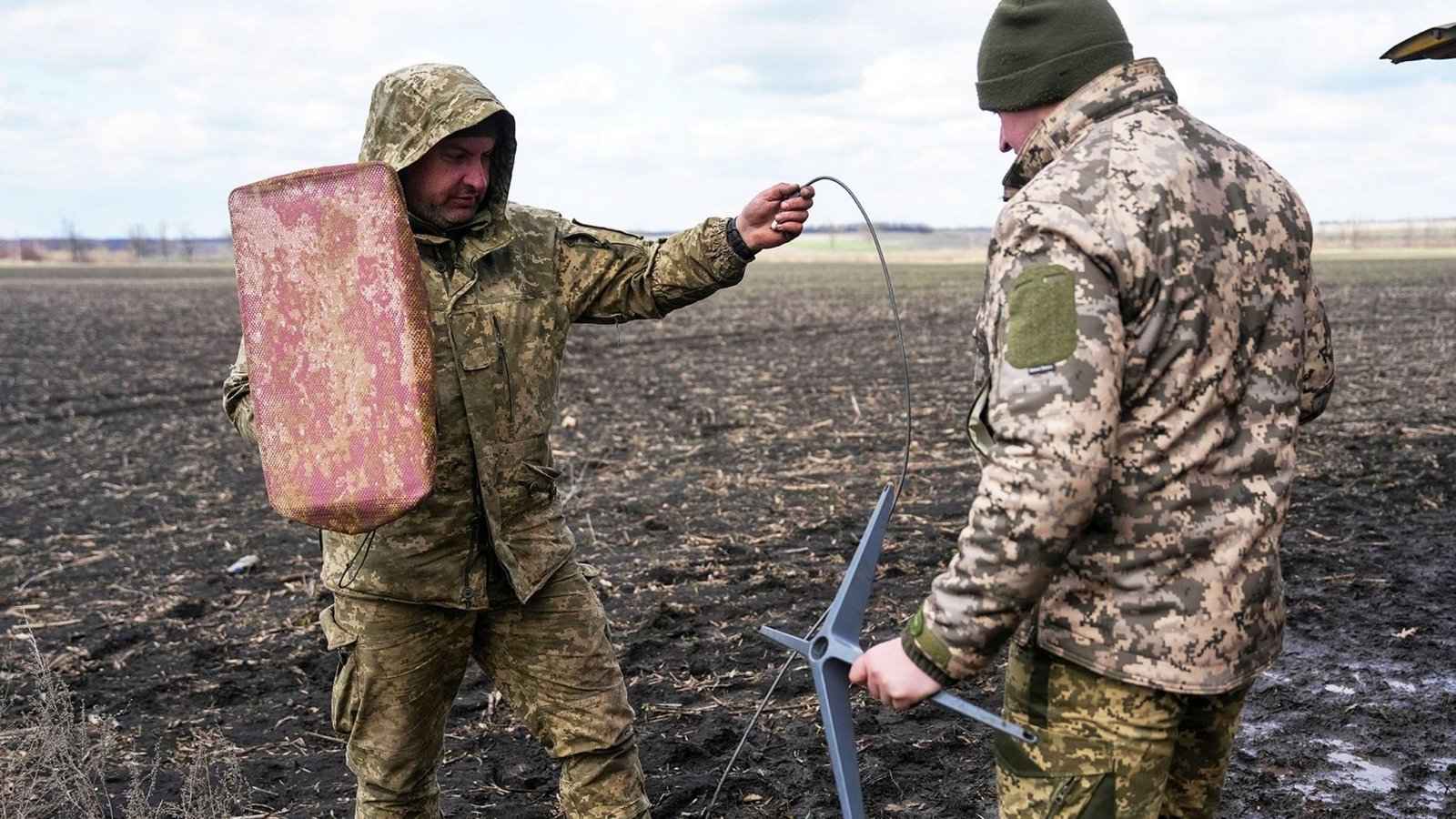
Overnight into Tuesday, units deployed along the Hulyaypole axis in southeastern Ukraine noticed a pattern in their failures. Starlink terminals mounted on long-range drones were dropping off the network during flight. At speeds of 110 to 120 kilometers an hour, the link fell for 10 to 20 seconds at a time, according to the 7th Air Assault Corps.
The aircraft kept flying. The operator lost the picture. In a weapon that depends on a video feed to find a target and a satellite link to correct its course, a gap of that length is the difference between a strike and a wasted airframe.
Serhiy Beskrestnov, an adviser to President Volodymyr Zelensky, said the restriction applies to Starshield, the military package of the satellite service, and is set at 100 miles an hour, about 160 kilometers an hour. Ukraine’s defense forces received no warning, he said, and a number of missions were disrupted as a result. Reuters first reported the change.
Volunteer Serhii Sternenko said the cutoff has since moved lower, with connections beginning to fail at 60 to 70 kilometers an hour. That figure has not been confirmed by the company.
SpaceX did not respond to a request for comment. It has not published the terms of the change or explained why it was made, which leaves operators to infer the rule from equipment that stops working in flight.
The practical effect is easy to describe and expensive to absorb. Ukraine’s long-range drone program leans on satellite links for navigation, for the imagery that confirms a target, and for the corrections that let a cheap airframe with a small warhead arrive where it was aimed. Remove the link at high speed and the drone must fly slower. A slower drone is a target that Russian air defense can see and reach.
This is not the first time the company has drawn a line in the middle of a war. SpaceX restricted coverage over occupied territory in 2022 and later limited use in long-range strikes inside Russia, saying the service was built for civilian communications and sold under terms that exclude offensive weapons. Ukraine complained each time and kept the terminals, because there is no substitute at scale.
Starshield is sold under separate arrangements, with the U.S. government among its customers. That puts a private supplier in the position of deciding how much capability a battlefield ally receives and when, a role normally filled by an export-control agency or a uniformed command.
The timing carries a political reading that Ukrainian officials did not miss. The restriction landed as Washington pressed Kyiv to stop striking Russian oil refineries, an objective the White House has pursued for months. Whether the two events were coordinated remains unclear, and the company has said nothing either way.
Even at 160 kilometers an hour, the limit reaches further than it first appears. Ukraine’s most effective deep-strike drones cruise near that figure, and mission planners build routes around the known performance of a specific airframe. A speed cap changes the route, the fuel load, the launch point, and in many cases whether the mission is worth flying at all.
Alternatives exist and none of them are ready. Military radio links work at short range and can be jammed. Fiber-optic drones trade range for immunity to electronic warfare. Europe’s IRIS² constellation is planned for the end of the decade. Ukrainian domestic programs are growing quickly from a small base. For now the kill chain runs through a commercial service agreement that Kyiv cannot audit and has no power to rewrite.
The episode raises the question that has followed Starlink through three years of war. A private company can set terms of service. Whether it can set the terms of a war is a different matter, and the answer has so far been decided by the absence of an alternative rather than by any rule.
For the units on the Hulyaypole axis, the arithmetic is immediate. Slower approaches, more aborted missions, more drones lost to air defense, and a lower tempo of strikes against logistics and artillery. The cost of the restriction is paid in sorties rather than in currency, which is why it does not appear in any financial statement.
Military analysts who study the front line say the deeper damage is to planning. A commander who cannot predict whether a link will hold at 120 kilometers an hour cannot promise a target will be struck on a schedule, and artillery and infantry operations are built around those promises.
Ukraine’s Ministry of Defense has asked for details and received none. The company’s position, as stated in earlier disputes, is that its terms are public and apply to all customers. Operators point out that a term disclosed in an agreement signed by a defense ministry is not the same as a warning delivered before a mission.
The next restriction, if it comes, will arrive the same way this one did, in the middle of a flight, on a service Ukraine did not build, does not control, and cannot replace quickly. The question officials are asking privately is not whether the limit will be lifted, but what they will do the day one of them is aimed at a target that matters more than a refinery.