
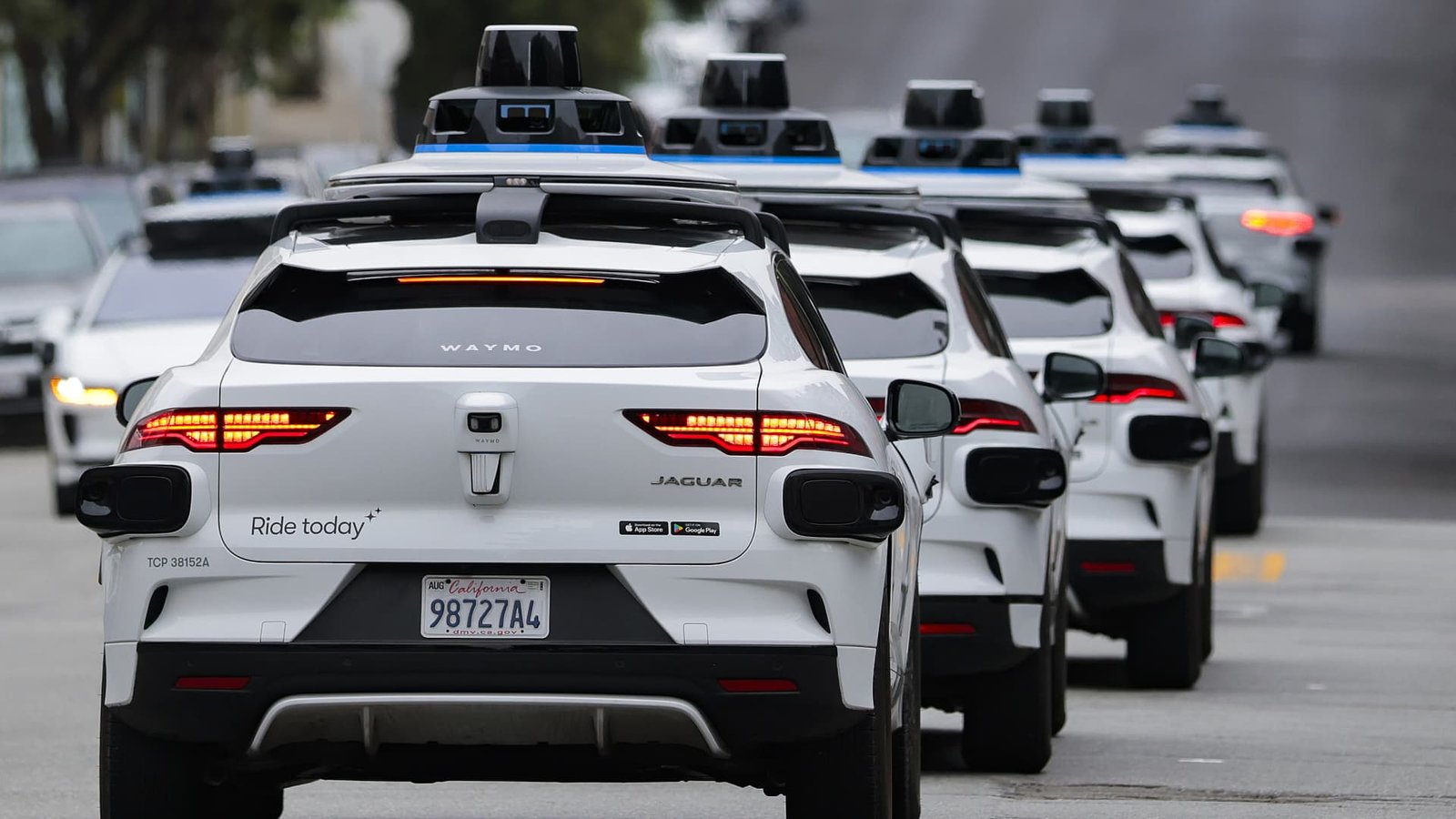
A rider in Denver opened the app on Wednesday morning and found a car waiting a block away, with no one behind the wheel. By the time the same day ended, riders in San Diego, Tampa and Las Vegas could do the same thing.
Waymo, the driverless unit of Alphabet, said it began collecting fares in Denver, San Diego and Tampa and opened its service in Las Vegas, four markets in a single day. Each city starts with dozens of vehicles. The company said it will widen access on a rolling basis and thicken the fleet as demand builds, rather than letting anyone hail a car on the street.
Tens of thousands of people in each market had signed up in advance, the company said, and access will open in waves over the coming weeks. Waymo has used that waiting-list approach since it began charging passengers in Phoenix in 2020, and it has kept the pattern as it moved into California, Texas, Arizona and Florida.
The pace is the story. Waymo now runs more than 4,000 vehicles across 14 U.S. cities, up from a handful two years ago, after opening commercial service in seven new markets since March 2025. It gave more than 500,000 paid rides a week as of early September, and executives have said they are aiming for one million weekly rides across 20 cities worldwide by the end of the year.
The money to fund that push no longer comes only from Alphabet’s balance sheet. Earlier this month Waymo closed a $5 billion term loan, its first debt financing, with Pimco, Blackstone and Sixth Street supplying the capital and Goldman Sachs advising. A company that spent years describing itself as a research project now borrows like an infrastructure operator, on the strength of a fleet that must be bought, insured and maintained city by city.
Las Vegas arrives with a crowded rulebook. In August the Nevada Transportation Authority approved applications from Tesla, Waymo and the Uber subsidiary Aviari to run paid driverless service across Clark County, with a combined ceiling of 7,000 vehicles. Tesla is capped at 5,000; Waymo and Aviari at 1,000 each. The approvals let all three charge fares under added safety, insurance and reporting requirements, a first for the county.
Denver is the harder launch. It is Waymo’s first commercial market where snow falls on the roads, testing cameras, radar and lidar that have to keep themselves clear of slush and ice. Waymo says the Zeekr-built minivans used in Denver and San Diego carry enhanced cleaning mechanisms for their sensing hardware, and the company has said it plans to add highway driving and airport service in the coming months.
Rivals are moving across the same ground. Amazon’s Zoox said separately that it is offering free rides in San Francisco, inviting passengers under a program it calls Zoox Explorers while it waits for state permission to charge. Zoox’s vehicle has no steering wheel and no pedals, and its footprint remains a fraction of Waymo’s. Tesla is expected to give fresh details on its driverless Cybercab, and Uber has partnered with several operators instead of building a fleet of its own.
Analysts put a large number on the eventual prize and a smaller one on the near term. Goldman Sachs Research has forecast that the U.S. robotaxi market will reach $48 billion by 2035, an estimate that assumes driverless fleets take significant share from human-driven ride-hailing. Reaching it requires something the industry has not shown at scale: a cost per mile low enough to undercut a paid driver, in every city that grants a permit, with a safety record strong enough that regulators keep widening the rules.
Safety remains the gate for regulators and the subject of public argument. Waymo says its vehicles have been involved in 94% fewer serious-injury crashes than human drivers over the miles they have driven, a claim critics press for more underlying data to support. Each new market brings new crash reports and a fresh audience deciding whether to trust a car with no driver.
The cost of a mistake has risen with the fleet. A driverless vehicle that causes a crash raises questions of liability that a human driver’s insurance has answered for a century, and each state writes its own rules for who carries the risk. Waymo has partnered with established ride-hailing and fleet operators in some markets, renting out its cars rather than running every depot itself, a structure that spreads the fixed cost but also spreads the control.
Alphabet, for its part, has faced investor questions about how much longer it will fund a unit that has yet to report a profit. Sundar Pichai, the company’s chief executive, has described Waymo as one of its long-term bets, and the term loan signals that the unit is now expected to stand on its own balance sheet as well as Alphabet’s.
The economics of the day are not visible in a press release. Four cities mean four sets of permits, depots, insurance arrangements and local political constituencies, each able to slow an expansion that investors are now paying for with borrowed money. Waymo’s bet is that the fixed cost of entering a city falls as the software matures, so each launch costs less than the one before it.
For the riders in Denver, the practical question is simpler than the strategic one. The cars are here, the waiting list is open, and the price of a ride is set by an operator that now has debt to service. Whether that makes the service cheaper over time or merely more available is the part the company has not had to answer yet.



