
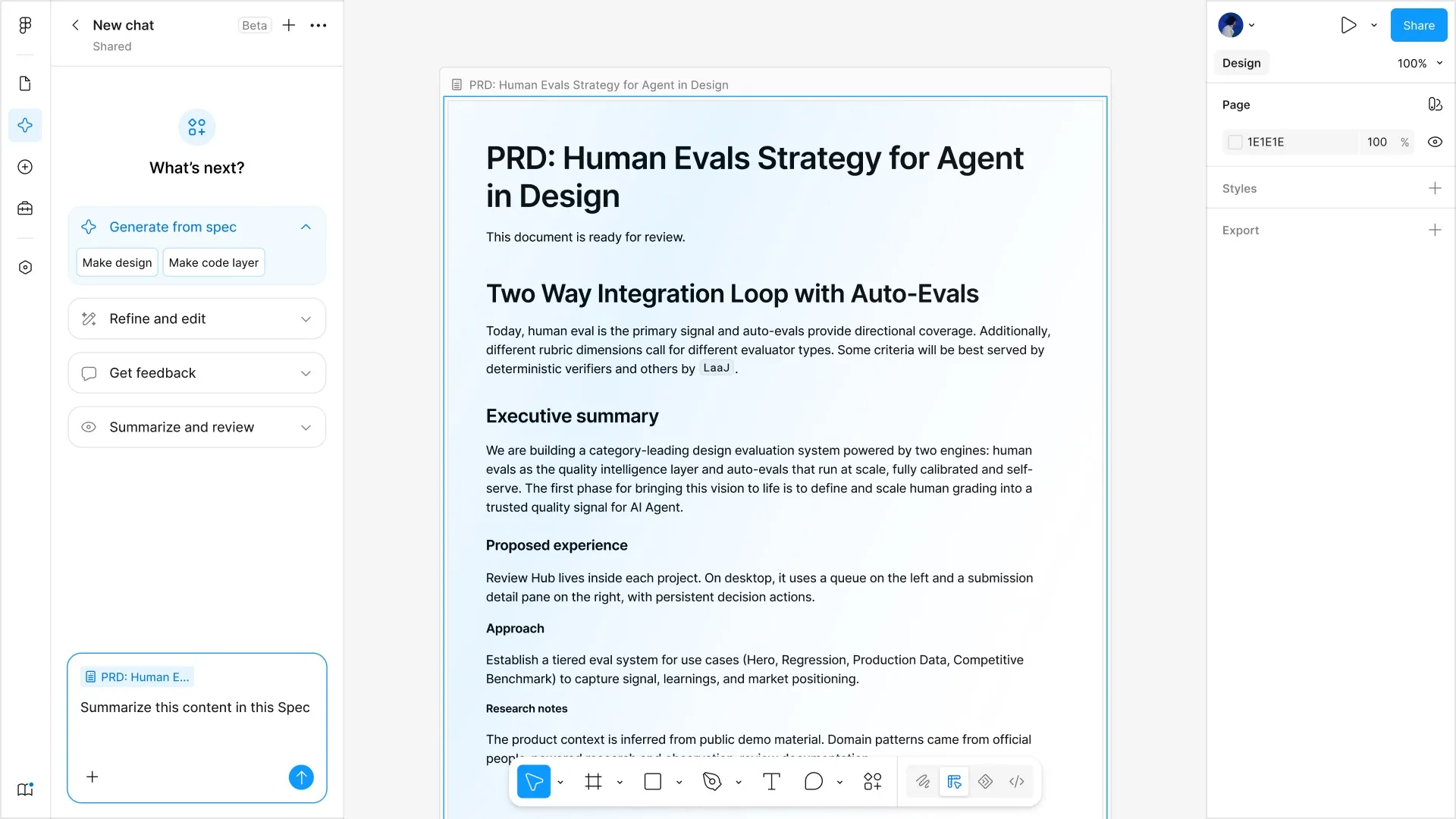
Figma used its first conference in India on October 14 to introduce a set of tools aimed less at designers than at the software agents now writing code alongside them, starting with a way to write a company’s design language down in a form a machine can read.
The feature, called Figma Specs, lets a team define its design system in Markdown, the plain-text formatting language, and reference elements on a canvas and layers in code. The result is meant to serve as a shared source of specification for people and AI agents working in the same product, so that a rule about spacing, color or component behavior exists somewhere other than a designer’s memory and a handful of documents nobody updates.
The company also moved its code layers feature from private testing into a public beta, and said the number of external tools that connect to Figma through the Model Context Protocol, an open standard for linking AI models to software, has grown past 20.
Figma’s own numbers suggest why the pitch is shifting toward automation. The company said its internal ratio of lines of code written to releases shipped has reached 17 to 1, a figure it uses to describe how much more software a team produces when models do part of the work and the constraints on that work are written down.
Design systems were built for humans. Style guides, component libraries and documentation existed so that a designer joining a project could find the rules and follow them, and their success was measured by how often people looked things up. An agent that generates interface code does not look things up in the same way, and a design language that lives only in the heads of a design team produces whatever the model happens to prefer.
Markdown is a modest choice with a clear logic. It is readable by people, parseable by software, and manageable in the same version-control systems that hold code, which means a design rule can be proposed, reviewed and changed the way a function is. Attaching specifications to canvas elements and code layers closes the loop between what a design shows and what a build produces.
The protocol connection matters as much as the specification. Connecting through the Model Context Protocol gives agents a defined way to ask Figma what a component is, rather than requiring engineers to paste screenshots into a prompt and hope. More than 20 connected tools is a small number by the standards of developer platforms, and it is the part of the announcement most likely to grow without the company saying much about it.
The India setting was not incidental. Figma held the event in a market that supplies a large share of the world’s design and engineering work for hire, and where teams at services firms build interfaces for clients in the United States and Europe. If design specifications become machine-readable instructions, the firms with thousands of engineers implementing client designs have the most to gain and the most process to rewrite.
Analysts said the announcements describe a company repositioning itself for a market where software is written by models as well as people. Figma’s business depends on seats and on teams working inside its canvas, and a world where an agent drafts screens would shrink that canvas unless the company owns the rules the agent follows. Owning the specification is a way to stay in the loop.
There are open questions about how the pieces hold together. A design language captured in Markdown drifts from the product unless something keeps the two in step, and the company has not described how conflicts between a written rule and a shipped component get resolved, or whether agents are expected to read the specification at every step or only at the start of a task.
The 17-to-1 figure deserves the same scrutiny. Lines of code per release is a measure of how much a company generates rather than how much value it produces, and it can rise for reasons that have nothing to do with efficiency, including refactoring, generated tests and code written and discarded. The company presented it as evidence of a shift, not as a benchmark anyone else has verified.
The competitive question underneath is who owns the rules. A specification that lives inside one vendor’s product is convenient for that vendor and awkward for a team that might move elsewhere, and rivals have begun publishing formats for the same purpose. Figma is betting that the place where a design already lives is the place where its rules should be written, a reasonable wager for as long as designers keep working inside its canvas.
On the broader question of who controls the interface layer, the answer is being negotiated in public through specifications. A design system written for people was a document that teams could interpret. A design system written for agents is closer to a contract that software follows, and the tools that hold those contracts will decide whose rules get enforced when a model builds the next screen.



