CAPE CANAVERAL, Fla. — The merger agreement was signed in June, priced in shares rather than cash, and on Thursday the paperwork landed with regulators: SpaceX has completed its acquisition of Anysphere, the company behind the AI coding tool Cursor. A filing with the SEC put the deal’s implied equity value at $60 billion.
Cursor’s shareholders received roughly 389 million shares of SpaceX Class A common stock under the transaction, according to the filing. Vesting equity followed the same path: already-vested restricted stock units converted into about 1.75 million SpaceX Class A shares, while unvested RSUs and stock options were exchanged for roughly 29.13 million RSUs and 44.37 million options in the combined company. The consideration was issued primarily in Class A stock, with no public offering of shares.
The closing, disclosed Aug. 14, ends a courtship that became public in April, when SpaceX said it had secured the right to buy Cursor later this year for $60 billion in stock, or pay $10 billion to walk away from a joint engineering effort. Two months later the two companies made the deal formal. At SpaceX’s IPO valuation, the $60 billion purchase price represented dilution of about 3.4 percent for existing shareholders.
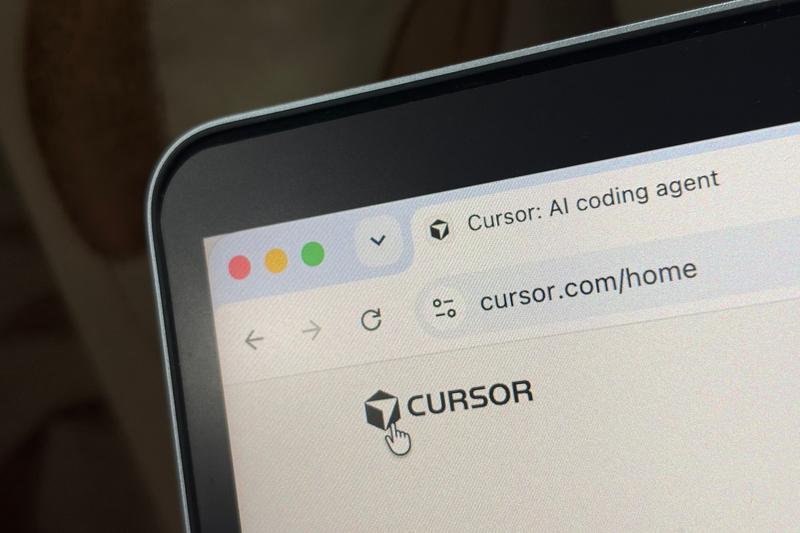
The price tag — roughly $266 million per Cursor employee, by one count — reflects the market’s verdict on AI coding tools, which have become the fastest-adopted slice of the software business. Cursor, founded by a group of MIT and Harvard dropouts, built its following on a code editor that writes and edits software alongside developers. It had topped a $2 billion private valuation before the SpaceX agreement.
For SpaceX, the logic runs through its own engineering. The company builds rockets, satellites and ground stations with software that must be written quickly and revised constantly; in-house use of Cursor gave management a firsthand view of the tool’s value. Elon Musk, SpaceX’s chief executive, has pushed the company to embed AI into its engineering workflow, and the acquisition puts that capability under its own roof.
The deal also hands SpaceX a second business line at a moment when it is positioning itself as more than a launch provider. The company already operates Starlink, its satellite internet business, and has said it will use proceeds from public markets to expand into areas where its balance sheet and manufacturing muscle can matter. Software tools for developers fit that template.
Anysphere’s investors had been courting other outcomes. The startup had explored raising at valuations far above its earlier rounds, and other technology companies had shown interest, but SpaceX’s all-stock offer carried a currency the private market could not match: shares of a company whose stock has become one of the most sought-after assets in technology. For Cursor’s shareholders, the choice was between a high private valuation and a liquid public stock.
The transaction’s structure — shares instead of cash — means the seller’s gain is now tied to SpaceX’s performance. That aligns incentives in a way cash deals do not, analysts said, and it explains why Cursor’s founders and early investors signed on despite the dilution to existing SpaceX holders.
Regulatory review moved quickly. The deal cleared antitrust scrutiny without concessions, according to people familiar with the process, a sign that regulators saw little overlap between a launch provider and a software startup. The absence of a fight shortened the timeline: the merger closed barely two months after it was announced.
The broader picture is a reshaping of the AI software market, where cash-rich infrastructure giants have begun buying the tools that developers use to build with AI. Microsoft has folded AI assistants into its developer products; now SpaceX owns one of the most popular independent editors. Analysts said the acquisition could accelerate the trend, as coding startups weigh whether independence is worth more than a seat at a hyperscaler’s table.
Cursor’s rise tracks a broader migration of software work into AI assistants. The tool grew out of research on code completion and became a full editor that developers trust with real projects; by the time SpaceX came calling, it had become one of the most widely used AI coding products in the world, with usage spanning solo developers and large engineering teams. Analysts said the $60 billion price, steep by software standards, reflects both that installed base and the value of owning a product that touches how the next generation of engineers works.
SpaceX has signaled it wants more than rockets. The company’s public listing this year gave it a currency for acquisitions, and executives have said they intend to deploy it across engineering, communications and software. The Cursor deal is the first large test of that strategy, and its success or failure will shape how investors judge the company’s ambition to be a diversified technology group rather than a launch monopoly.
For SpaceX, the deal closes one chapter and opens another. The company’s SEC filing said the merger is complete, the shares are issued, and Cursor now operates as part of the SpaceX constellation of businesses. The next question is how the AI assistant that millions of developers use will change under new ownership — and whether the $60 billion price looks cheap or expensive when the industry’s next cycle arrives.