The queue outside the San Francisco venue on October 17 was the kind that hardware launches are staged to produce. RTX Spark laptops went on sale in six cities the same day, and much of the crowd spent the first hour handling the machines and asking questions rather than reaching for a card.
Few of those in line placed an order on the spot, according to people who were there. That gap between turnout and conversion is the detail worth watching on any launch day. A line measures interest; an order measures willingness to pay.
Nvidia built its business selling chips to other companies and only in the past few years began putting its name on finished machines. Opening in six markets at once is a supply decision as much as a marketing one. Units have to be in the channel in every city on the same morning, and a company that misses one market gets a week of coverage about the miss.
The format also has an audience beyond the people standing outside. Launch-day footage travels, and a crowd is the cheapest evidence a hardware maker can produce that a product exists and that someone wants it. Nvidia has used the same staging for graphics cards for years, where lines outside a Micro Center have become part of how the cards are marketed.
Demand for graphics hardware has run ahead of supply for most of the past two years, a consequence of memory prices and of the same manufacturing capacity that AI accelerators consume. When supply is short, a launch-day line is evidence of scarcity rather than of excess demand, and scarcity can sit alongside weak conversion because the buyers who wanted the product most found it through other channels months earlier.
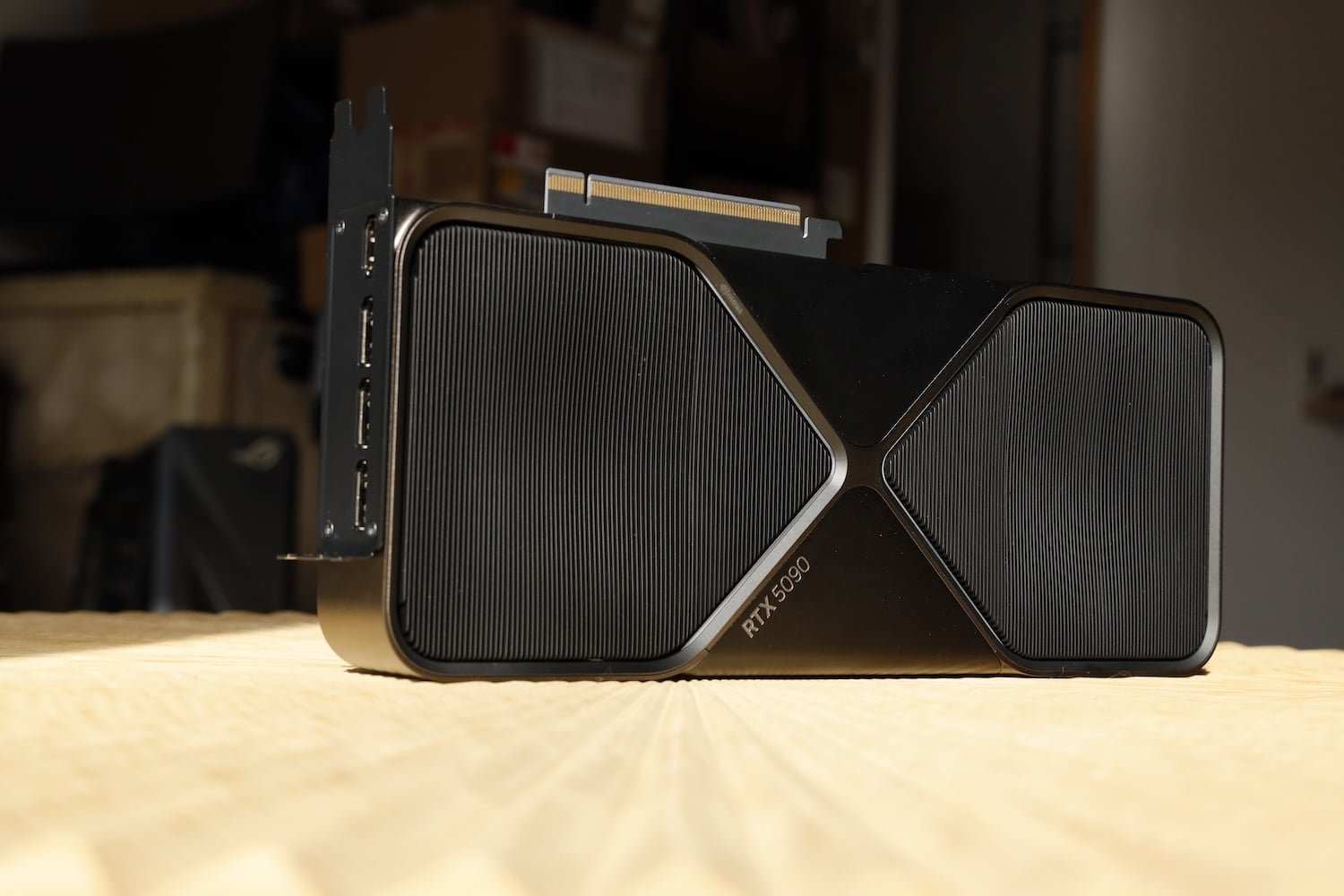
The same day brought a second signal about how tight the market is. Nvidia responded to rumors that the RTX 5090 had been discontinued, saying the card is still in production and that supply is simply constrained. The distinction matters to anyone holding one.
A discontinued flagship changes the behavior of everyone around it. Third-party sellers raise prices above the suggested retail level, buyers who were waiting decide to wait longer, and the card starts to be treated as an asset rather than a component. A card that is short but still shipping keeps those expectations anchored, which is why the company bothered to answer a rumor on the day it was trying to sell laptops.
The two products point in different directions for Nvidia’s consumer business. Laptops reach buyers who will never open a case, and they carry the company’s name into retail stores where the sales staff, rather than a forum, explain what the hardware does. Add-in cards reach the enthusiasts who generate the benchmarks and the word of mouth that the rest of the market reads.
Laptop launches are also where the AI pitch gets made to people who are not running data centers. Every vendor now claims that a machine can run models locally, and the claim is true in a narrow sense: small models run on consumer hardware, and they run better on a part with fast memory and a wide instruction set. The question a buyer asks is what the local model does that the cloud version does not, and the answers so far are privacy, latency and the ability to work without a connection.
Analysts said day-one conversion is a poor predictor of a product’s performance. The numbers that matter arrive four to six weeks later, when the channel reports sell-through and when retailers decide how much shelf space to keep after the launch display comes down. A launch that sells out in a weekend and a launch that sells steadily for a quarter can look identical on the first day.
Retail partners have their own reasons to be cautious. Laptops carry thin margins, inventory ages quickly when a new generation is six months out, and a brand that has never sold a full machine at volume has no track record with buyers who walk in without a recommendation. Store staff tend to push what they know.
The pricing question sits underneath all of it. Nvidia’s consumer silicon has been priced at a premium through the shortage, and a laptop built around it lands in a category where buyers compare against machines from companies that have made portables for two decades. Whether the six-city launch expands, and how quickly, will say more about sell-through than anything said on stage.
There is also the question of what the launch is for. Nvidia does not need consumer revenue to fund its data-center business, which is larger by an order of magnitude. It does need the consumer franchise to keep developers familiar with its software stack, and to keep the brand in front of buyers who will one day specify hardware for a company.
For the people who stood in line in San Francisco, the calculation was simpler. They came to see the machine, and most of them left without one, which is what a first day usually looks like when the product is new, the price is high and the reviews are not yet written.