The first chip Terafab makes will not be a product. It will be an argument of a narrow kind, that the building and the machines inside it can turn sand into working silicon at all.
Elon Musk set out that sequence on a SpaceX earnings call on October 20. Commissioning of machinery begins in the first half of next year. The first test chip, built on SRAM circuits and required to function, is the internal target for May or June at the venture’s research site in Austin. Volume production is scheduled for the third quarter of 2028.
“I put big error bars on that timeline,” Musk said, according to Reuters.
He has reason to hedge. Terafab is a joint venture funded by SpaceX and Tesla, announced in March, and it is trying to do in roughly two and a half years what the industry usually measures in five to seven. TSMC announced its Arizona project in 2020 and did not begin volume production of advanced chips there until 2025, after repeated slips.
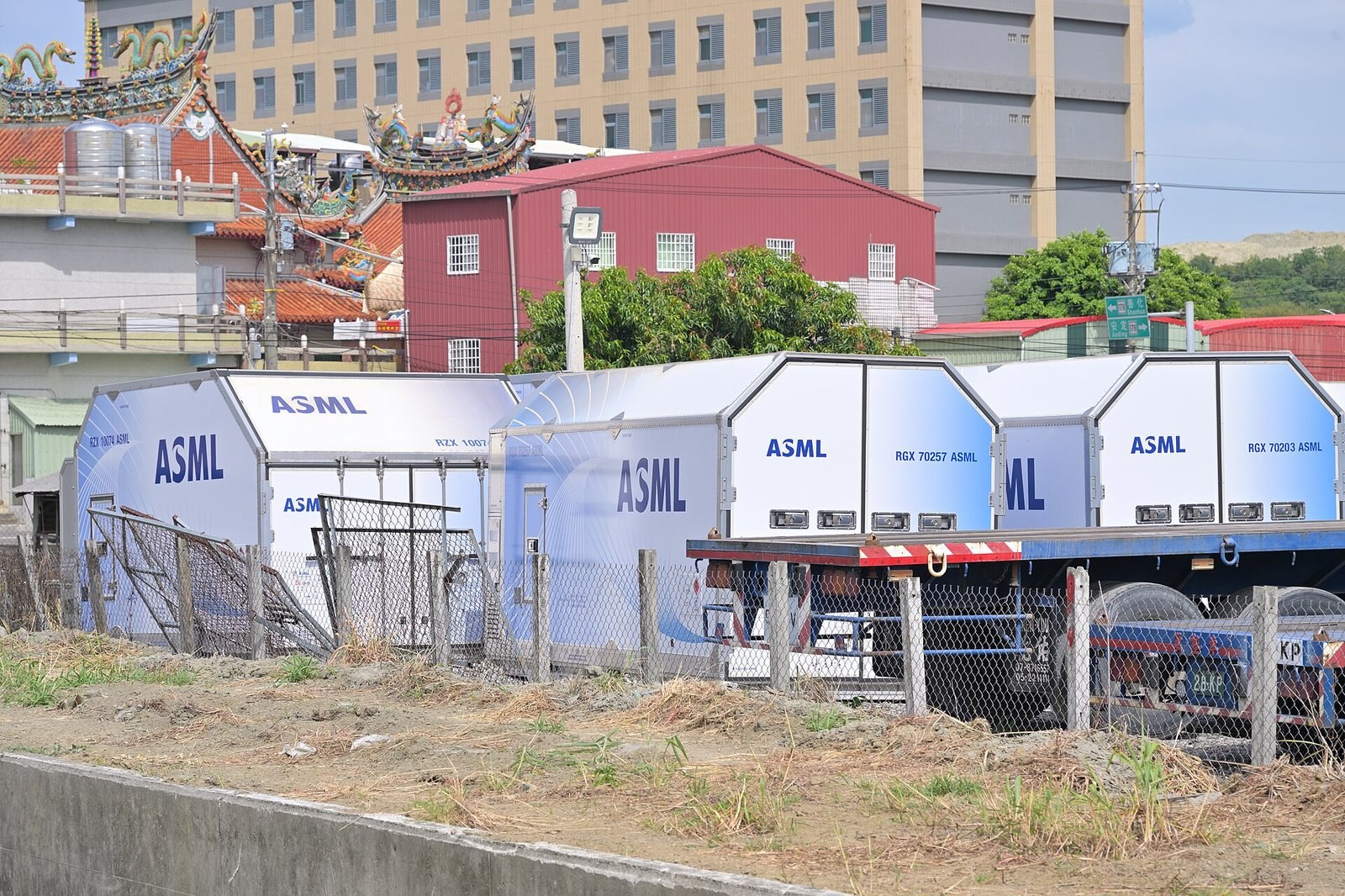
What Musk could control was the order book. What he cannot is the tool queue, and that is where his remarks became interesting. Musk said ASML and other equipment suppliers have moved deliveries forward. Bringing chip manufacturing inside the company is the purpose of the project, and when the machines land is the most direct variable in the schedule.
ASML builds the extreme ultraviolet lithography systems that every leading-edge fab needs, and it delivers only a few dozen a year. Those units are allocated years in advance to TSMC, Samsung, Intel, SK Hynix and Micron. A supplier that accelerates delivery for one customer is moving another customer’s slot, which is a favor that gets priced.
The ambition is wider than a normal fab. Musk has said existing capacity worldwide covers about 2% of what Tesla and SpaceX expect to need across their programs, which include inference chips for vehicles, silicon for the Optimus robot and parts built to survive radiation in orbit. Terafab is designed to put design, fabrication, memory production, advanced packaging and testing under one roof, an integration no commercial foundry attempts because each step has different economics and different customers.
Money is not the binding constraint yet. Musk said capital equipment spending would be no less than tens of billions of dollars through early 2028 and probably north of $100 billion over the long term. He also said the two shareholders have not settled how to divide the cost, and confirmed that SpaceX and Tesla are discussing a merger, which would fold that argument into an accounting entry.
Intel joined in April to contribute manufacturing expertise, and Musk said the full-scale plant would run Intel’s 14A process. The first phase at the permanent site in Grimes County, Texas, was sized at about $16.8 billion in August. Prototype work is in Austin, next to Tesla’s Gigafactory.
A test chip is a modest object. SRAM arrays are memory blocks engineers use to check whether transistors and the wiring between them behave as simulated. They are the first thing a new process runs because they fail loudly and cheaply. Getting one to work proves the tools are installed and the recipe is approximately right. It says nothing about yield, and yield is what decides whether a fab is a business.
The gap between first silicon and profitable output is where fab schedules usually die. A new process needs a year or more of learning before defect rates fall to commercial levels, and that learning comes from running wafers, not from planning. Terafab has no process of its own; it will run Intel’s, which shortens the recipe work but does not remove the ramp.
The economics are different for a captive plant, which is the one advantage Terafab genuinely holds. A merchant foundry prices wafers to recover capital and earn a return on it. A plant that supplies its own owner only has to beat that price, and it can run at lower utilization without reporting a loss on every wafer. Tesla and SpaceX also do not have to win a customer qualification cycle, a year-long process in which a buyer tests a new fab’s parts against its own designs before committing volume.
Staffing is the other open item. Leading-edge fabs in Arizona and Japan have pulled experienced process engineers out of Taiwan, and the pool is small and mobile. Terafab will bid for the same people while Intel, TSMC and Samsung are all hiring in the same country, in the same state, at the same time.
None of this makes the date impossible. It makes it a claim that can be checked in stages: tools in the building by mid-2027, a chip that works by summer, wafers in volume fifteen months after that. Musk has hit some of his dates and missed many, and the ones he missed tended to be the ones that depended on somebody else’s factory.
The ASML remark is the part worth keeping. Equipment suppliers accelerate for customers who pay premiums and carry weight, and they do it by delaying someone else. If Terafab’s machines really do arrive early, the story to watch is not in Austin. It is in the delivery schedules of the fabs that were standing in line ahead of it.