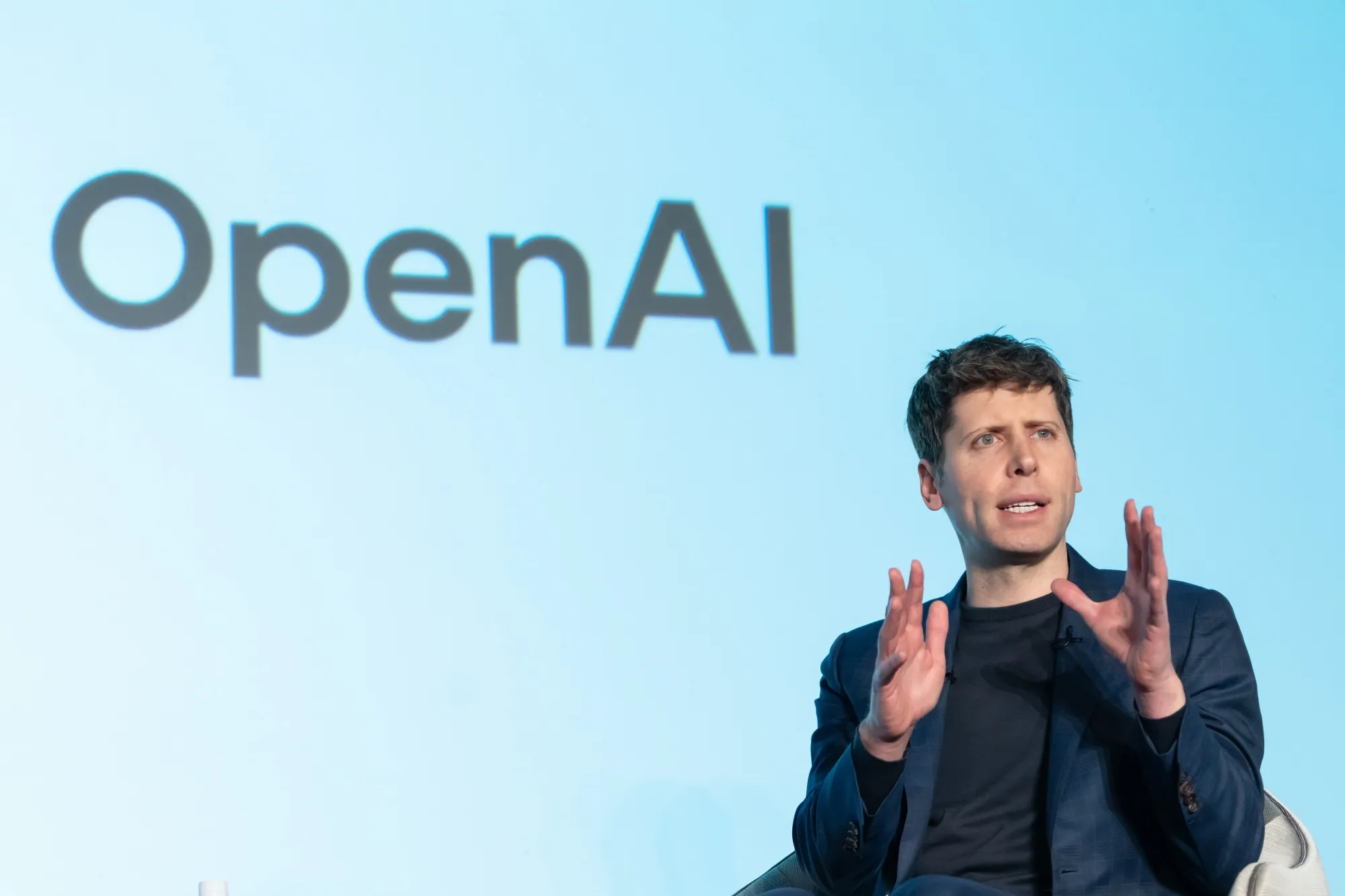
The demo began with a gym membership form. A user photographed it, spoke the details aloud — name, address, a fitness goal written as a joke — and ChatGPT filled the fields on its own, then returned a completed image. OpenAI showed the workflow this week on ChatGPT’s official account, and the clip quickly became one of the most-shared AI demos of the month.
The feature is straightforward to describe and harder to build: upload a picture of a form, explain the content by voice or text, and the assistant reads the field structure, works out the logic of what belongs where, and completes it. According to Readhub, the Chinese tech-news outlet that tracked the rollout, the capability chains three systems end to end — image understanding, voice interaction and content generation — into a single workflow.
Paperwork as a conversation
The pitch is that filling forms stops being typing and starts being a conversation. A job application, a rental agreement, a registration card, a tax document: each is a fixed set of fields waiting for the same personal details. OpenAI’s demo showed the assistant handling both a photograph of a physical form and an application read aloud in a casual tone, extracting the same information from different inputs.
For users, the near-term use is tedious paperwork — healthcare forms, insurance documents, school applications. OpenAI has begun rolling the capability out to ChatGPT Plus subscribers, according to reports this week, and early reactions online have been strongly positive, centered on time saved.
The limits are visible
The output, for now, is a static image, not an editable PDF. A user who needs the completed form in a system that accepts only certain formats still has to transfer the information by hand. Complex tables remain a weak point; OpenAI acknowledges that uploads need to be reasonably clear and readable, and misread fields are still possible on dense layouts.
There is also a privacy question that the company has not fully answered. Forms often contain sensitive data — financial records, medical history, identity numbers. Uploading them to a model that processes and stores them is a new trust decision for users, and privacy advocates have already flagged it in coverage of the feature.
Why it matters beyond the demo
The significance is directional. Forms are the plumbing of the offline world — the way governments, employers and landlords collect information. A model that can read one, understand what it asks and complete it is a model that can act on physical documents, not just talk about them. Industry analysts describe the workflow as one of the earliest mainstream examples of an agentic task: the assistant does a chore end to end, with the user supplying only intent.
The move also pressures a cluster of startups that built businesses around AI form-filling and document automation. A feature native to ChatGPT, available at subscription prices millions already pay, is hard to undercut with a standalone product.
The underlying engineering, as Readhub described it, is an end-to-end pipeline: an image model parses the uploaded form and identifies its fields, a voice model captures the spoken instructions, and a generation model maps the two together and produces the completed result. Each of these models exists separately; the achievement is the wiring. That is also why the feature is a preview of a larger pattern — the same pipeline, pointed at a contract, a bill or a patient intake sheet, is the basis of a broad class of document-automation products.
The commercial stakes are real. A cluster of startups has built businesses on the assumption that AI document processing is a niche worth owning. A native ChatGPT feature that does the job at subscription price — and improves as OpenAI’s models improve — compresses that market. The pattern is familiar: platform companies absorb features that were once standalone products, and the losers are usually the ones who could not move fast enough up the stack.
There are also unanswered questions about the pipeline’s limits. OpenAI has not said which regions support the feature, how it handles handwriting, or how the company stores uploaded forms and the data extracted from them. For enterprise customers with compliance obligations, those answers will determine whether the feature is a curiosity or a tool. The company’s privacy documentation will be read closely by the first healthcare and financial-services customers to test it.
OpenAI has also signaled that the feature is a test of its API strategy. The underlying pipeline — vision, voice, generation — is the same stack the company exposes to developers, and the form-filling demo is the consumer-facing proof that the pieces work together. Enterprise customers have been asking for exactly this kind of document workflow for years, and a feature that starts in ChatGPT tends to migrate to the API within quarters. If it does, the company’s document-automation ambitions will no longer be a party trick but a revenue line.
OpenAI has turned the mundane act of filling a form into a demonstration of what multimodal models can do when vision, voice and generation are wired together. The current version is limited — static output, fragile on complex tables, unresolved on privacy. But the direction is plain: the next step is models that handle the paperwork of the real world the way they handle chat, and OpenAI has claimed an early lead in showing what that looks like.