Young Liu put a number on it. The chairman of Hon Hai Precision Industry, the Taiwanese contract manufacturer the world knows as Foxconn, told CNBC in an interview broadcast Friday that his company already builds about 40% of the world’s AI servers, expects to reach 45% next year, and intends to hold half the market within two years.
Contract manufacturers rarely publish targets like that. Their business runs on being invisible, on absorbing a customer’s design and returning a finished product at an agreed cost. Liu’s willingness to say the number out loud reflects something more concrete than ambition: he said capacity is fully booked for at least the next 18 months.
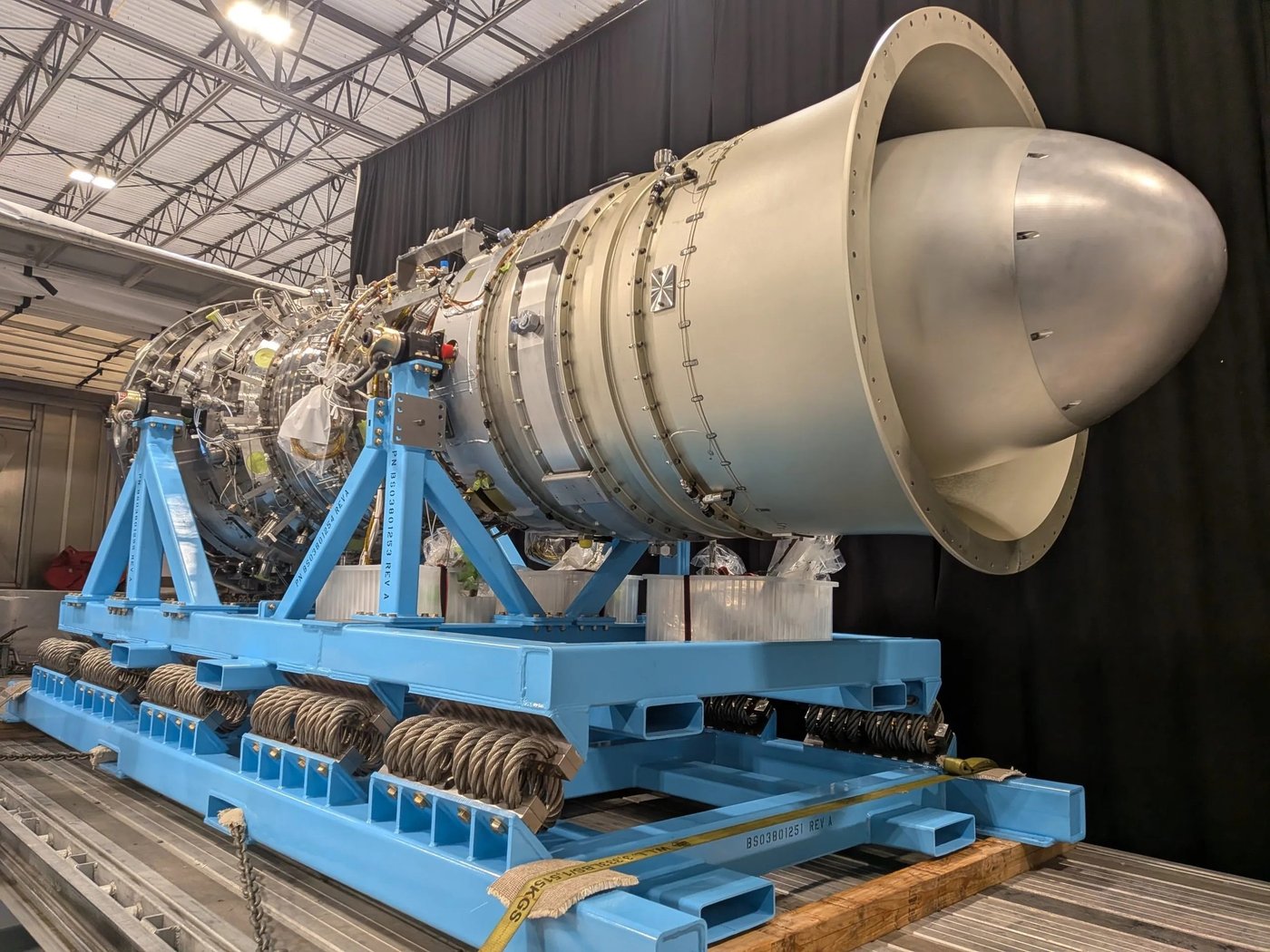
Foxconn built its reputation on consumer electronics, most visibly assembling Apple’s iPhone and a large share of the world’s laptops, phones and game consoles. AI servers are a different product with a familiar shape. What used to be a pizza-box machine with one or two chips inside has become a rack weighing well over a ton, holding 72 accelerators, thousands of cables, cold plates and coolant lines, and power distribution sized for a small substation. Assembly work that once meant screwing a board into a chassis now means testing, cabling and debugging a system that has to run for months without a service call.
That shift moved dollar content per unit up sharply, and it moved the value of the work toward the companies that can integrate at rack scale. It also made the assembler a bottleneck. When Nvidia ships a new generation of rack architecture, the constraint is often not the chip. It is the number of factories that can take delivery of components, build the rack, test it and ship it without weeks of rework.
Liu expects the mix to follow the work. Within three to five years, he said, AI infrastructure should account for 60% to 65% of Foxconn’s revenue. Hon Hai’s annual revenue has run above $200 billion, so the arithmetic implied by that forecast is a business of well over $100 billion a year built around computing for machine learning, at a company that a decade ago sold mostly phones.
The customers for that capacity, by Liu’s account, remain almost entirely model developers and cloud providers. Governments and large enterprises, the two groups that analysts have spent two years describing as the next wave of AI demand, have not begun buying at scale. That is the honest part of the interview, and the part that matters most. A market that is sold out because a handful of buyers are racing each other is different from a market that is sold out because demand has broadened. Foxconn’s order book describes the first condition, not the second.
The American buildout follows the same logic. Liu said expansion in the U.S. will move up the supply chain rather than only adding final assembly lines, meaning components, modules and subassemblies made closer to the customer. The caveat he attached is a cost one: early production will be limited to products that can absorb the higher expense of building in the United States. Rack-scale AI systems, where a single unit can carry a seven-figure price tag, clear that bar. Consumer devices do not.
Margins are the question investors keep returning to. Foxconn’s gross margin has historically sat in the single digits, because assembling someone else’s design is a business of throughput and yield, not pricing power. Rack integration raises revenue per unit and usually raises gross profit per unit, but it does not change the structure of the relationship. The customer owns the design, the customer owns the demand, and the customer can qualify a second supplier.
That last point is where the 50% target gets tested. The competing bidders for rack business include Quanta Computer, Wistron and Inventec, all Taiwanese, all capable of the same integration work, along with Dell and Supermicro, which sell branded systems and carry their own customer relationships. Nvidia’s reference designs compress the differences between them. When the blueprint is shared, the contest comes down to who can build it faster and cheaper, which is the contest Foxconn has won for four decades.
Liu also said a new collaboration with OpenAI is under discussion, without describing it. Foxconn and OpenAI have worked together before on hardware, and the company has been named among the manufacturing partners for AI devices that OpenAI has explored. A deepening of that relationship would be logical for both sides: OpenAI needs physical production, and Foxconn needs a customer whose demand does not depend on another company’s product cycle.
Asked whether the industry is in a bubble, Liu said it is not. The capacity figures support him for the next year and a half. They say nothing about 2029, when the current generation of data centers will be depreciating and the question will be whether the applications running inside them earned their cost of capital.
What Foxconn has built is a position. It is the largest assembler of the machines that the AI industry currently cannot get enough of, and it is converting that position into contracts that stretch past the current budget cycle. Whether half the market is worth having depends on what the market’s margins look like when the shortage ends. On that question, Liu did not offer a number.