For most of this year, the pitch to investors in Anthropic’s chip financing carried a specific promise: investment grade by 2027. Blackstone, which arranged $6.3 billion of debt for the company’s processor purchases, has revised that. The private-credit manager now tells investors the model developer is likely to land in the high-yield range after it lists, in the BB band, according to the Financial Times.
Both companies declined to comment.
The difference between BB and BBB is not a matter of taste. It is the line between borrowers that pension funds and insurers can hold without a dedicated allocation and borrowers that require one. It sets the coupon, the covenant package and the pool of buyers for every subsequent refinancing.
Anthropic is not a distressed company. It reported $16.29 billion of revenue in the first half of this year, a figure that would place it among the fastest-growing enterprise software businesses ever built. Its models are used by a large share of the companies that write code for a living, and its contracts with large enterprises run for multiple years.
What it has, along with that revenue, is a set of obligations that look unlike anything a software company has carried before. Anthropic has committed to computing capacity across several suppliers, including a large tranche of Google’s custom chips and cloud agreements that extend for years. Those commitments are contracted rather than optional. They are also denominated in the same dollars the revenue arrives in, and they were signed when demand was accelerating.
Rating agencies treat that combination carefully. A software business with high gross margins and no fixed assets earns an investment-grade rating on the strength of its cash conversion. A business that must prepay for power, buildings and silicon years ahead of the revenue they generate looks more like a capital-intensive manufacturer, and is rated like one.
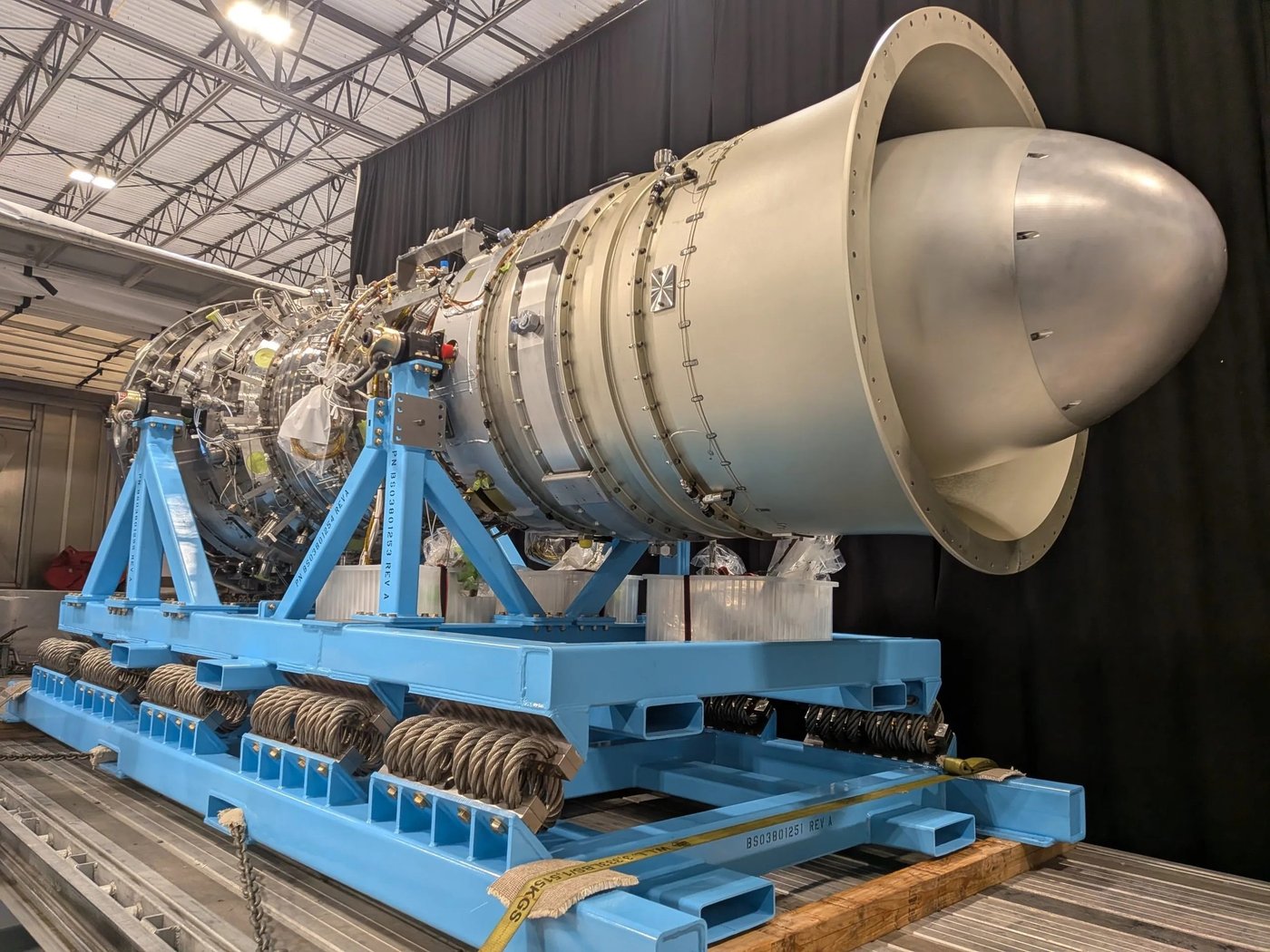
The $6.3 billion facility reflects that structure. Financing chip purchases usually means lending against equipment that depreciates quickly and has a thin secondary market. The lender’s protection comes from the contract stream and from the borrower’s franchise, not from the resale value of the collateral.
Blackstone’s revised guidance is a statement about that franchise as much as about the debt. Private-credit managers do not usually walk back a rating path to investors unless their own models have changed. The revision implies a view that Anthropic’s cash flow will be consumed by capacity commitments for longer than the original underwriting assumed.
There is a competitive dimension. Anthropic’s closest rival has been signing compute deals at a scale that requires constant external funding, and the two companies bid for the same scarce capacity. Whatever one pays for chips sets a floor for the other. A rating that limits Anthropic’s access to cheap debt raises its cost of staying in that auction.
The listing itself is the other variable. An initial public offering does not change a credit profile, but it changes the investor base. Public shareholders price a company on earnings and growth; bondholders price it on coverage of fixed obligations. Companies that list while carrying large contractual commitments often find the two audiences asking incompatible questions. Anthropic would be the largest test of that so far.
High-yield issuance is not a death sentence. Several of the largest technology companies spent years in the BB band before cash flow caught up with their ambitions. The cost is measurable: a wider spread, tighter covenants, and a smaller set of buyers for each new deal.
The more consequential effect may be on the terms of the next contract. A company that expects to fund expansion with investment-grade debt can sign longer commitments and accept lower returns in the early years. A company that expects to fund at high-yield spreads has to shorten its commitments or raise its prices, and neither is easy when competitors are still signing.
That calculus runs in both directions for the buyers of the debt. Insurers and credit funds have been eager for paper tied to AI infrastructure, because the yields are higher than most of what the investment-grade market offers. They are also aware that the assets behind the paper, chips and cooling systems, lose value faster than the buildings that house them.
Executives at the company have described its spending as an investment in a market that will be much larger in five years. That may prove correct. The rating question is whether the bond market is willing to wait that long on the strength of the projection alone.
For the private-credit funds that have financed this buildout, Anthropic is the clearest test of a broader thesis: that AI infrastructure can be underwritten like other infrastructure, with predictable cash flows and a stable rating. A BB outcome after listing would not break that thesis. It would be the point at which the market stopped pricing the industry on its ambitions and started pricing it on its contracts.