
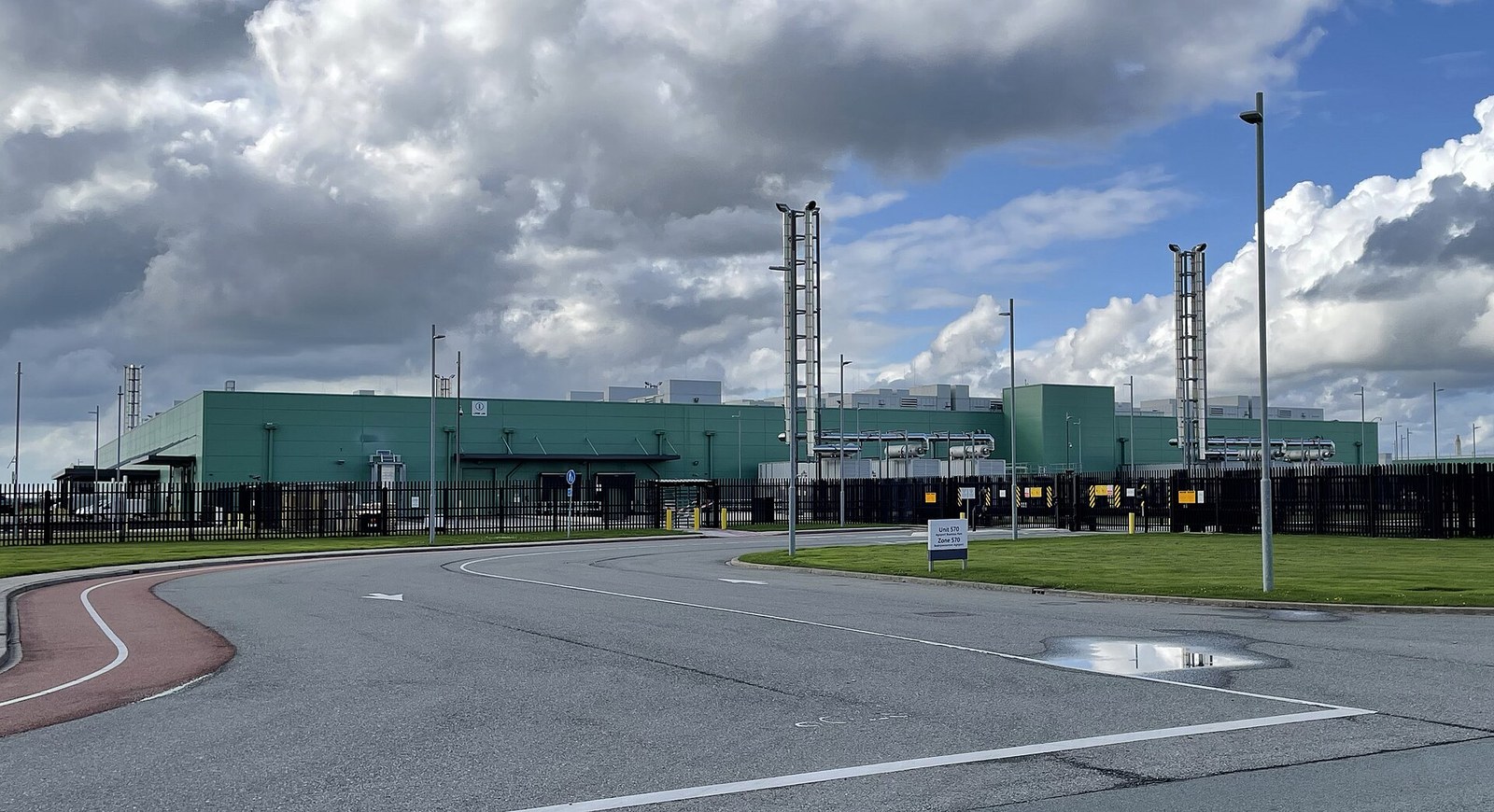
The lease was signed in October of last year. The option attached to it was never exercised.
Microsoft will not take up its right to more than double the size of a data center lease with Nscale in Texas, according to the Financial Times, which cited three people familiar with the matter. The deal that will not happen was worth tens of billions of dollars. The site as contracted covers roughly 104,000 Nvidia GB300 chips, the accelerator that most of the industry’s capital spending is chasing.
One person familiar with the decision told Reuters it was taken months ago, before Nscale filed to list in September. That detail matters to anyone reading the announcement as a verdict on demand. A decision made in the summer and disclosed in November reflects planning done when the order book looked different, not a judgement formed this week.
Nscale is preparing an initial public offering of about $35 billion. A customer walking away from an option is not a customer walking away from a contract, and the distinction is the one the company will be making to investors for the rest of the year. An option is a right, not a commitment. Exercising it would have added capacity the buyer no longer needs on the timeline it once assumed.
The same week, Microsoft cut $5 billion from its capital expenditure guidance for the fiscal year. Its stated reason was delay in third-party data center delivery, and The Information traced the shortfall to a site in Texas built by IREN, the Australian cloud provider. IREN fell 11.4% on the day. CoreWeave fell about 9%.
That reaction is the interesting part. A guidance cut blamed on suppliers should be bad news for suppliers and neutral for the buyer, and the market treated it as bad news for everyone who sells compute capacity to somebody else. The read is that investors no longer trust the distinction between a company that cannot get buildings finished and a company that has decided it does not need them.
The structure behind these deals explains the confusion. Microsoft builds some of its own capacity and leases much of the rest from developers who raise the money, buy the land, pour the concrete and purchase the chips, then rent the finished hall back on a long contract. The arrangement keeps capital off the tenant’s balance sheet and puts it on the landlord’s. It also means that when the tenant’s plans change, the landlord is holding an asset with one plausible customer.
For three years that model looked like the cheapest way to buy speed. Land, power and shell construction take longer than a company can wait when its customers are signing up faster than it can serve them, so it pays somebody else to take the construction risk and the financing cost. The risk only becomes visible when the schedule slips, which is exactly what Microsoft says happened.
Nscale’s position is the one to watch. It has a listing to complete, a site in Texas that is now smaller than it might have been, and a pipeline of customers who have just watched the largest of them decline an option. The company’s filing will have to describe its contracted revenue and its options separately, and investors will read the second number as a measure of how much demand is real.
None of this means the buildout has stopped. Microsoft’s capital budget is still enormous, and a $5 billion reduction is a rounding error against it. What changed is the direction of the revision. For two years every adjustment to a hyperscaler’s spending plan went up, and analysts learned to treat guidance as a floor. A cut, however small, resets that expectation, and expectations are what the equipment supply chain finances itself against.
The disclosure also lands in a quarter when the industry’s own accounting is under scrutiny. Lease obligations do not appear as debt, and the length of a contract determines how much of a landlord’s revenue an investor is willing to underwrite. A customer who declines an option has told the market something about the demand curve beyond the term already signed, and that is information no filing captures until the next one is written.
There is a second reading, less flattering to the sellers. If the constraint is delivery rather than demand, then the shortage of transformers, turbines, cooling equipment and electricians is now the binding limit on the industry, and the money will keep flowing to whoever can solve it. Under that reading, IREN’s fall is a statement about execution, not about appetite.
Microsoft has not said which reading is correct, and its guidance language, built for lawyers, does not settle it. The option it declined lapses quietly. The contract it kept does not.
The question left hanging is the one every landlord in this business now has to answer: when the largest tenant in the market holds an option rather than an obligation, what exactly is the asset being financed?



