
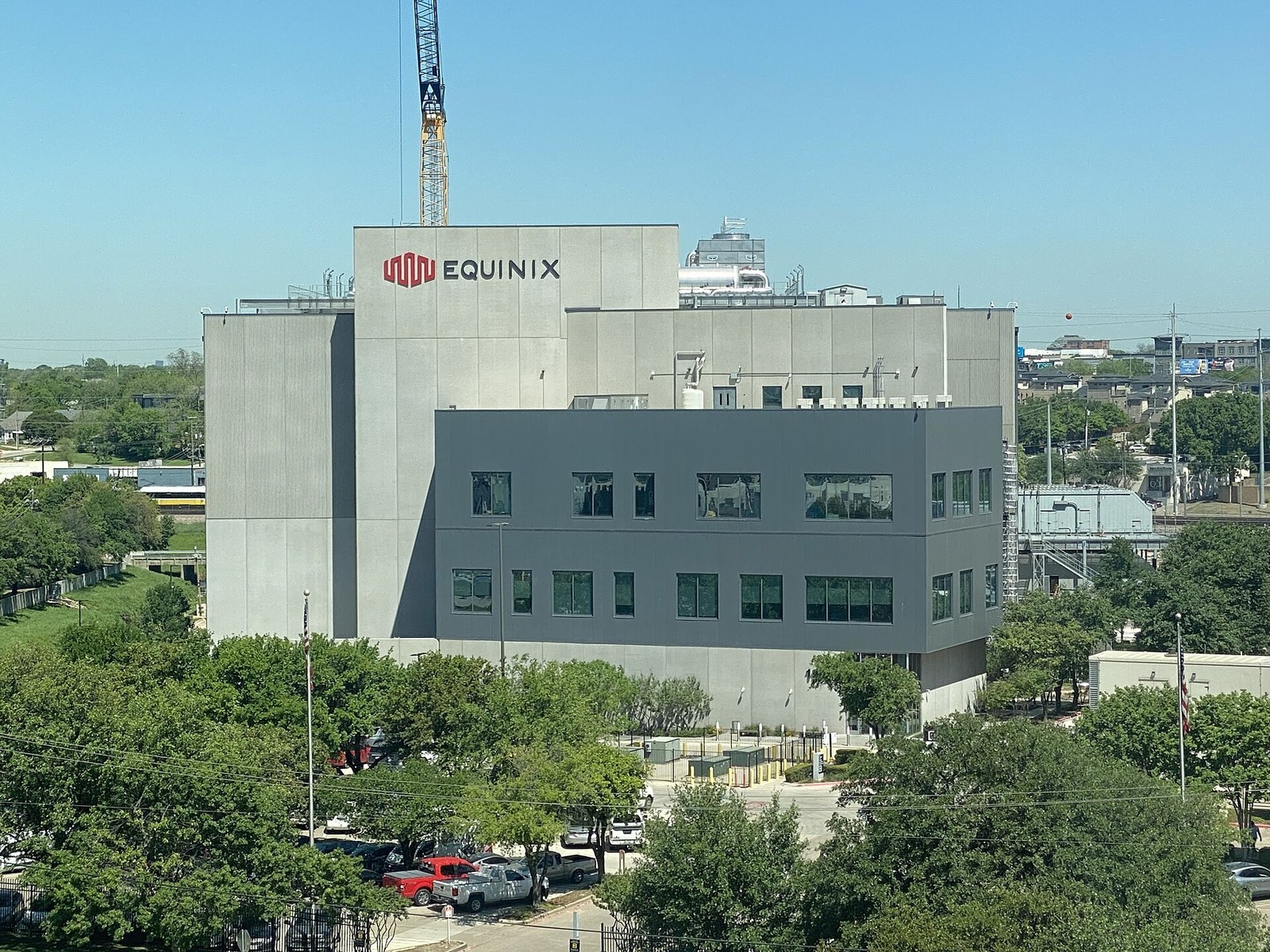
For most of the past decade, opening a data center in Singapore has meant clearing two approvals before the first concrete is poured. Industrial land is allocated under rules that leave little room for negotiation, and the electricity a hall of servers draws has to be found inside a grid serving one of the densest cities on earth. Equinix has now cleared both.
The company opened SG6 on Nov 6, its sixth International Business Exchange in the city-state, on an investment of $290 million. The building is aimed at artificial intelligence and high-performance computing workloads, the segment where demand currently outruns supply by the widest margin.
Singapore matters out of proportion to its size in this business. It is the interconnection point for Southeast Asia. The submarine cables that link Indonesia, Malaysia, Vietnam and India to the rest of the world come ashore there, and the carriers holding capacity on them need a place to hand traffic to one another. That is what an Equinix exchange sells. Floor space is rentable, but the product is proximity: the ability to cross-connect two networks inside one building under a contract measured in months rather than years.
Which is why the supply constraint has bite. A market where land and power are both rationed does not clear through price alone. It clears through queue position. Every hall that gets built is capacity a competitor did not get, and the tenant that signs early holds the interconnection density that later arrivals have to reach through it.
Equinix operates more than 280 data centers worldwide. The count describes a strategy of breadth: many sites in many metros, each holding a dense cluster of networks and tenants. For most of its history that model produced steady contract revenue with low churn, because leaving a building means re-cabling a network and renegotiating every peering arrangement attached to it.
AI tests the model in an awkward way. A training cluster wants contiguous power in large blocks and a small number of very large tenants. The Equinix format is the reverse: many cages, many customers, revenue spread across thousands of agreements. SG6 can serve both kinds of demand, but the mix inside the building decides the margin, and the mix is not something the company controls once leases are signed.
The mechanics of a colocation lease explain the exposure. A retail cage is priced on committed power plus cross-connects, and the cross-connects carry margins the floor space does not. Wholesale deals, the kind an AI tenant signs, are priced on megawatts with thinner margins and longer lead times. A hall of wholesale tenants earns less per square foot and depends on utilization staying high. A hall of retail tenants earns more and fills slowly.
Singapore’s approvals are the binding constraint, and that is where the money goes. In a queue gated by allocation rather than price, $290 million buys a position in line, not a solution to the regional shortfall. The distance between the power AI operators want in Southeast Asia and the power that has been permitted is measured in gigawatts. One building closes a fraction of it.
There is a second, quieter cost. Land in Singapore is expensive enough that the same capital would buy several times the capacity in Texas or Ohio. Equinix is paying for latency and jurisdiction, not for square meters. Customers who need to serve Indonesian or Vietnamese users within a few milliseconds have no substitute. Customers who need raw training throughput do, and most of them are already building in Iowa.
Permitted power is the other half of the asset, and it behaves differently from land. A building of this class draws load that a city-state grid treats as industrial: a dedicated substation, a connection agreement with the utility, and a study that assumes the equipment inside runs near its rated draw for most of the day. Those agreements are not transferable between sites. They attach to the building, which is why the building is worth more than its floor area.
That split is the part worth watching. If SG6 fills with inference and interconnection tenants, the building behaves like the rest of the portfolio: sticky, high-margin, hard to churn. If it fills with AI tenants chasing a temporary shortage, the leases will be shorter, the power draws larger, and the renewal conversation three years out will look nothing like the one Equinix is used to having.
The company has not disclosed the building’s capacity in megawatts or how much of it is pre-leased. What it has said is the investment figure and the workload class. Both point at the same bet: that the scarce asset in Asian computing over the next five years is a permitted site close to a cable landing, and that whoever holds the site can wait for tenants to arrive.
Whether that bet pays depends on a permitting system neither Equinix nor its customers control, and on a power market where the marginal buyer is now a hyperscaler willing to sign for a decade. The next approval in Singapore will go to someone. The queue behind it is longer than the buildings.



