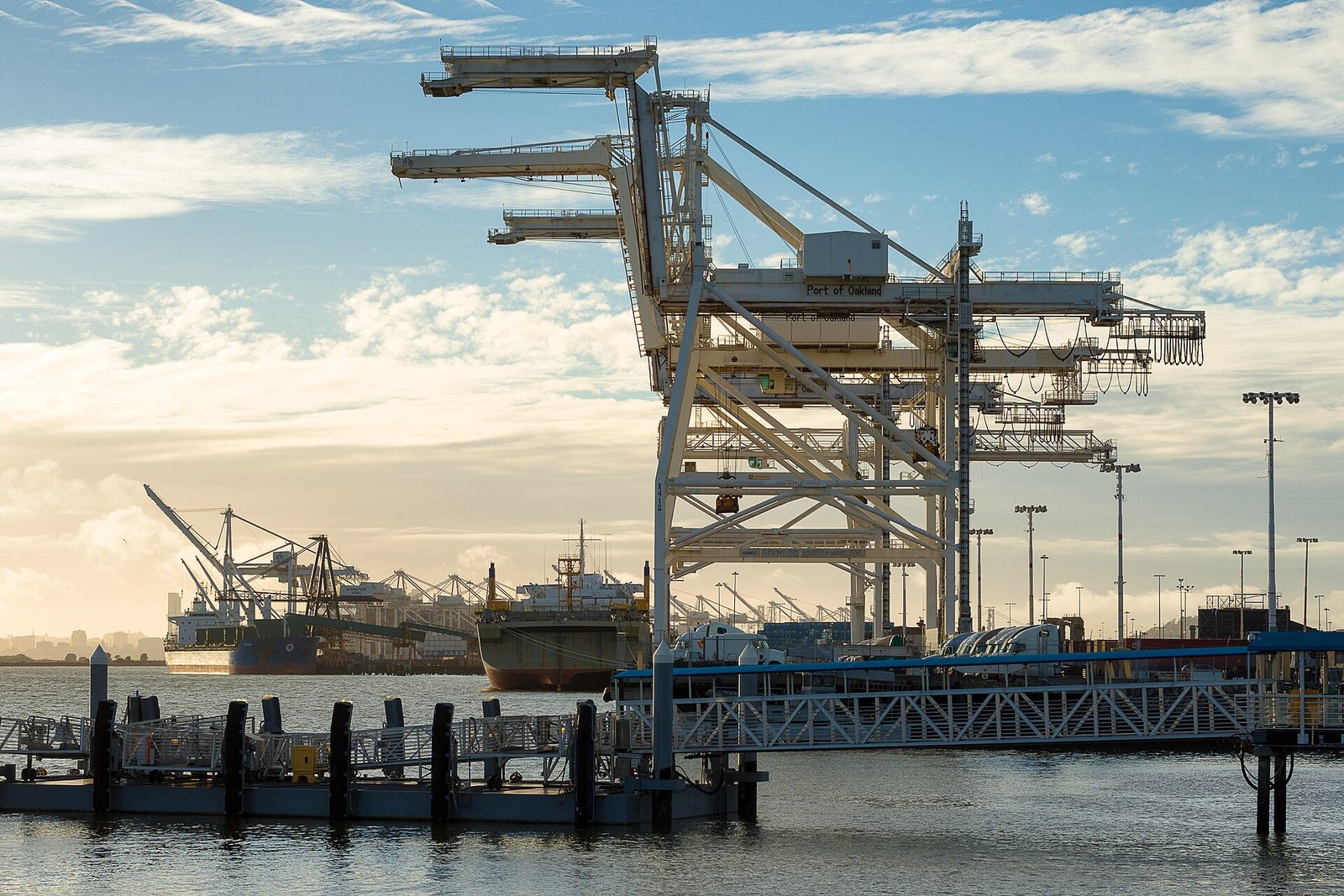
The shipment was loaded, documented and dispatched from Oakland toward a destination in Texas this summer. At some point between those two points it stopped being anyone’s property. The cargo is still missing. Police have made no arrests.
Ars Technica documented the case on Nov 6, putting the value of the vanished Nvidia hardware at $11.4 million. The record does not say how the goods were moved, whether the load was taken from a yard, hijacked on a highway, or collected by someone who presented paperwork that looked correct. Each of those is a different crime with a different set of suspects, and the fact that none has been charged suggests how little the investigation has to work with.
What the record does say is why the target was chosen. AI accelerator cards are small relative to their price, and the market for them is deep, global and largely indifferent to provenance. Eleven million dollars of graphics silicon fits into a space that a few people can move. The same value in automobiles would require a parking lot, a transport permit and a buyer who wants forty identical cars.
That ratio is the whole economics of cargo theft. Thieves do not optimize for the value of what they take. They optimize for value per unit of handling, and the handling is what gets you caught. A pallet of accelerators has a better ratio than almost any legal freight on the road, and the resale market clears without asking many questions because the demand for compute currently exceeds the supply of it by a wide margin.
The legitimate channel is the problem. Nvidia’s hardware is scarce, allocation is rationed, and a buyer who cannot get an order filled through a distributor has a strong reason not to inspect a serial number too closely. Secondary markets for enterprise hardware have existed for decades. What has changed is the spread between the official price and the price a buyer will pay for immediate delivery, and that spread is the thief’s margin.
Serial numbers are the obvious control and a weak one. Every unit can be traced in principle, and in practice tracing requires the manufacturer, the distributor, the reseller and the end customer to all check, at the moment of sale, against a list that somebody has to maintain. Most transactions in the secondary market are between parties who have never met, brokered by someone who takes a commission and warrants nothing.
So the industry response has moved to the physical layer. Shipments of high-value electronics now travel with GPS trackers inside the pallet, not on the tractor, so that a stolen trailer can be found and the load inside it still located. Some move under escort. Some move with two drivers and no overnight stops, because a parked truck is the moment when a load is most exposed. Some shippers split a single order across several vehicles so that one loss does not take the whole delivery.
All of that costs money, and the cost is rising with volume. As AI buildouts scale, the number of shipments carrying six and seven figure values grows faster than the number of people available to watch them. Security is a fixed cost per shipment, and it is being applied to a flow that is growing by multiples.
Insurance is the other mechanism, and it is where the argument gets difficult. A cargo policy is priced on declared value. Declare too little and the premium is affordable but the claim is capped. Declare the true value and the premium reflects a risk the carrier may not want to underwrite at all. Shippers and insurers negotiate this every year, and the negotiation tends to resolve in favor of the number that keeps the shipment moving.
There is an uncomfortable question about where the loss lands. The company that bought the hardware booked it as inventory or as capital equipment. If it was insured, the insurer absorbs most of the value and the buyer absorbs the delay. If it was not, the buyer absorbs both, and the delay is the larger number, because the equipment was on its way to a deployment schedule that does not move.
The strategic reading is that the physical layer of the AI buildout is softer than the financial one. Analysts spend their time on allocation, on lead times, on whether a fab can add capacity. Nobody models the loss rate on the highway between a port and a data center, because until recently the answer was that it did not matter.
It matters now. A single trailer can hold a meaningful fraction of a quarter’s deployment, and the supply chain that moves it runs on commercial freight practices designed for televisions and furniture. The security posture of a $11.4 million load is often the same as the posture of a $40,000 one, because both are handled by the same broker, the same carrier and the same driver pool.
The market’s response will be boring and effective: more tracking, more escorts, more splitting of loads, higher freight rates on electronics lanes, and insurers writing exclusions that push the risk back to the shipper. None of it recovers this shipment.
The open question is whether the loss rate stays low enough to be an operating cost or climbs high enough to change how compute hardware is moved. There is a version of the next few years in which GPUs travel like pharmaceuticals, with chain of custody at every handoff and a guard on the dock. That would be a strange outcome for a product that is otherwise treated like a commodity. It would also be cheaper than losing another eleven million dollars in the dark.