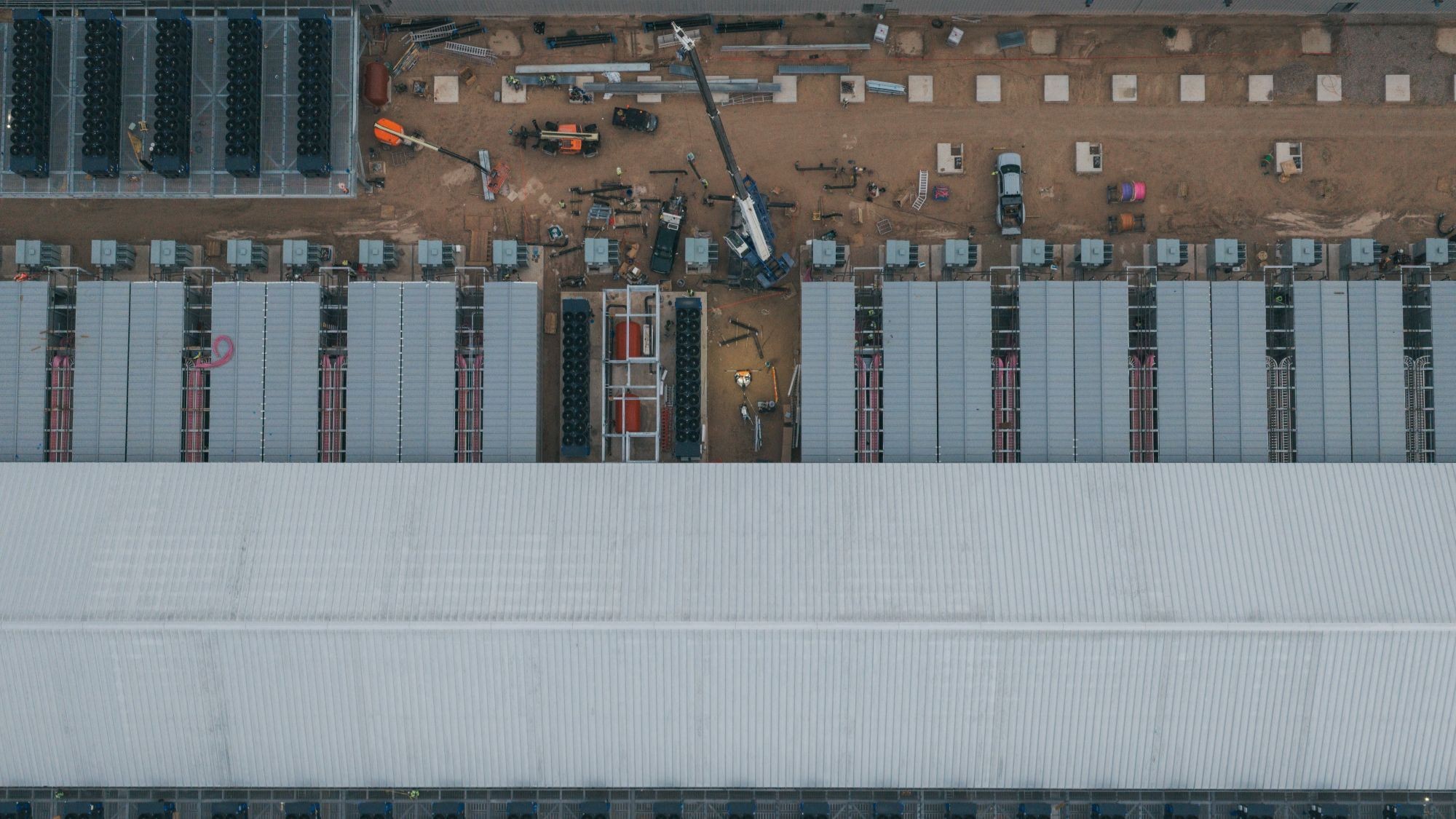
In late September, with bankers already sketching the roadshow, Anthropic signed an order for 1.7 gigawatts of heavy-duty gas turbines. It took the equipment along with the engineering and construction crews needed to install it, paying $3.4 billion to OnePWR, a Texas equipment supplier, according to the Financial Times. It is the largest single purchase of generating equipment known to have been made by an AI laboratory.
The order is easier to understand as a schedule than as a bet. A turbine is not a commodity a buyer can pick up in a quarter; it is a slot in a factory queue that stretches years, followed by permitting, gas supply, interconnection and a construction sequence that cannot be compressed much further. A company that intends to run clusters at gigawatt scale has to hold the metal long before it knows what those clusters will earn.
Anthropic did not buy OnePWR. The supplier’s employees did not transfer, and the transaction covered turbines plus the capability to install them, not the company that makes them. That structure keeps the obligation finite: an asset, a crew, a bill. What it does not do is remove the obligation from a balance sheet that investors are already reading line by line.
They are reading it closely. In the same week, people involved in the listing said early pricing conversations had pushed the company’s valuation to $1.2 trillion to $1.3 trillion, with at least one investor willing to go no higher than $1.1 trillion. In October the discussion had run between $1.8 trillion and $2 trillion. Four investors told Reuters they would not subscribe unless the number came down.
The gap between those ranges is the whole argument. A valuation is a claim on revenue that has not arrived, and the buyer of that claim wants evidence of the slope. Anthropic’s updated filing left the October revenue line blank, which is the kind of blank that reads louder than a small number. A listing before Thanksgiving now looks less certain than it did a month ago.
The turbines and the blank line belong to the same problem, and the market is treating them as if they do not. Power is a cost that arrives on a fixed schedule: the order is placed, the equipment ships, the plant runs, and the payments fall due whether or not the models sell. Revenue arrives on contracts customers can cancel. A company that buys 1.7 gigawatts is converting an uncertain future into a certain present obligation, which is a reasonable thing for an operator to do and an uncomfortable thing for an underwriter to price.
That obligation has a shape worth naming. Turbines are built to order and delivered in a sequence the factory sets, so a buyer who takes delivery early pays for storage and financing on equipment it cannot yet run. A buyer who waits takes whatever slot is left. Either way the decision is committed years before the revenue that justifies it, and it is not reversible in the way a lease is.
There is a case for owning generation rather than buying power from a utility. A regulated utility builds to a forecast approved by a commission, and a customer asking for gigawatts on a two-year clock is asking it to move faster than its process allows. On-site turbines sit behind the meter, bypass the interconnection queue and let the operator decide when to run them. The trade is that the operator now carries fuel price, maintenance and emissions compliance, and answers to state regulators it did not previously deal with.
Gas is also a political choice. A laboratory that publishes research on model safety and speaks about energy use is now one of the larger private buyers of fossil generation equipment in the country, and the permits for those units will be contested in the counties where they are sited. The company has not said where the 1.7 gigawatts will go.
The investor objection is not that power is unnecessary. Compute commitments of the size Anthropic has disclosed cannot be served without it, and the chips are useless in a building with no current. The objection is sequencing. Money spent on turbines is money not spent on research, and a buyer at $1.2 trillion is being asked to fund a build-out whose output he cannot yet measure.
What to watch is narrow. The filing will be amended again, and the revenue line will either be filled in or explained. The price range will be set, and the covered book will show whether the four investors who spoke to Reuters were representative or loud. And the turbine order will produce a paper trail of permits, which will put a date and a place on a plan the company has described only in capacity terms.
If the listing prices near the top of the revised range, the turbines will be read as foresight and the blank line as conservatism. If it slips past Thanksgiving, the same order will be read as a commitment made before the company knew what it could sell. The equipment does not change either way. Only the story around it does.