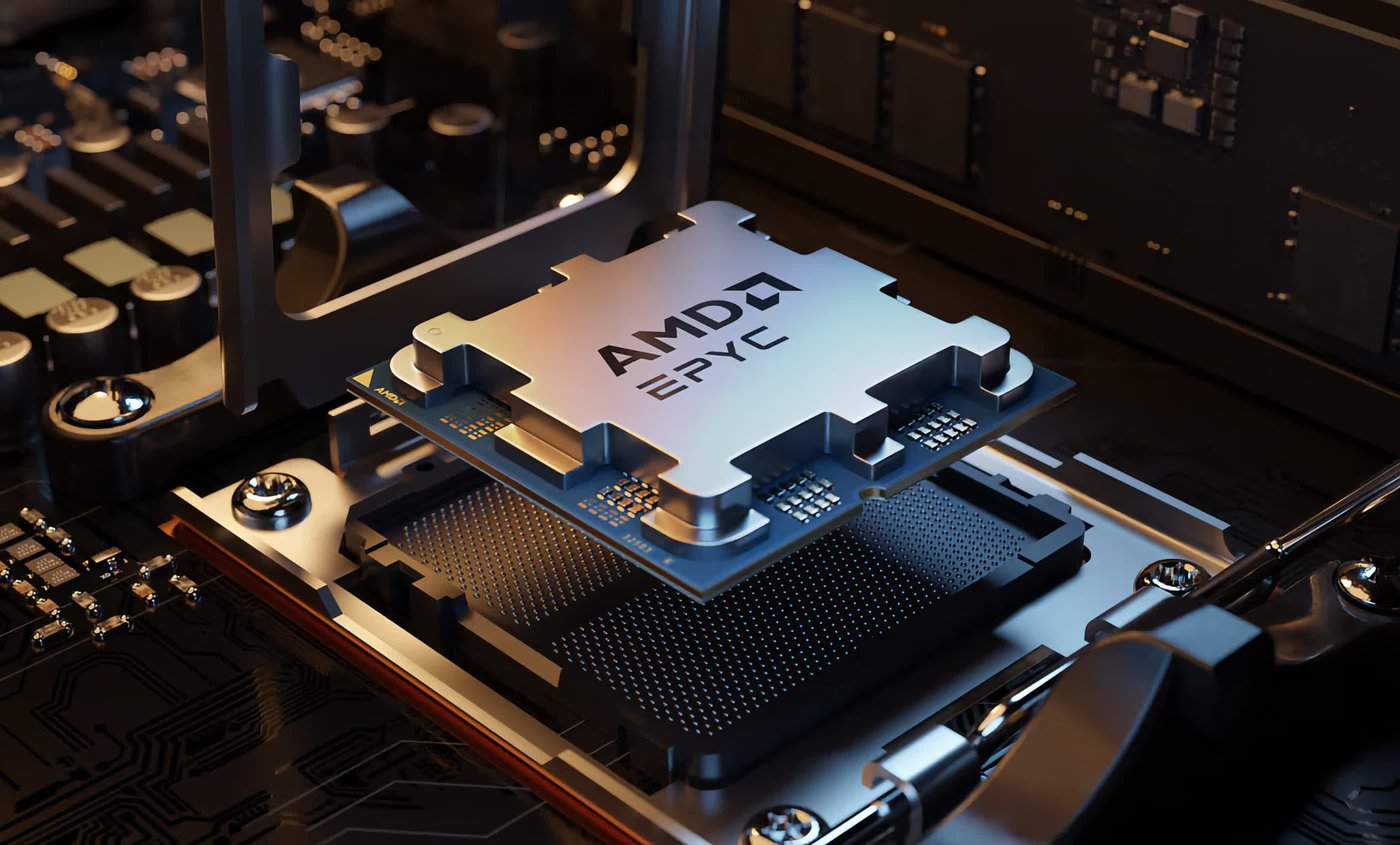
The wafers are moving through the fab now, and each one represents a bet that AMD’s engineers have been working toward for years. Advanced Micro Devices said this week that it has begun volume production of Venice, the sixth generation of its EPYC server processor and the first high-performance computing product in the industry to reach volume manufacturing on Taiwan Semiconductor Manufacturing Company’s 2-nanometer process.
The announcement positions AMD at the front of the race to commercialize the world’s most advanced chipmaking technology. Two-nanometer manufacturing is the industry’s next great transition — the point where transistor geometry reaches limits that forced chip designers to reinvent how they pack computing power into silicon. Whoever gets there first, with yields good enough to sell at scale, gains a measurable cost and performance edge over rivals stuck on older nodes.
Venice is aimed squarely at the data center. The new EPYC generation is designed for cloud, enterprise and AI workloads, the markets that now account for most of the industry’s growth and most of its profit. AMD said the chip delivers the performance and energy efficiency that hyperscale operators need as they expand capacity for AI training and inference, where power consumption has become as important as raw speed.
The 2-nanometer node is a technical achievement with commercial consequences. Transistors at that scale are so small that the laws of physics begin to interfere with their operation, and TSMC has spent years and billions of dollars developing the materials, equipment and design tools needed to make them work. Chips built on the process are expected to be significantly faster and more power-efficient than their predecessors, which is why every major chip company wants access to it — and why AMD’s claim to be first into volume production matters.
The company’s relationship with TSMC is central to the story. AMD has relied on the Taiwanese foundry for its most advanced products for years, having sold its own manufacturing operations in 2008 and committed to the fabless model. The partnership has served both companies well: AMD’s EPYC line has taken meaningful share from Intel in the server market, and TSMC has gained a marquee customer willing to adopt new nodes early. Venice extends that pattern, with AMD again among the first to commit to a new process.
The Arizona dimension adds a political layer. AMD said it plans to extend production of the chip to TSMC’s fab in Arizona, the foundry’s first major manufacturing site on U.S. soil, which has been ramping up advanced production as part of a broader push to bring leading-edge chipmaking back to America. The plan reflects both the commercial logic of diversifying production and the pressure from Washington, which has made domestic chip manufacturing a national priority and funded it accordingly.
For AMD, Venice arrives at a delicate moment. The company has ridden the AI boom to record revenue, with its data center business growing rapidly as hyperscalers adopt its accelerators alongside Nvidia’s. But the competition is intensifying: Nvidia dominates AI accelerators, Intel is fighting to defend its server stronghold, and custom silicon from cloud providers is taking share at the edges. Venice gives AMD a product story that none of its rivals can match this quarter — the first 2-nanometer server chip in production.
Analysts said the manufacturing advantage may be temporary but the marketing advantage is real. Being first on a new node wins benchmarks, headlines and design wins, even if competitors follow within months. The harder test is execution: new processes historically have struggled with yields in their early months, and AMD’s customers will be watching whether Venice can be produced in volume without the shortages and delays that have plagued other node transitions.
The broader significance is for the industry’s supply chain. The 2-nanometer transition is happening against a backdrop of geopolitical tension over semiconductors, with the U.S., Europe and China all trying to secure advanced chipmaking capacity. TSMC’s Arizona fab, once seen as a symbol of American industrial policy, now becomes a production site for the industry’s most advanced chips — if the ramp goes as planned.
For data center operators, Venice is a procurement decision in the making. The chip’s performance and power figures will be pored over by engineers at every hyperscaler, and its availability will shape capacity plans for next year. For AMD, the chip is a statement of intent: in the race to the leading edge, the company intends to arrive first — and to keep arriving first until the rest of the industry catches up. The wafers are moving, the yields are being watched, and the next chapter of the chip industry is being written one batch at a time.