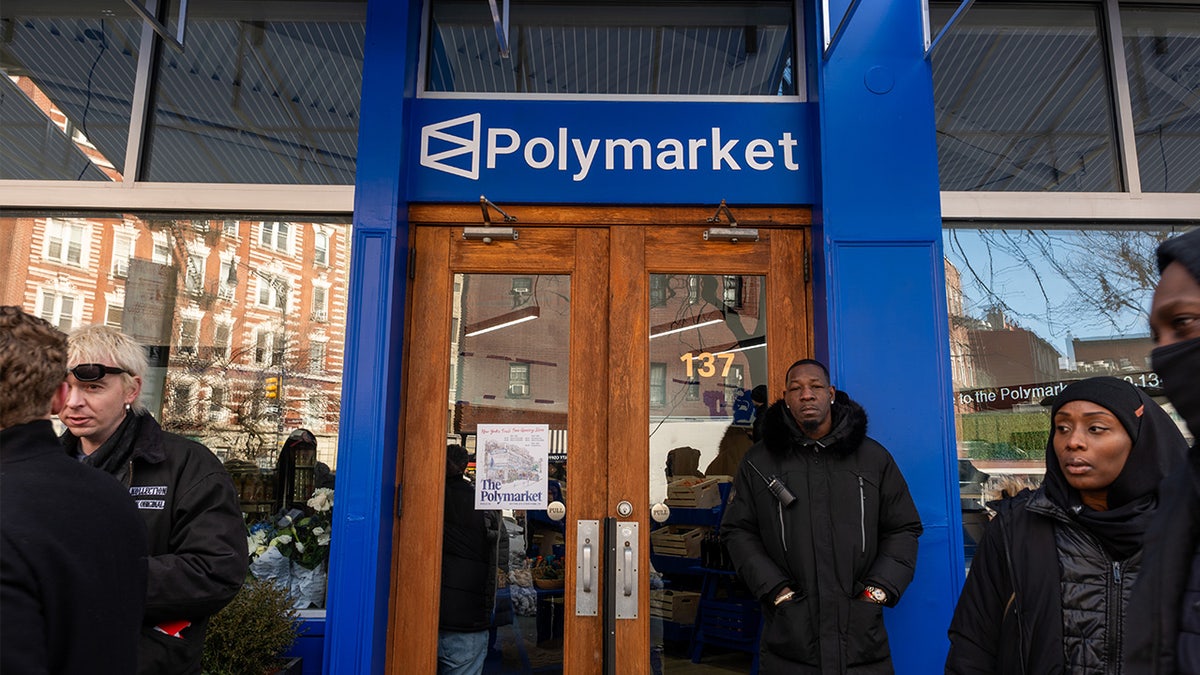
The clearest measure of what happened to prediction markets this year is not a headline number but a calendar. A World Cup in June and July, an NFL season that began in September, and a product that lets users bundle several unrelated outcomes into a single wager have between them turned an obscure crypto-adjacent exchange into something that looks, financially, like a sportsbook.
Polymarket told CNBC on Nov. 10 that its annualized revenue has passed $1.8 billion, up from just over $1 billion in June. The growth has come mainly from the compliant U.S. exchange the company opened to American users in May, which runs separately from the international decentralized platform it operated while U.S. access was restricted.
Volume tells the same story in a different unit. According to data from TickerTracker, notional trading on the U.S. platform exceeded $14.5 billion in October, compared with $4 billion in June. Notional volume is not revenue; the company earns fees on trades rather than the stake itself, and the gap between the two numbers is where the argument about the business model lives.
A venue that earns fees has to charge them, and charging them changes who shows up. The international platform grew on the premise that trading was free and liquidity would follow; a U.S. venue with a clearing arrangement, a compliance staff and an exchange partner cannot run on that premise. Revenue per dollar traded is now the number that determines whether the $1.8 billion figure reflects a durable business or a promotional one.
The company’s backers have already priced in a version of this. Intercontinental Exchange, the owner of the New York Stock Exchange, committed in 2025 to invest as much as $2 billion at a valuation of roughly $8 billion. That deal gave Polymarket something a crypto startup rarely gets: a partner with clearing expertise, market-data distribution and a regulatory vocabulary that supervisors take seriously.
What the volume number does not settle is whether the growth is structural or seasonal. Annualizing October is a generous method. October contained a full NFL schedule, the tail of a World Cup year and a presidential-adjacent news cycle that drives political trading, which is the category Polymarket built its reputation on. A run rate computed from a peak month is a statement about the present, and investors will want to know what February looks like.
The revenue mix matters here. Political event contracts are episodic and concentrated around elections and legislative deadlines. Sports contracts are recurring, high-frequency and competitively priced against sportsbooks that have spent a decade optimizing margins. The company’s push into combination contracts, which mimic the parlay bets that drive a large share of sportsbook revenue, is an attempt to capture the recurring category without conceding the pricing.
That puts Polymarket in direct conflict with an industry that has more lobbying capacity and more experience with state regulators. Kalshi, the other federally regulated prediction market, has been fighting cease-and-desist orders from state gaming commissions that argue event contracts on sports are sports betting under state law. Polymarket’s U.S. venue faces the same question, and the answer will be decided by courts and by the Commodity Futures Trading Commission rather than by the market.
The federal side has been friendlier than it once was. Polymarket’s earlier incarnation settled with the CFTC and blocked U.S. users, a period the company now describes as a detour. The current commission has been more receptive to event contracts as a category, and the arrival of a regulated venue with a major exchange partner changed the argument from whether prediction markets should exist to how they should be supervised.
For ICE the calculus is about data and distribution. Exchange groups have watched retail trading migrate to venues that look nothing like theirs, and a market that produces a continuously updated probability for a real-world event is a product that can be quoted, licensed and embedded in news coverage. The investment is a call option on that becoming an asset class rather than a curiosity.
The unresolved question is the one that has followed the category since the beginning. If a prediction market prices an election, a rate decision or a football game with the same machinery, regulators have to decide whether they are supervising a financial instrument or a gambling product. Polymarket’s revenue suggests users have already decided. The law has not.
There is also a simpler risk, which is that the platform’s growth outruns its controls. Markets on violent events, on individual deaths, on the outcome of a legal case involving a named person have repeatedly forced the industry to write rules after the fact. Every one of those episodes invites a supervisor to conclude that the venue cannot police its own listings.
For now the numbers point one way. A company that was a niche site for political junkies two years ago is telling a television network that it is running at a pace that would place it among the larger retail trading venues in the country, and it has a stock-exchange owner on its cap table to prove that someone with a balance sheet agrees. Whether October was a peak or a plateau is the only thing left to measure.