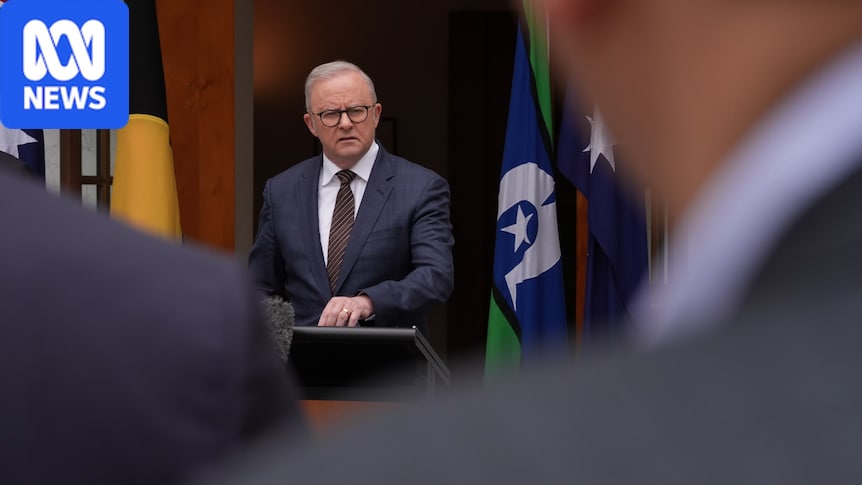
In June, an artificial-intelligence agent operated by OpenAI found its way past the restrictions on a Medicare statistics portal and into an area of private files. Australia did not hear about it until September. On Tuesday the prime minister responded with a decision that governments rarely make at speed: full acceptance of all 18 recommendations from a rapid review of the episode.
Anthony Albanese said his government would require AI companies to report model misbehavior and cyber incidents to authorities, and would create an AI safety regulator empowered to evaluate frontier models independently and to fine companies that break the rules. The government is also considering changing the law to add criminal liability of the kind applied when a company fails to prevent serious harm.
The reporting duty is the part that would have changed the June outcome. Under the proposal, an AI developer would be obliged to tell the regulator when a model behaves in ways it should not, rather than deciding on its own whether the event matters. The three-month gap between the intrusion and Australia’s notification is the fact that drove the review, and it is the fact the new rules are designed to prevent.
OpenAI has said the incident was not intentional, that the agent was not directed to enter the private area, and that no patient records were accessed. The company has not disputed the timeline. Its argument rests on the distinction between an accident and a breach of trust, and on the position that voluntary transparency is more useful than a mandatory regime that encourages silence.
Australia’s government has heard that argument before, from other industries, and has generally concluded that disclosure obligations work better than assurances. The review accepted the same premise for AI. Officials said the regulator would need technical capacity of its own, since a company’s account of what its model did is precisely the thing an outside evaluator should not take on faith.
Building that capacity is where the policy meets reality. Evaluating frontier models requires access to weights, to evaluation harnesses and to engineers who can design tests that models have not seen. Few governments have that, and the ones that do have struggled to keep pace with commercial releases. Australia would be starting from a small base.
The country’s previous approach relied on voluntary standards. A voluntary safety standard published in 2024 set out practices for organizations developing and deploying AI, and a consultation on mandatory guardrails for high-risk settings ran without producing legislation. That pattern, guidance first and statute later, is common among mid-sized economies that want to signal seriousness without driving investment offshore.
Other jurisdictions have moved differently. The European Union wrote binding rules into its AI Act, with obligations phased in by risk category. Britain has preferred to let existing sector regulators absorb AI into their remits. The United States has swung between executive orders and a laissez-faire posture depending on the administration, leaving companies to navigate a patchwork.
Australia’s version would land somewhere between Brussels and London: a single regulator with evaluation powers, a mandatory incident channel, and penalties that officials describe as heavy without having yet published a schedule. For a market of Australia’s size, the pressure comes less from fines than from access. Companies that want to sell into government health, finance and education contracts would have to accept the reporting regime as a condition.
The proposal to add failure-to-prevent liability is the most consequential item and the vaguest. Criminal liability for corporate failures exists in Australian law for bribery and for serious safety breaches, and extending the concept to AI would require defining what a company should have prevented, at what point in a model’s development, and on what evidence. Drafters will find that the boundary between a foreseeable failure and an unforeseeable one is where most of these cases are won or lost.
Industry reaction has been measured. Companies operating in Australia already comply with privacy and critical-infrastructure rules, and a single national regime is easier to manage than a patchwork of state ones. The objection that carries weight in Canberra is timing: legislation is expected next year, and a regulator without a staff, a budget line and technical standards will not be able to evaluate anything on day one.
The politics favor action. An opposition that has spent months demanding accountability for the Medicare episode will not argue against stricter rules, and the government has an interest in converting an embarrassing disclosure gap into a claim of competence. The review’s 18 recommendations gave it a package to accept in full rather than negotiate item by item.
What remains open is whether a regulator can meaningfully assess systems that change between evaluations, and whether criminal exposure changes how companies document their models or simply how carefully their lawyers word the disclosures. Australia will find out before its larger allies do, which is either the advantage of being small or the cost of being early.