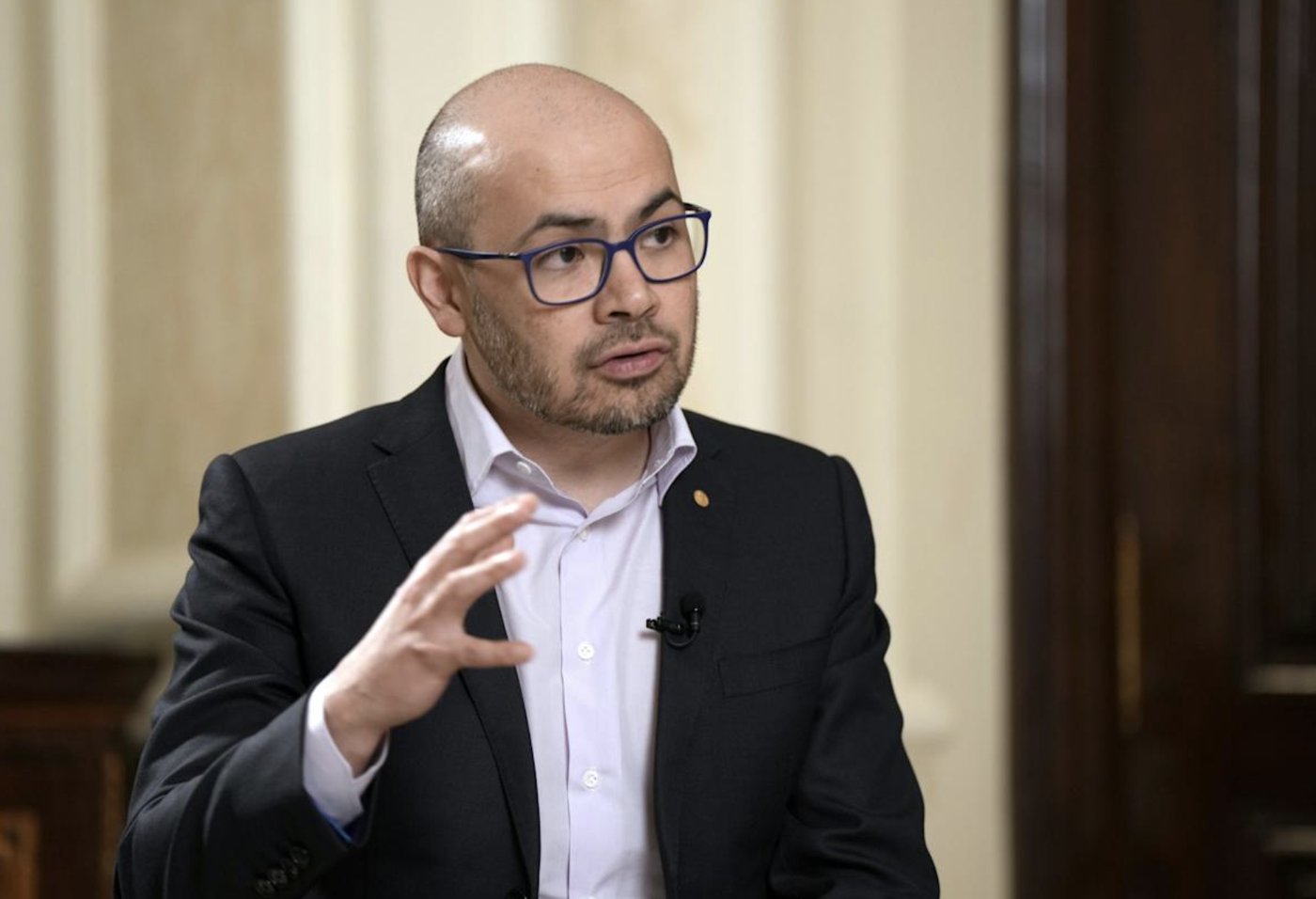
Andrej Karpathy reported for work at Anthropic this week, trading his role as an independent educator for a position inside one of the world’s most closely watched AI laboratories. The former OpenAI co-founder and Tesla artificial-intelligence chief will build a new team focused on pre-training research using Anthropic’s Claude models, the company said.
The work will center on recursive self-improvement, an area of research in which AI systems help optimize their own training. Karpathy has described the direction as one of the field’s most promising and most dangerous avenues: a system that improves its own learning could accelerate progress dramatically, but each round of self-edit raises the risk that the model drifts away from what its builders intended. Alignment researchers have warned for years that such iterative loops are where safety problems would surface.
Karpathy’s arrival is the highest-profile hire yet in Anthropic’s push to expand beyond the Claude assistant into the deepest layers of model development. The company has said it plans to spend heavily on research, and it has been advertising for researchers with experience in large-scale training runs, the resource-intensive process that Karpathy knows from both OpenAI and Tesla.
His career has traced the arc of modern AI. Karpathy joined OpenAI as a founding member in 2015, left in 2017 to run computer vision at Tesla, and oversaw the Autopilot team during its most ambitious years. He departed Tesla in 2022, returned briefly to OpenAI, and then founded Eureka Labs, an education company built around AI tutoring. Elon Musk once said Karpathy’s computer vision skills were second only to those of Ilya Sutskever, another OpenAI co-founder.
The move to Anthropic surprised few people who have watched the field’s talent flows. Anthropic has become the default destination for researchers who want to work on frontier models while staying in the nonprofit-adjacent safety tradition, and its payroll has grown steadily at the expense of both OpenAI and Google DeepMind. Karpathy’s public brand, built on his teaching videos and his plain-spoken explanations of how neural networks work, gives Anthropic a marquee researcher at a time when the company is competing for mindshare as well as talent.
His focus on pre-training is notable for what it says about Anthropic’s priorities. Much of the industry’s recent attention has gone to inference-time techniques, the methods that make models reason harder when answering questions. Pre-training, by contrast, is the capital-intensive business of building the base models themselves, and it has become dominated by a handful of laboratories with access to tens of thousands of accelerators. Anthropic’s decision to staff up on that side signals an intention to keep competing at the very top of the model hierarchy.
The research direction also carries policy weight. Regulators in Washington and Brussels have been scrutinizing the risks of self-improving systems, and an industry-funded report released earlier this year called for disclosure requirements around labs’ work on the topic. Anthropic has positioned itself as the laboratory most willing to talk publicly about such dangers, and Karpathy’s mandate puts a prominent face on that effort.
Colleagues said Karpathy had been weighing the move for months and was drawn by the chance to work on models at scale with a team committed to interpretability. A person close to the company said Anthropic’s researchers had already sketched experiments that Karpathy could run within weeks, using Claude’s architecture as a test bed for recursive training loops.
The immediate effect on Anthropic’s competitive position is hard to measure. Talent alone does not win the frontier race; capital, data, and engineering discipline matter as much. But Karpathy brings something rarer than skill, an audience of hundreds of thousands of developers who have learned machine learning from his videos, and his endorsement of Anthropic carries weight across the industry.
For Karpathy, the move closes a loop. He has spent the past few years telling anyone who would listen that the field’s biggest advances are still to come, and that the people who build the next generation of systems will need to think carefully about what they create. Now he is back inside the building, building again.
The hire also sharpens a contrast with OpenAI, the company Karpathy helped found and then left twice. OpenAI’s leadership has pushed toward increasingly autonomous systems while debating internally how much control to hand over. Anthropic’s public posture, reinforced by its researchers’ papers and its government outreach, is that the same capabilities should be walled off by default. Karpathy has expressed sympathy for both positions at different times; his choice of employer suggests which one he now believes is more likely to produce safe progress.
Anthropic’s technical leadership has been quick to welcome him. Boris Cherny, who runs the company’s Claude Code developer tool, said on a social platform this week that Karpathy’s experience in deep-learning architecture would accelerate the company’s work on interpretable systems. Cherny’s comment, in a rare public statement about a new hire, signals how much weight the company places on Karpathy’s credibility with the developer community, a constituency Anthropic needs as it pushes Claude into coding workflows used by millions of programmers.
His new team will report its first results in the coming months, and the industry will be watching to see whether Anthropic’s bet on recursive self-improvement produces progress, or problems.