The last time Microsoft put an Nvidia chip inside a Surface, the result was the Surface RT, a 2012 tablet that sold so poorly the company wrote off nearly $1 billion in inventory. Fourteen years later, the two companies appear ready to try again.
The Verge reported Friday that Microsoft is preparing to announce Surface devices powered by Nvidia’s N1 family of processors, citing existing leaks and people familiar with the matter. The announcement could come as soon as Computex, the industry trade show that kicks off in Taipei next week, the report said. Microsoft and Nvidia declined to comment.
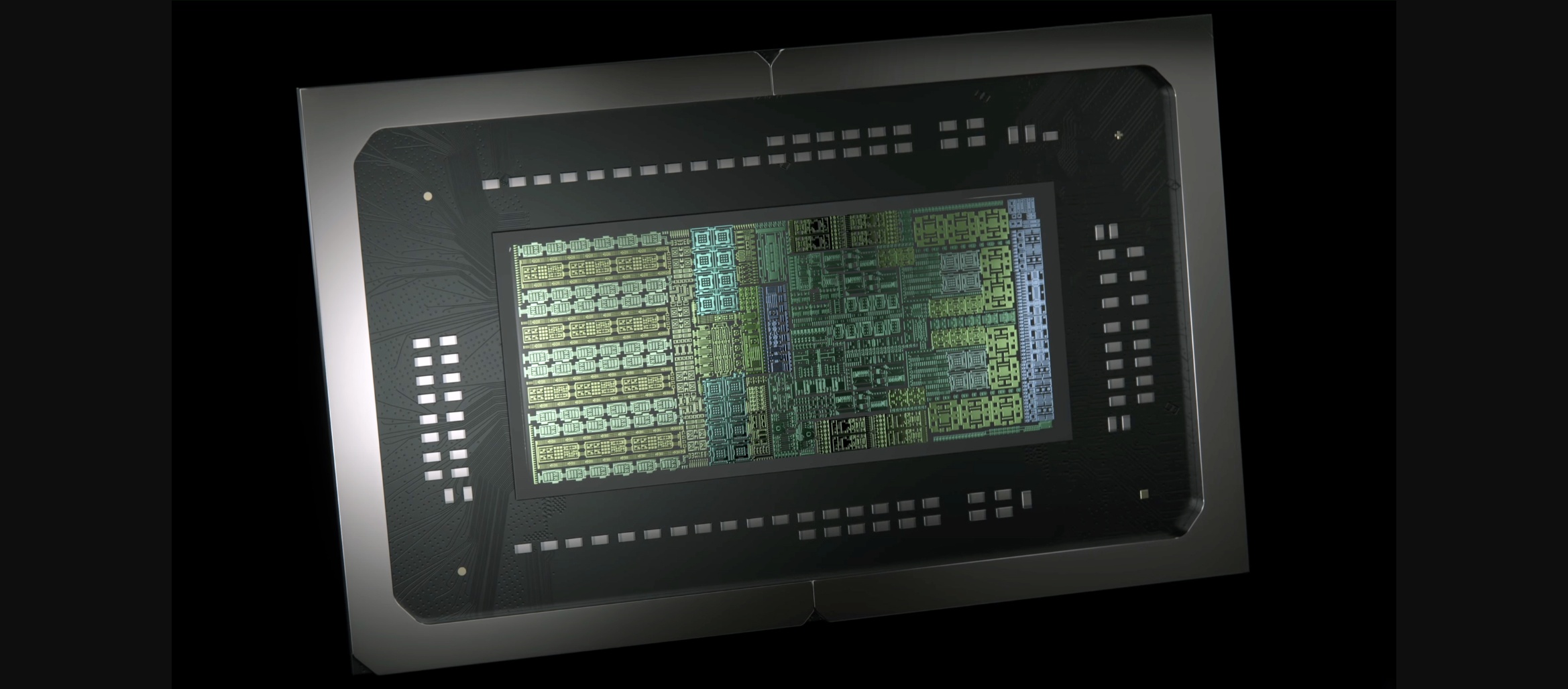
The N1 line is an Arm-based processor family developed with MediaTek, according to technical materials that have circulated in recent weeks. The higher-end N1X pairs a 20-core Arm central processing unit with an Nvidia Blackwell-class graphics chip, linked through Nvidia’s NVLink-C2C interconnect, and supports up to 128 gigabytes of unified memory. A lower-end N1 variant, with fewer cores and a smaller graphics configuration, is aimed at business laptops and productivity machines.
The chips share a silicon foundation with the DGX Spark, the small desktop computer Nvidia introduced for developers working on AI models, according to people familiar with the plans. Repackaged for laptops and officially supported on Windows, the silicon would bring Nvidia’s data-center AI technology to the consumer PC for the first time.
An Nvidia-powered Surface would mark the chip designer’s return to personal computers after more than a decade away. Nvidia last appeared in the category with its Tegra line, which powered a wave of early tablets and smartphones before the company retreated to concentrate on data-center chips, a bet that eventually made it the world’s most valuable company.
The move would put Nvidia directly against Intel and AMD, the two companies that have dominated PC processors for four decades, and against Qualcomm, whose Snapdragon X line has become the leading Arm alternative for Windows laptops. It would also extend a rivalry with Apple, whose M-series chips have redefined expectations for laptop performance and battery life.
For Microsoft, the partnership would be the third attempt to make Windows run natively on Arm. The first ended in the Surface RT debacle, when the software giant discovered that Windows apps written for Intel chips would not run on the machine. The second came with the Surface Pro X in 2019, powered by Microsoft’s custom SQ1 and SQ2 chips built on Qualcomm designs; it sold modestly. The third push, built around Qualcomm’s Snapdragon X line, has gained more traction as app compatibility has improved through Windows’ Prism emulation layer.
The AI wave has changed the calculation. Nvidia’s pitch is that a single chip with a large pool of unified memory can run the kinds of AI models that laptops have so far struggled to handle locally, without sending data to the cloud. The N1X configuration supports up to 128 GB of memory, enough to run models with more than 100 billion parameters on the device, according to the materials.
“Jensen is not going to be happy if they just get data center,” said Tom Mainelli, an analyst at IDC who tracks the PC market. “They want everything on the edge.” He was referring to Nvidia Chief Executive Jensen Huang, who has said the company intends to own every layer of the AI stack.
The Surface line has always been Microsoft’s way of showing PC makers what Windows hardware should look like. A Surface running an Nvidia chip would serve as a reference design for the Windows-on-Arm ecosystem, analysts said, signaling to Dell, HP, Lenovo and Asus that Nvidia silicon is a viable path.
Microsoft’s incentives extend beyond hardware. The company has invested heavily in AI features across Windows, and a fast on-device processor would let those features run more smoothly. Microsoft has also been hedging its dependence on Qualcomm, its main Windows-on-Arm partner, a person close to the company said.
The risks are familiar. Software compatibility remains the biggest question, developers said; even with emulation, some x86 applications run slowly or break entirely. Nvidia has also never shipped laptop chips at the volumes Intel and AMD manage, raising questions about supply and pricing.
Wall Street has already begun to price in the threat. Intel and AMD shares have slid in recent weeks on speculation that Nvidia would enter the market, according to traders. Qualcomm, which had been expected to hold a near-monopoly on premium Windows-on-Arm laptops, could face its first serious competitor.
A formal announcement at Computex would set up a head-to-head with Qualcomm, whose newest Snapdragon processors are also expected to feature prominently at the show. Nvidia’s keynote is scheduled for the show’s opening day, and Microsoft is expected to appear alongside, according to people familiar with the arrangements.
For Nvidia, the PC is the last big device category it has not conquered. For Microsoft, the Surface is the canvas on which it paints the future of Windows. After more than a decade of false starts in Arm computing, the two companies may finally be betting on each other.