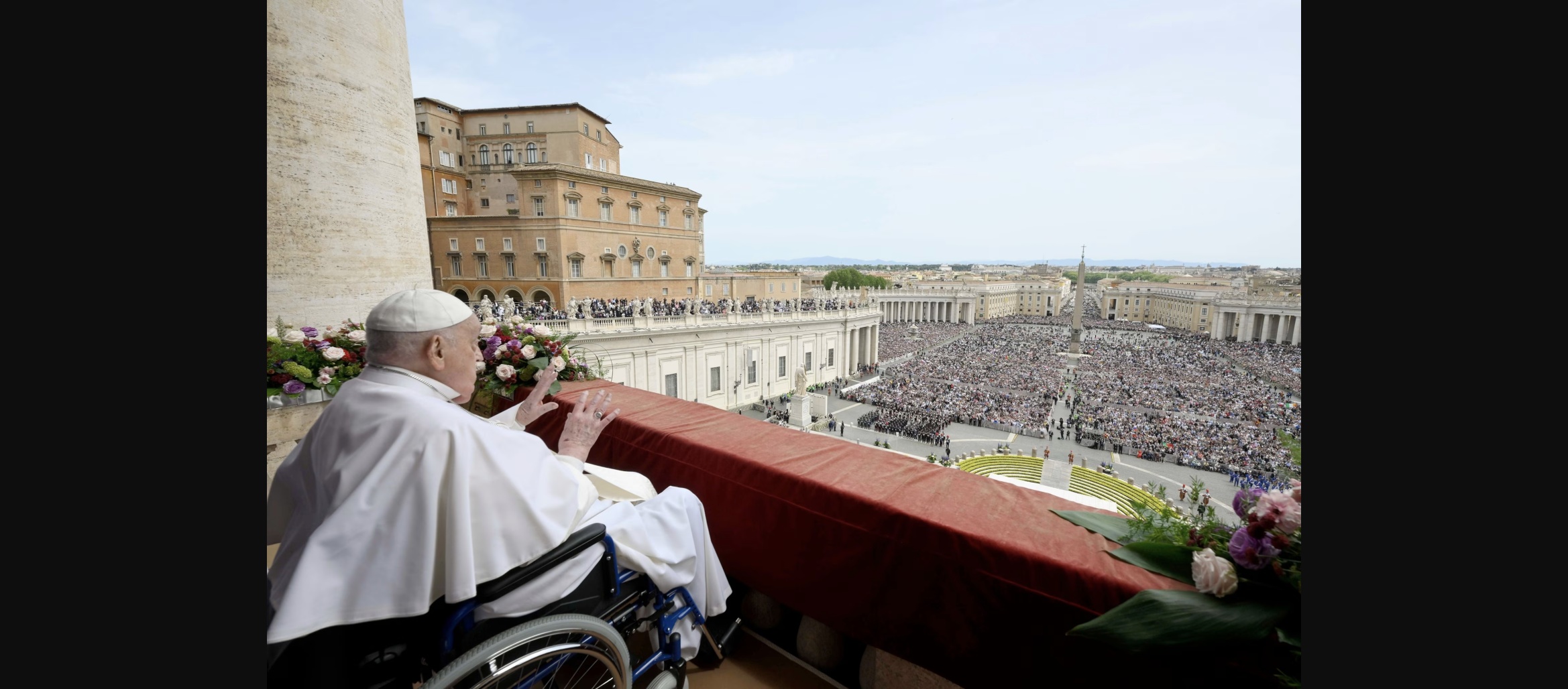
VATICAN CITY — The word Pope Leo XIV chose was “disarm.” Presenting “Magnifica Humanitas,” his first encyclical, in the Vatican’s Synod Hall on May 25, the pope told an audience of cardinals, members of the Roman Curia, reporters and invited guests that artificial intelligence must be disarmed before it weakens human relationships, critical thinking and peace itself.
“Artificial intelligence needs to be disarmed,” Leo said. “The word is strong, I know, but deliberately chosen because this moment needs words capable of attracting attention, awakening consciences and indicating paths forward for humanity.”
The 82-page document, titled in full “On Safeguarding the Human Person in the Time of Artificial Intelligence,” is the most forceful statement yet from a papacy that has made the technology a defining theme. It equates the unchecked worship of technology with spiritual emptiness, and Vatican-watchers said its tone is sharper than expected. The pope framed the encyclical around a warning about “technological messianism” — the belief that machines will solve what politics, morality and faith cannot. “Peace, not merely the absence of war, is justice at work,” he said. “But when technology weakens our critical sense, peace itself is at risk.”
The document builds on the work of his predecessor. Pope Francis, who died in 2025, spent his final years warning about what he called the “technocratic paradigm” — the tendency to let the logic of efficiency, control and profit shape personal, social and economic decisions. Francis denounced it in “Laudato Si’,” his 2015 encyclical on the environment, and pressed the Group of Seven in 2024 to keep humans in control of weapons and other consequential AI systems. Leo’s encyclical cites those warnings and extends them, arguing that technology is not a neutral tool and that the most powerful technology is not necessarily the best.
The document takes aim at several targets: autonomous weapons, which Francis had called for banning outright; the concentration of AI power “among a handful of corporations,” which the encyclical argues concentrates moral authority as well; and labor markets, where automation threatens human dignity. It also notes that AI’s environmental cost — the energy and water consumed by data centers — offends the church’s teaching on creation.
On accountability, the pope is specific. “A more moral AI is not enough if that morality is determined by a few,” the encyclical says. It calls for shared ethical standards, independent oversight, legal frameworks and user education, and it urges clarity about responsibility at every stage of development. The document stops short of endorsing a particular regulatory model, but officials said the Vatican would now engage governments directly on the mechanisms.
The Holy See’s engagement with the tech industry predates the encyclical. In 2020, the Vatican organized the Rome Call for AI Ethics, a pledge that Microsoft, IBM and Cisco signed, committing to principles of transparency, inclusion and accountability. The encyclical goes further, framing AI as a matter of peace and human dignity rather than corporate ethics — a shift that signals the church’s next phase of engagement.
Leo brought a personal record to the subject. Elected in 2025 after the conclave that followed Francis’s death, the Augustinian pope is a trained mathematician who has warned priests against using AI to write homilies. He created an in-house study group on AI in May, before the encyclical’s release, to track the technology’s development and advise the church. Deepfakes and disinformation are a particular concern; the search for truth, he has said, is fundamental to his religious order’s spirituality.
The encyclical’s significance extends beyond the church. Religious leaders rarely write about model architectures, and the Vatican is positioning itself as a moral counterweight to the companies building the technology. Notre Dame philosophy professor Meghan Sullivan, who directs the university’s ethics institute, called the church “the adult in the room” in debates about how AI will be integrated into society. “For sure, the pope is going to be one of the most forceful advocates for human dignity in these discussions,” she said.
Whether the document changes anything in Silicon Valley is another question. The tech industry has learned to sign ethics pledges; the Rome Call’s signatories continue to build and sell AI systems, and none of the major labs issued a public statement in the days after the encyclical’s release. But the document gives governments cover to regulate. European policymakers have already cited Vatican statements in AI legislation debates, officials said, and the encyclical reframes the conversation from what AI can do to what it should do.
The pope’s closing message to the tech companies was unambiguous. “AI can imitate and simulate the person, but it does not possess a moral conscience, empathy, or affective, relational or spiritual capabilities,” the encyclical says. The most powerful technology, it warns, is not necessarily the best.
For a debate long dominated by engineers and executives, the Vatican’s entry changes the register. When a religious leader writes about the spiritual dangers of technology worship, the subject has become public property in a way Silicon Valley no longer controls. The church is asking a question the industry has not fully answered: not whether AI works, but what it is for.