The memo went out on a Thursday, and by the end of the day, hundreds of employees at one of Israel’s best-known software companies knew their jobs were gone. Wix, the website-building company, confirmed it is cutting as many as 1,000 employees, about 20 percent of its workforce in Israel and abroad, after posting a loss in the first quarter. Chief Executive Nir Abrahami cited two reasons. The first was the shekel, which has gained more than 20 percent against the dollar in a year and reached a 33-year high, squeezing companies that earn in dollars and pay in local currency. The second was AI.
Abrahami said the fast evolution of AI capabilities and the need to shift to AI-native ways of working had made parts of the current organization obsolete. The phrasing, reported by The Times of Israel, was careful, but the message was clear: the company believes it can do more with fewer people, and the technology that lets it do so is improving by the quarter. Wix is not alone. Rapyd, the fintech unicorn, said it is restructuring around a business model in which AI runs the company, and its chief executive, Arik Shtilman, told employees in a letter that Rapyd is now a company operated by AI. “This is not a future goal; it is our current reality,” Shtilman wrote, announcing a reorganization that will leave a more focused team in place. Amdocs, the Israeli-founded software and communications firm, is preparing to cut about 10 percent of its global workforce, or as many as 3,000 people, according to Hebrew media reports, as its new chief executive redesigns the operating model around the AI era.
The wave extends beyond Israel’s homegrown companies. Dozens of employees at Meta’s Israeli office received dismissal notices this month as part of the social media giant’s plan to cut 10 percent of its global workforce to offset billions in AI infrastructure spending. AI21 Labs, an Israeli AI startup, cut about 60 percent of its staff in a restructuring that will leave mostly research and product development teams to work on its agent management system. Layoff-tracking services show the Israeli tech sector shedding thousands of jobs in a matter of weeks, and industry executives say more cuts are coming.
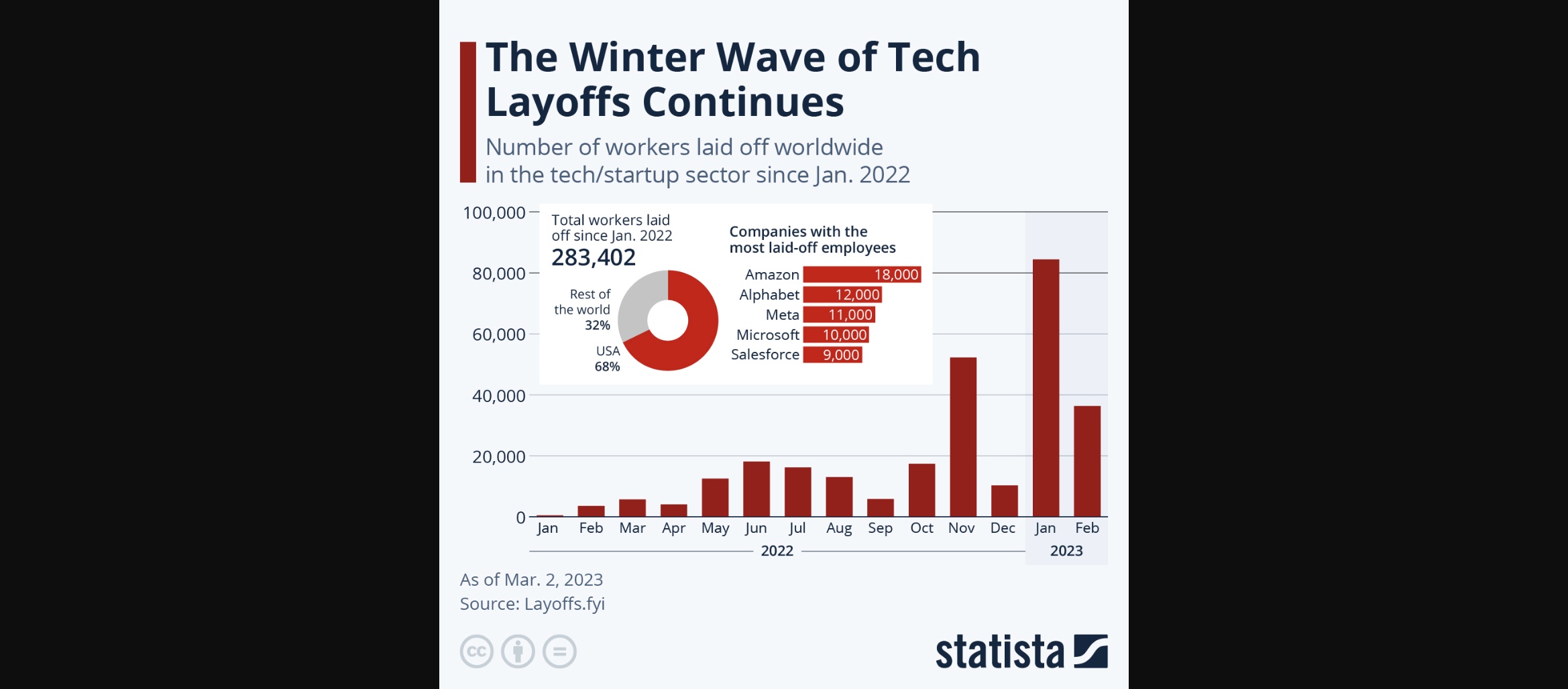
The defining feature of this wave is who is doing the cutting. This is not the startup winter of 2022 and 2023, when early-stage companies with no revenue shrank to survive. The current cuts are at mature companies with profitable products, and the stated reason, repeatedly, is that AI is changing how work gets done. Tal Aspir, head of the AI lab at consulting firm BDO, told The Times of Israel that the current wave reflects a broader transformation in the technology sector rather than a cyclical slowdown. For years, growth was measured by rapid hiring and expansion; today, the focus has shifted to operational efficiency and the ability to scale through technology rather than headcount, and AI is accelerating the transition.
The data supports the interpretation. A survey by the Israel Innovation Authority found that 50 percent of tech companies now say AI has had a substantial impact on their layoff plans, up from 29 percent in December. Yet only 7 percent of companies cited AI as the main reason for workforce reductions, with business efficiency measures still the primary driver. The survey also showed a stark divide within the industry: software companies laid off an average of 6.6 percent of their workforce in the first half of the year, while hardware companies cut just 1.1 percent. Semiconductors, computing infrastructure and defense technology are hiring; the software companies that build the applications AI can now write are shrinking.
That divide is the most striking signal. If AI’s first big employment effect is concentrated in software engineering and adjacent roles, then the companies that build software are becoming the first test case for whether AI displaces its own workforce. Israeli tech, with its heavy concentration of software companies, global customer bases and efficient labor market, is showing the pattern in compressed form. The shekel complicates the picture, since currency strength alone would have forced some cost cutting, but executives cite AI alongside currency, not instead of it.
The human cost is real and concentrated. Medium-sized companies, employing between 50 and 200 people, accounted for nearly half of the firms that carried out extensive layoffs of at least 5 percent of their workforce, according to the survey. Those are the companies least able to absorb the shock and the employees least likely to have the networks that large-company layoffs provide. The Innovation Authority warns that a software engineer leaving a company cannot always move into a hardware or semiconductor role, because the required skills differ, and that even when total employment holds steady, individual workers can face genuine difficulty reentering the market.
The question now is whether the pattern repeats elsewhere. Israel’s tech sector has historically been a leading indicator, small enough to show trends early and global enough to reflect forces that will hit larger markets. The executives making these cuts are not talking about a downturn; they are talking about a reorganization of work around AI, one that assumes the technology will keep improving and that companies which do not reorganize will be unable to compete. If they are right, the Israeli wave is a preview of labor market changes that will spread across the global software industry. If they are wrong, the companies that cut deepest will have traded their workforce for a productivity bet that did not pay off. The layoffs themselves, either way, are already done.