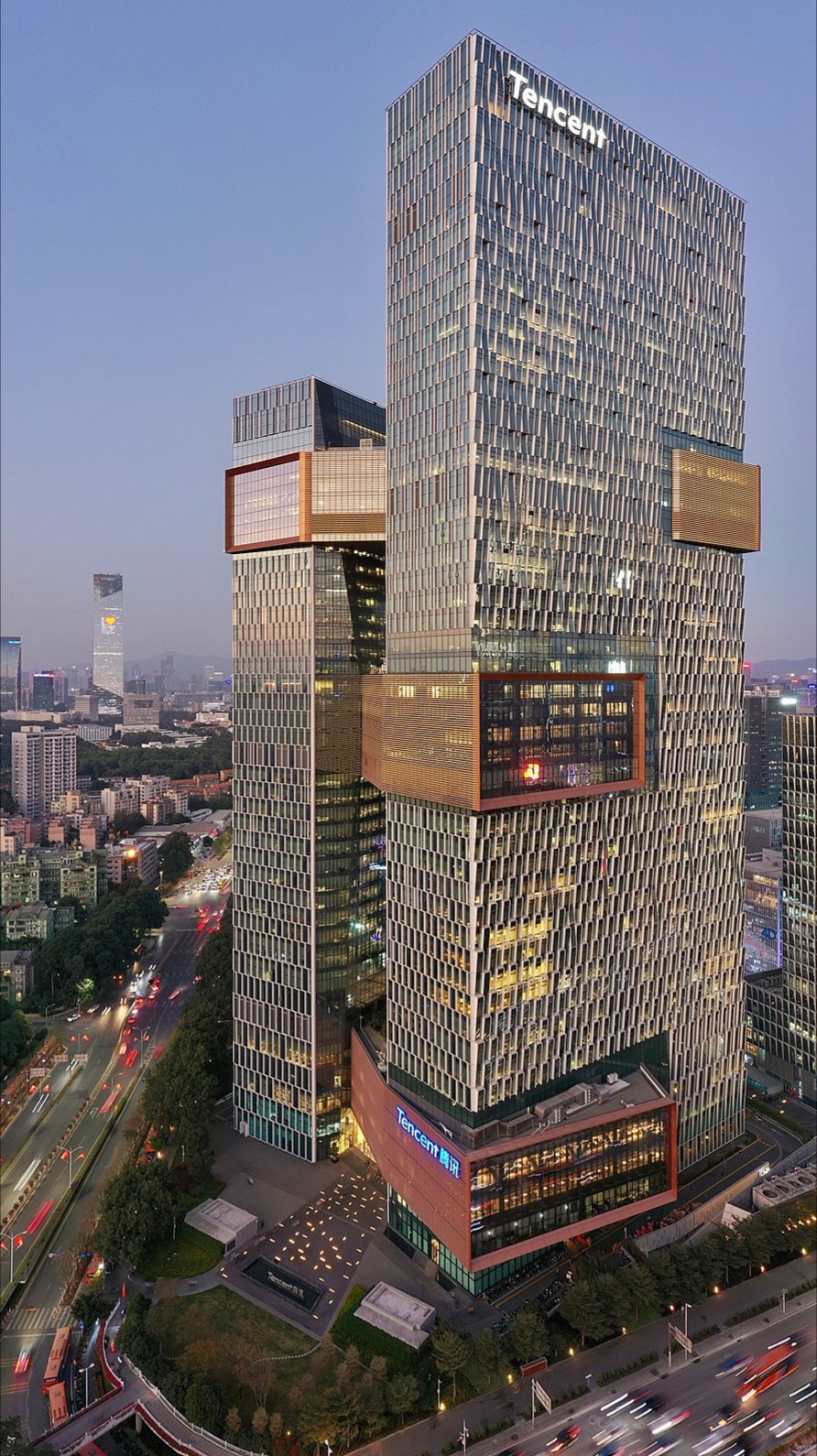
HONG KONG—The announcement hit the exchange before the market opened: Tencent Holdings had priced $2.45 billion of dollar notes and 15 billion yuan of renminbi notes, roughly $4.5 billion in total. On the same day, the company disclosed it had spent HK$501 million, about $64 million, buying back 1.08 million of its own shares.
The pairing of a large debt raise with a share buyback, both announced June 10, is a statement of intent. Tencent is stockpiling cash for the AI buildout it has made central to its strategy, while using its buyback program to support a share price that has been one of the strongest in Asia. Financing and repurchase in parallel, as analysts put it, is how a company both loads its arsenal and defends its valuation.
The notes were sold under Tencent’s global medium-term note program, in four tranches. Dollar notes: $1.75 billion of 10-year paper at 5.00%, and $700 million of 20-year paper at 5.60%. Renminbi notes: 11 billion yuan of 10-year bonds at 2.50%, and 4 billion yuan of 30-year bonds at 3.10%. The coupons show why Tencent issued in both currencies: its dollar debt costs roughly twice its renminbi debt, a spread that reflects both China’s interest-rate environment and the depth of the offshore renminbi market.
The proceeds, net of fees, will amount to about $2.43 billion and 14.94 billion yuan, and Tencent said it intends to use them for general corporate purposes, including refinancing. The company’s outstanding notes under the program will rise to roughly $22.18 billion after the new issuance settles on June 16.
The borrowing is cheap by the standards of Tencent’s alternatives. The company generates more than 100 billion yuan of free cash flow a year, and its balance sheet has long been among the strongest in technology. But the note sale locks in financing at rates below what equity would cost, and the tenors, stretching to 2056, let Tencent match long-duration assets with long-duration liabilities.
The buyback is the other half of the strategy. Tencent has repurchased shares steadily for years, and the HK$501 million spent on June 9’s session continues a program that has made the company one of the largest buyers of its own stock in Asia. The company’s shares have rallied hard, and the buyback, while small in relation to the company’s market value, signals management’s view that the stock remains attractive.
The capital deployment is aimed at a specific target: artificial intelligence. Tencent has said it will raise spending on AI infrastructure this year, and its WeChat app, the gateway to more than a billion users, is being rebuilt around AI features. The company has also been placing bets across the AI ecosystem, including a reported interest in DeepSeek’s financing round, and its cloud division is competing for enterprise AI workloads against Alibaba and Huawei.
The timing of the raise reflects market conditions. Dollar funding costs for Chinese technology companies have fallen from the peaks of recent years, and investor appetite for high-quality Asian credit has been strong. The renminbi tranche, priced at 2.5% for ten years, drew particular interest from offshore investors seeking yield in a currency they expect to remain stable.
Analysts see the deal as part of a broader pattern across Chinese technology. Alibaba has announced one of the largest AI spending programs in the world, and ByteDance, Baidu and others are funding data-center expansion. Tencent’s borrowing adds to a wave of issuance that is reshaping the capital structures of China’s biggest companies, which had spent the early part of the decade paying down debt and buying back shares.
There are risks. The notes are unsecured obligations of the company, and the 30-year renminbi tranche in particular locks in a liability that will outlast most of Tencent’s current products. Regulators in China have watched share buybacks and offshore borrowing closely, and any tightening of the rules could complicate future transactions. For now, though, the market’s response has been positive, with the notes pricing at the tight end of guidance.
The reception from credit investors suggests the market shares that confidence. The dollar tranches priced with order books several times oversubscribed, according to people familiar with the deal, and the renminbi notes drew demand from banks and asset managers across Asia and the Middle East. Tencent’s credit rating, among the highest of any Chinese company, keeps its borrowing costs well below those of most peers, and the company has signaled it will remain a regular visitor to the debt market as its AI spending grows.
The deal also says something about Tencent’s confidence. A company that borrows $4.5 billion while buying back stock is betting that its AI investments will pay off, that its cash generation will continue, and that its share price will keep rising. The combination of a war chest and a floor under the stock is the signature move of a management team that has been here before: Tencent has used exactly this playbook in past cycles, and it has worked.