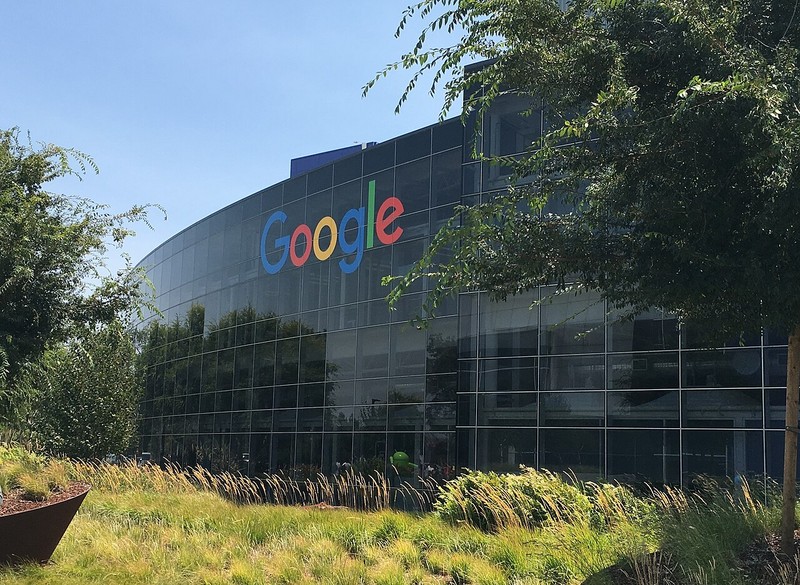
Alphabet has completed the largest equity offering in its history, raising roughly $85 billion to fund the data centers, chips and power that its AI push requires. The capital is now in hand, and the spending it finances is already underway.
The raise was announced June 1 and upsized within 48 hours, from an initial $80 billion to about $84.75 billion, after the underwritten block was oversubscribed. It has three parts: a roughly $30 billion underwritten public offering of Class A and Class C stock, a $10 billion private placement to Berkshire Hathaway in two equal $5 billion tranches, and a $40 billion at-the-market program that will sell shares gradually, beginning in the third quarter. Class A shares in the offering were priced at $355.20; Class C shares at $351.80.
Investors absorbed the dilution with some grumbling. Alphabet’s shares fell about 4% on June 2, the day after the plan was announced, a direct measure of how the market priced the arrival of tens of billions of new shares. Management did not treat the reaction as a reason to pause. The dilution, in the company’s framing, is the price of avoiding borrowed money: Alphabet chose to fund the largest infrastructure program in its history with equity rather than debt, and executives have said they do not intend to change that posture.
The scale of the program is the story. Alphabet’s 2026 capital expenditure guidance now sits between $180 billion and $190 billion, raised from an earlier $175 billion to $185 billion range after the company closed its acquisition of Intersect in March. The figure is roughly six times what Alphabet spent in 2022 and about double its 2025 outlays. First-quarter capital spending reached $35.7 billion, split roughly 60% to servers and 40% to data centers and networking equipment, a run rate that already exceeds $140 billion annualized before the second-half acceleration implied by the guidance. Management has told investors that 2027 spending will increase significantly again, with no ceiling communicated.
The demand side explains the urgency. Google Cloud’s backlog, revenue contracted but not yet recognized, roughly doubled in a single quarter, from about $240 billion to approximately $460 billion, according to figures cited by analysts. Sundar Pichai, Alphabet’s chief executive, has said demand for compute is “meaningfully exceeding our available supply.” The company is selling TPUs directly to enterprise customers for the first time and has introduced an inference-optimized chip, and it is guaranteeing data centers for Anthropic’s buildout as part of a broader financing arrangement with Broadcom and Wall Street investors.
The timing carries a message about how the AI buildout is being paid for. Three of the companies at the center of the AI boom, SpaceX, OpenAI and Anthropic, are pursuing public listings or have completed them, tapping the equity market for growth capital. Alphabet, which already trades, chose to sell stock directly in the secondary market rather than spin off businesses or restructure. The decision says the company intends to fight the AI war with its own balance sheet, on its own timeline, without depending on a pricing window that it does not control.
The offering was structured to minimize disruption to a stock that trades at some of the highest multiples in the index. The at-the-market component gives Alphabet the option to dribble shares into the market over a year or more rather than dumping them at once, and the Berkshire placement provided an anchor buyer for the largest single block. The company also issued mandatory convertible preferred stock, a hybrid that defers dilution until conversion. The result is a raise engineered to be absorbed slowly, even as its purpose, spending $180 billion to $190 billion in a single year, could hardly be faster.
The market context has shifted since the raise was announced. Alphabet’s stock has recovered the June dip, and the offering’s size now looks like part of a pattern rather than an outlier: Amazon arranged $31.5 billion in loans and bonds within 48 hours this month, and Meta is exploring an equity raise of its own. The four largest American technology companies are on track to spend close to $700 billion on AI infrastructure this year.
The raise also settles, for now, the question of how Alphabet will pay for the buildout without fracturing its business. The company considered and rejected options that would have changed its structure: spinning off the cloud business, hiving off infrastructure into a separate entity, or selling stakes to sovereign funds. Instead it chose the most conventional tool available, selling its own stock, and the choice has become a template for peers. Analysts said the decision to absorb dilution rather than restructure reflects confidence that the operating businesses will compound faster than the share count grows, a bet that the market will test quarter by quarter.
What the money buys is capacity that arrives over years. Servers ordered now come online in quarters, and data centers take longer still. Alphabet’s bet is that the demand visible in its backlog today will still be there when the buildings are full. The $85 billion, in that sense, is not a bet on this year’s earnings. It is a bet on the shape of the decade, funded in stock because stock is what the company has in abundance.