
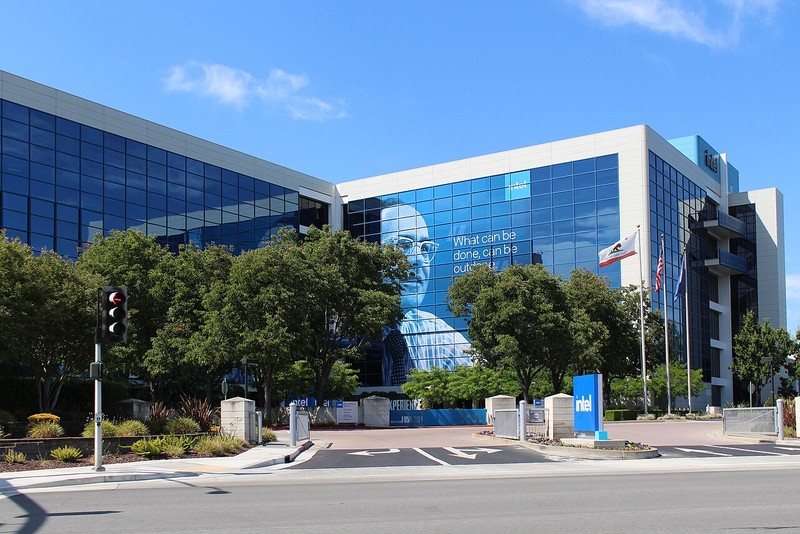
Fourteen months ago, Intel’s stock traded near $11 and the company’s future was the subject of an open debate about whether it would survive as a chip designer, a foundry or a holding of leftover assets. On June 12, shares traded around $83, a gain of roughly 652% since Lip-Bu Tan took over as chief executive in March 2025.
The rally has a scorecard behind it. Intel says its 18A process, the advanced node it needs to compete with Taiwan Semiconductor, moves to volume production in October. The company has secured a foundry order to make Apple’s entry-level M-series chips, according to people familiar with the matter, and it has taken an order for Google’s TPUs exceeding three million units. On three fronts at once, advanced process, external foundry customers and AI chips, Intel is no longer defending; it is attacking.
Tan, the former Cadence Design Systems chief executive who joined Intel’s board in 2024 and took the top job a year later, has run the company as a turnaround, cutting costs, tightening capital spending and pushing the foundry business to the center of the strategy. His early messaging treated 14A, the node after 18A, as Intel’s primary external offering. That has shifted: at a Morgan Stanley conference in March, chief financial officer David Zinsner said Tan now sees 18A as a node to offer to outside customers, and Intel introduced an enhanced variant, 18A-P, with early wafers already running in the fab.
The Apple deal, if it closes on the terms reported, would be the foundry’s biggest external win since Intel began offering manufacturing services. Apple is preparing to qualify Intel’s 18A process for its lowest-end M-series processors, the chips that go into MacBook Air laptops and entry iPads, as a second source alongside Taiwan Semiconductor, according to people familiar with the plans. Initial products could land as early as 2027. Apple has taken Intel’s 18A process design kit and is testing it, the people said.
The Google order is larger in volume. Intel’s fabs will produce more than three million TPUs for Google’s AI infrastructure, according to a person familiar with the arrangement, a commitment that validates the foundry’s claims about its manufacturing capacity. Intel is also co-designing a custom chip with Google, an infrastructure processing unit announced in April.
The financial picture is improving from a low base. The foundry business has lost more than $10 billion a year for the past two years, and external foundry revenue was just $547 million in 2023, $159 million in 2024 and $307 million in 2025, much of it from U.S. government defense contracts. The new orders, if they convert into production, would be the first large commercial customers the foundry has signed. Bank of America analysts noted that Intel’s shares have gained about 436% over the past twelve months, a move that prices in much of the turnaround before it is visible in the financial statements.
The market backdrop helps. AI inference workloads, which run constantly rather than in training bursts, need CPUs alongside GPUs, and Tan told analysts on the earnings call that the CPU-to-GPU ratio in AI systems, once about one to eight, is trending toward one to one. That shift pulls demand toward Intel’s core products at the same time the foundry wins arrive.
Nvidia’s decision to invest $5 billion in Intel, announced this month, added a layer of credibility. The two companies, rivals in parts of the chip market, are exploring whether Nvidia can use Intel’s fabs for some production, according to people familiar with the discussions, a hedge against the concentration of advanced manufacturing at Taiwan Semiconductor.
The turnaround also has a geopolitical tailwind. Washington has made advanced chip manufacturing in the United States a strategic priority, and Intel is the only American company that can plausibly build leading-edge chips at scale on American soil. Government contracts for defense-specific production have kept the foundry’s external revenue positive through the lean years, and policy support, in the form of CHIPS Act subsidies and procurement preferences, gives Intel’s customers a reason to qualify its process even when the economics are not yet the cheapest. Analysts said the Apple and Google orders, if they hold, would convert that policy tailwind into commercial reality.
The risks remain real. 18A has not yet proven its yields at scale, and foundry customers are unforgiving about cost and defect rates. Apple has walked away from second-source relationships before. The stock, at $83, trades well above the levels justified by Intel’s current earnings, and any slip in the October production schedule would hit the story hard.
For Taiwan Semiconductor, the implications are clear. A second advanced foundry with a credible process, real customers and American government backing changes the arithmetic of the chip supply chain. Intel’s rally is a market verdict that the company’s bets are working. The production line in October will be the first test of whether the verdict survives contact with reality.



