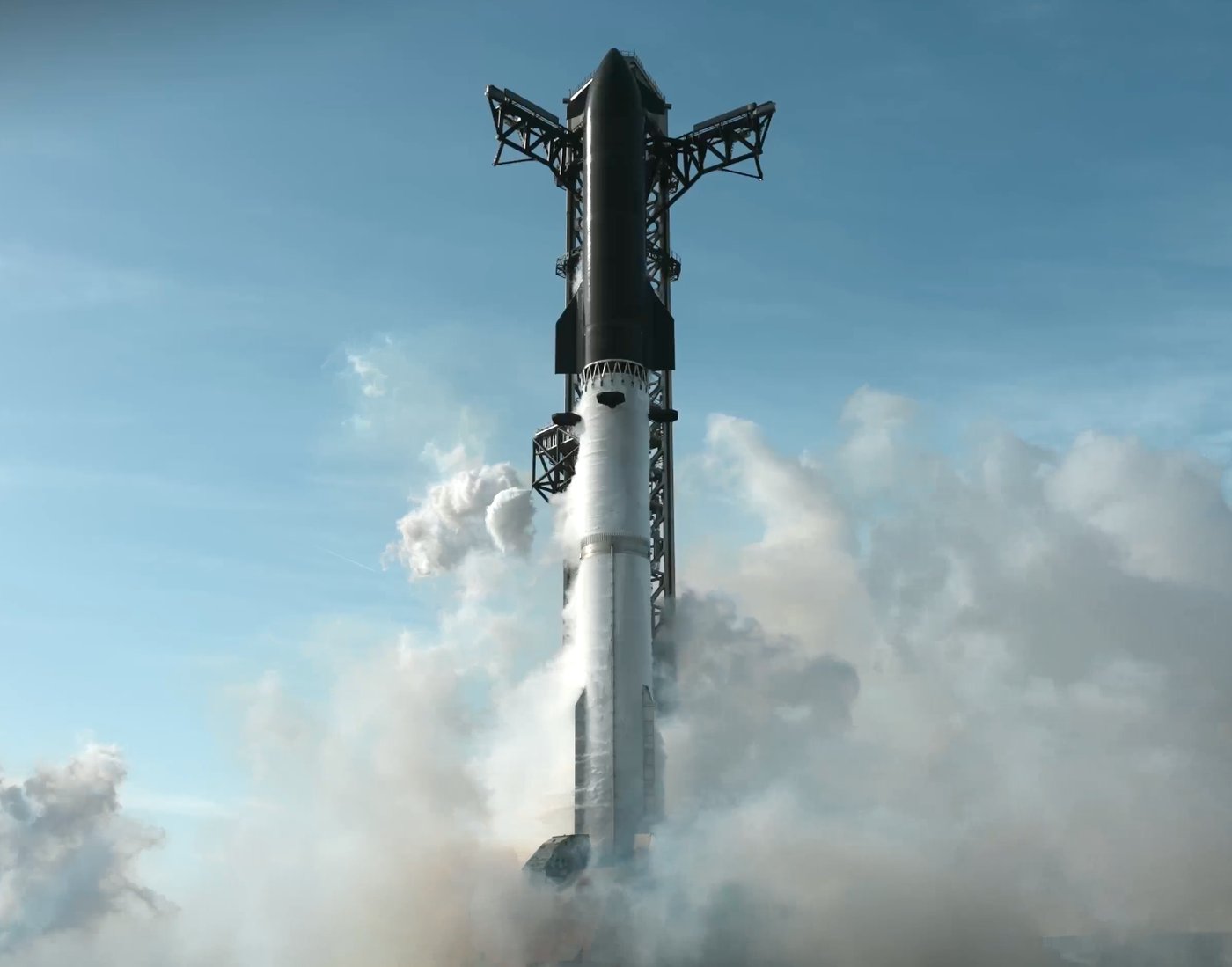
The booster was supposed to slow down, hover over the Gulf of Mexico and splash down under control. Instead, on July 24, the Super Heavy stage of SpaceX’s Starship came down faster than planned, and the impact tore the vehicle apart. The failure capped an otherwise successful 13th test flight of the world’s largest rocket — the first major launch since SpaceX’s record-breaking public offering in June.
The mission achieved its primary objective: deploying the first batch of third-generation Starlink satellites into orbit. The redesigned Starship V3 upper stage performed its simulated landing maneuver after releasing the payload, a demonstration of the precision the company needs for eventual recovery. The booster, however, failed to relight all the engines required for its landing burn, exploding on contact with the water.
It is the second consecutive problem with the V3 booster. On the first V3 flight in May, the booster failed as it separated from the upper stage. Friday’s flight was the second attempt at the 13th launch overall; the first, on July 16, was aborted immediately after ignition following multiple engine failures. SpaceX said it replaced six engines before Friday’s launch to address the problem.
The results were closely watched by Wall Street. SpaceX went public in June in the largest IPO in history, and its shares have traded down from a peak above $200 to $115 at Friday’s close. In after-hours trading following the booster failure, the stock fell another 2 percent before paring losses. The public market has yet to fully embrace the company’s fly-fast-and-break-things development model.
Starship’s trajectory matters more than its stock price in the near term. The vehicle is central to NASA’s Artemis program, where it is slated to serve as the lunar lander, and to Starlink’s next phase — the V3 satellites deployed Friday are too large for the Falcon 9 rocket that has built the constellation so far. Every successful flight advances both programs.
The V3 satellites represent a step change in the network’s economics. With more bandwidth per satellite and greater power, they let Starlink serve more customers at lower cost, the revenue engine that funds SpaceX’s other ambitions. Analysts said the deployment validates the design, which had previously only flown on ground tests.
Recovery remains the unfinished engineering problem. SpaceX has caught Super Heavy boosters with its tower-mounted mechanical arms on earlier versions of the vehicle, but the redesigned V3 hardware has yet to complete a successful return. The company said it is preparing the next tower-catch attempt, and Elon Musk has indicated an attempt to catch the upper stage at the launch site could come as early as the next flight.
The test program follows a rhythm the company calls fly, fail, fix. Each flight exercises new hardware, collects data and informs the next iteration. The approach has produced the fastest development cycle in the history of rocketry, but it also produces public failures that spook investors and regulators alike.
Starbase, the company’s South Texas launch site, is central to the program’s cadence. A second launch pad, designed to fuel Starship faster and adapted to the V3 vehicle’s geometry, went into service this year. Rapid turnaround between flights depends on both pads, since orbital missions will eventually require multiple tanker launches in close succession for refueling demonstrations.
The stakes extend to Artemis. NASA’s timeline for returning astronauts to the Moon depends on Starship demonstrating orbital refueling — a capability that has not yet been attempted. Each test flight that reaches orbit brings that demonstration closer, which is why the upper stage’s clean performance on Friday carried significance beyond the satellite deployment.
SpaceX said the upper stage encountered no issues on its way to deploying the Starlinks, a contrast with the May flight, when it lost an engine. The heat shield performed during reentry, and six Starlink satellites captured images of the spacecraft during its descent, transmitting them after splashdown.
The booster failure will be studied in the coming weeks. SpaceX typically identifies a root cause, implements a fix and schedules the next flight within months. The company’s engineers have said the V3’s larger, more powerful Raptor engines are harder to relight in flight than their predecessors, a problem they have been working on since the first V3 launch.
For Starlink customers, the constellation’s growth has been visible in performance. The V3 satellites begin service gradually, joining thousands of operational spacecraft already in orbit. The business remains Starlink’s cash engine, funding Mars ambitions that generate no revenue at all.
The broader question for SpaceX is whether the public market can tolerate the development model. Private investors accepted failures as the cost of progress; public shareholders have historically punished them. Friday’s after-hours decline suggests the tension is real, even as the company’s fundamental firsts keep piling up.
Musk, who remains SpaceX’s largest shareholder, has shown little appetite for slowing the test cadence. The next flight is expected within months, with the booster catch attempt back on the agenda. In the company’s calculus, each failure is tuition — and the curriculum is the most ambitious rocket program ever attempted.