
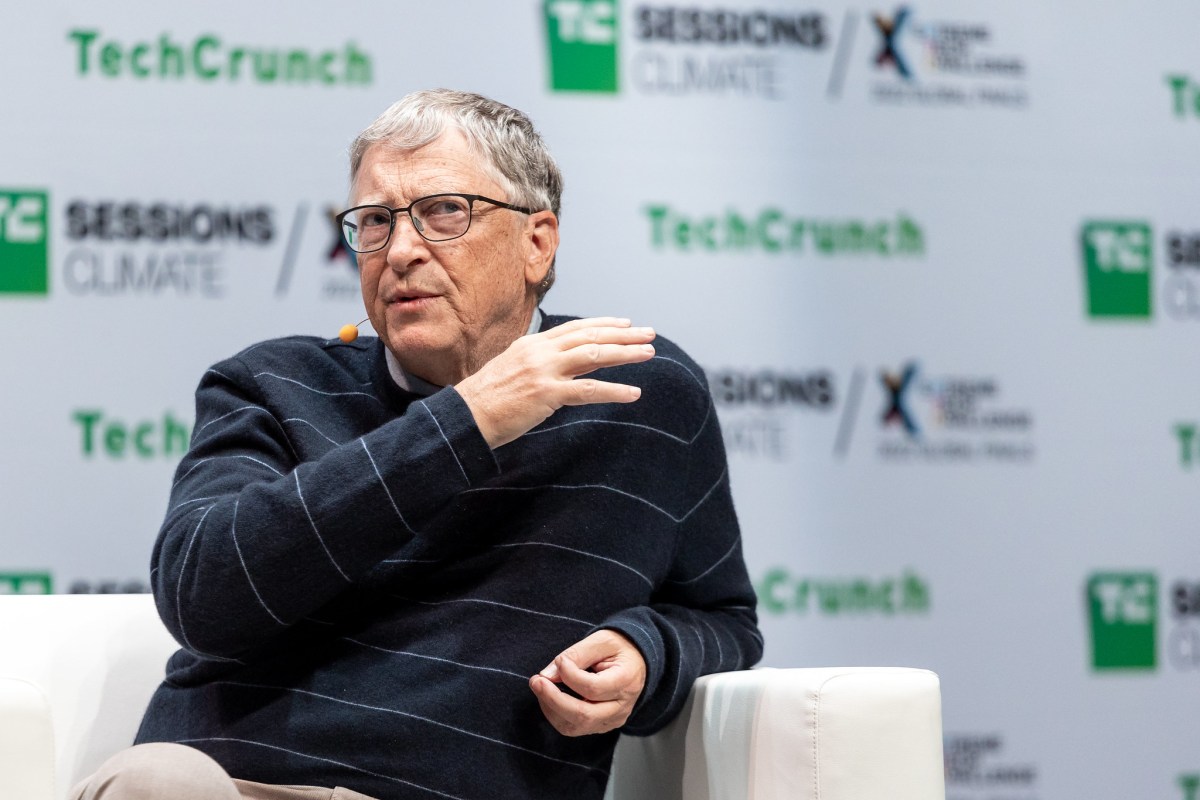
Bill Gates returned on Aug. 26 to an idea he first floated more than a decade ago, proposing that governments tax the robots that replace human workers and create a class of “Human Reserved” jobs to cushion the impact of AI on employment. In an interview, the Microsoft co-founder said the technology that is now being deployed across factories, offices, and call centers makes the proposal more than a thought experiment. It is becoming, he argued, a question of policy design.
Gates first raised the robot tax in 2014, when industrial automation was spreading through manufacturing and the term “artificial intelligence” was still mostly confined to research labs. The idea was met with skepticism, including from economists who said taxing productivity was self-defeating. A decade later, with generative AI writing code, answering customer calls, and processing documents, Gates said the conversation has changed. “The question is not whether these tools displace work,” he said in the interview. “It is what we do with the people whose work they displace.”
The “Human Reserved” concept is the newer part of the proposal. Gates envisions a category of jobs that are deliberately kept for human workers, in the way national parks are reserved for conservation, roles in caregiving, education, community services, and other areas where the presence of a human matters as much as the output. Governments, he suggested, could fund these positions the way they fund other public goods, and could structure taxes on automation to pay for them.
The proposal lands at a moment when the debate over AI and jobs has shifted from abstract worry to concrete experience. Companies across industries have announced layoffs tied to automation, and studies have shown AI tools changing the composition of work in white-collar fields that were once considered safe. At the same time, unemployment rates in most developed economies remain low, and economists are divided over whether AI will be a net creator of jobs or a net destroyer of them. Gates’s intervention is an attempt to steer that debate toward institutional answers.
The mechanics of a robot tax are the subject of fierce disagreement. Some proposals would tax the capital equipment that automates work, effectively taxing productivity gains. Others would tax the profits of companies that replace workers, or fund transition programs out of general revenues. Critics argue that taxing automation would slow the adoption of technology that makes economies richer, and that the better answer is education, retraining, and a stronger social safety net funded by the broader gains AI produces.
Gates’s framing sidesteps part of that debate. By arguing for reserved jobs as well as taxes, he is making a claim about the value of work itself: that employment provides identity, structure, and social connection in ways that a universal basic income check does not. He has been careful not to endorse a single mechanism, saying instead that governments should experiment, that different countries will find different answers, and that the goal is to keep human beings attached to the economy rather than surplus to it.
The timing of the interview matters. Gates has become one of the most visible figures speaking about AI’s risks and opportunities, funding research and policy work on the subject through his philanthropic organization. His statements carry weight in policy circles, and his return to the robot tax gives the idea a fresh hearing at a moment when several governments are actively studying how to manage automation’s labor-market effects.
The idea has also gained purchase in unexpected places. Labor unions, which were initially skeptical of technology, have begun proposing versions of an automation tax as part of their bargaining agendas. Some European governments have studied the concept, and policymakers in Asia have debated it in the context of aging workforces. The conversation has moved from fringe to mainstream even as the specific design remains unresolved.
Gates acknowledged the objections in the interview. He said he understands the concern that taxing robots could slow innovation, and that the answer is to design the tax so it does not penalize the first adoption of productive technology but does capture a share of the gains for the people who lose out. He also acknowledged the difficulty of defining a “robot” for tax purposes, a problem that has tripped up every serious attempt at the idea.
The deeper question Gates is raising is about the social contract in an economy where capital increasingly does the work that labor used to do. His answer, reserved jobs and automation taxes, is one version of that contract. Others propose different versions, from expanded wage subsidies to shorter working hours to guaranteed basic incomes. The disagreement is real, and it will shape policy for a generation.
What has changed since 2014, Gates said, is that the future is no longer hypothetical. The robots are here, the AI is here, and the workers who are being displaced are not statistics in a think-tank report; they are people who voted, pay taxes, and expect the system to answer for what is happening to them. Whether the answer is a robot tax, reserved jobs, or something no one has proposed yet, he said, the cost of not answering is measured in social trust.



