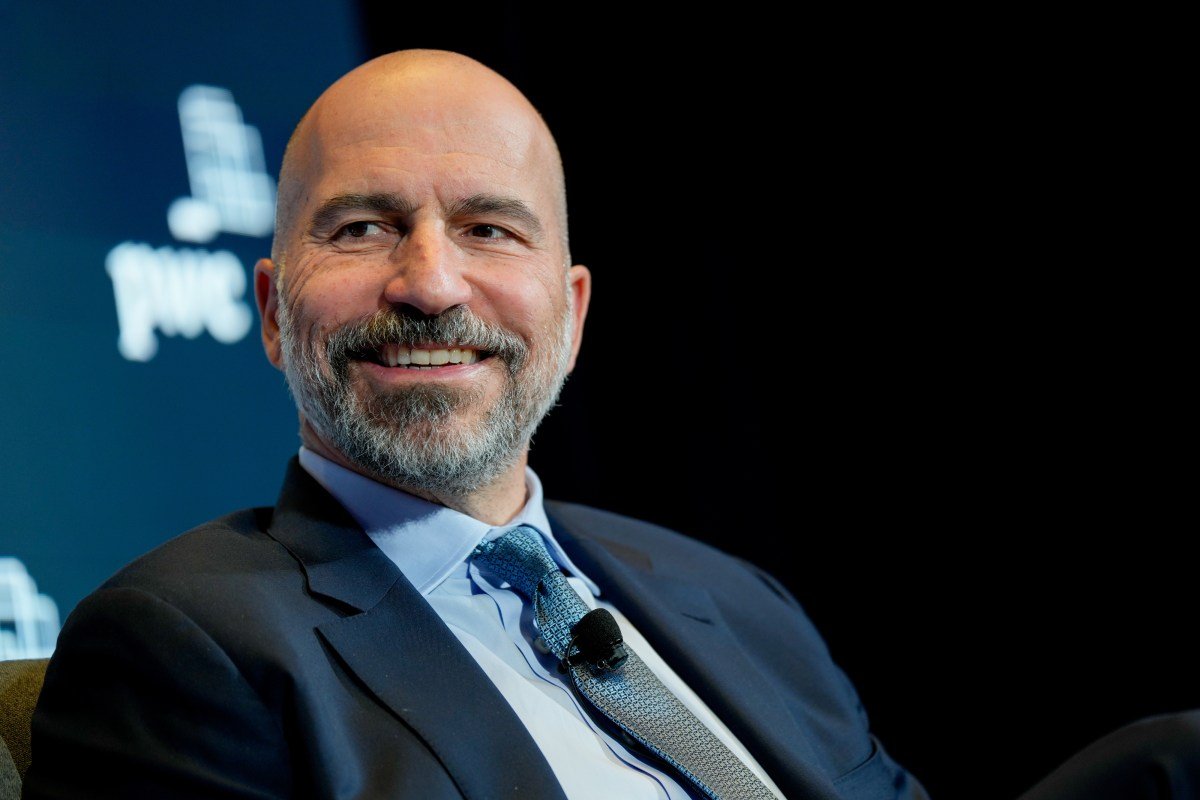
SAN FRANCISCO—Dara Khosrowshahi has spent years telling investors that Uber’s future runs on robotaxis. On Wednesday he told employees the company needs to be smaller to get there.
Uber is cutting about 3,300 roles, roughly 10 percent of its global workforce, in the largest round of layoffs since the pandemic, the company said. Mr. Khosrowshahi announced the cuts in a memo to employees Wednesday, part of an overhaul that strips out management layers and concentrates the company in two hubs as it pours money into autonomous vehicles.
The cuts reach deep into the organization. Management ranks will shrink by about 20 percent, and some managers are being moved into individual-contributor roles rather than laid off. Small teams of one or two people, a structure that multiplied during years of expansion, are being cut by nearly half. Positions more than seven layers below the chief executive are being eliminated, and three delivery operations units—covering restaurants, retail, and white-label clients—are being merged into one.
Remote work is all but over. Fewer than 1 percent of employees will remain fully remote, with hiring and staffing concentrated in the company’s New York and San Francisco hubs. After the cuts, Uber’s headcount will fall below 30,000, back to roughly its level of 2021.
Mr. Khosrowshahi’s rationale, laid out in the memo, is that the hierarchy and fragmentation built during a hypergrowth era no longer fit a company of Uber’s current size. The organization added layers faster than it refined them, he argued, and the result was a structure built for expansion rather than for the business Uber is becoming.
The layoffs are the deepest since the pandemic, when Uber cut thousands of jobs as ridership collapsed. The company spent the years after that rebuilding: it sold its money-losing self-driving unit to Aurora in 2020, abandoned the expensive bet on building its own cars, and returned to steady profits after a decade of losses. Wednesday’s cuts mark a different kind of restructuring—not survival, but a reshaping for what Mr. Khosrowshahi calls the next phase.
That phase is driverless. Uber has committed more than $10 billion to robotaxi partnerships over the coming years and holds stakes in the autonomous-vehicle and electric-vehicle companies Avride, Lucid, Nuro, and Rivian. The strategy is a reversal of the company’s earlier approach: rather than building its own self-driving technology, Uber is placing side bets across the field so that whatever robotaxi platform wins, Uber’s network is ready to carry its passengers.
Investors reacted with caution. Uber shares fell about 7 percent in premarket trading after the announcement, a move that suggested some shareholders read the cuts as a response to cooling growth rather than a pure efficiency play. Uber’s core ride-hailing and delivery businesses remain profitable, but competition has intensified on both fronts, and the company’s valuation has come under pressure as investors weigh how quickly driverless fleets will erode the cost advantages of human-driven rides.
The economics of autonomy explain the timing. Once robotaxis scale, the biggest variable cost in ride-hailing—the driver—disappears, and the companies that operate the largest fleets at the lowest cost will capture the margin. Uber wants to be lean enough to fund that transition without asking shareholders for more money. The savings from Wednesday’s cuts, the company signaled, will help pay for the driverless push.
There is a risk in cutting now. Autonomous vehicles are still years from replacing drivers at scale in most cities, and Uber’s human-driver network remains its moat. Shrinking the organization ahead of the transition saves money but also tests whether the company can keep innovating while it trims. Mr. Khosrowshahi has bet that Uber can do both, and that the efficiencies gained today will matter more than the ideas lost.
The memo also signals where Uber thinks its future employees will sit. Concentrating people in New York and San Francisco, the hubs closest to regulators, advertisers, and the autonomous-vehicle industry, reflects a company that expects its most important work to happen in person and near the centers of the robotaxi business. The near-total end of remote work is a bet that the culture of the next decade will be built in offices.
For the broader gig-economy sector, the cuts are a marker. Rivals including Lyft and DoorDash are watching how Uber finances its autonomous transition, and layoffs at the industry’s largest player tend to echo across the group. The message from the memo is that the era of spending to grow at any cost is finished, replaced by a discipline aimed at one prize: operating driverless fleets profitably.
Mr. Khosrowshahi closed the memo on the note he has sounded for years: the company that moves people and goods will eventually move them without drivers, and Uber intends to be that company. First, he told employees, it has to be the right size.