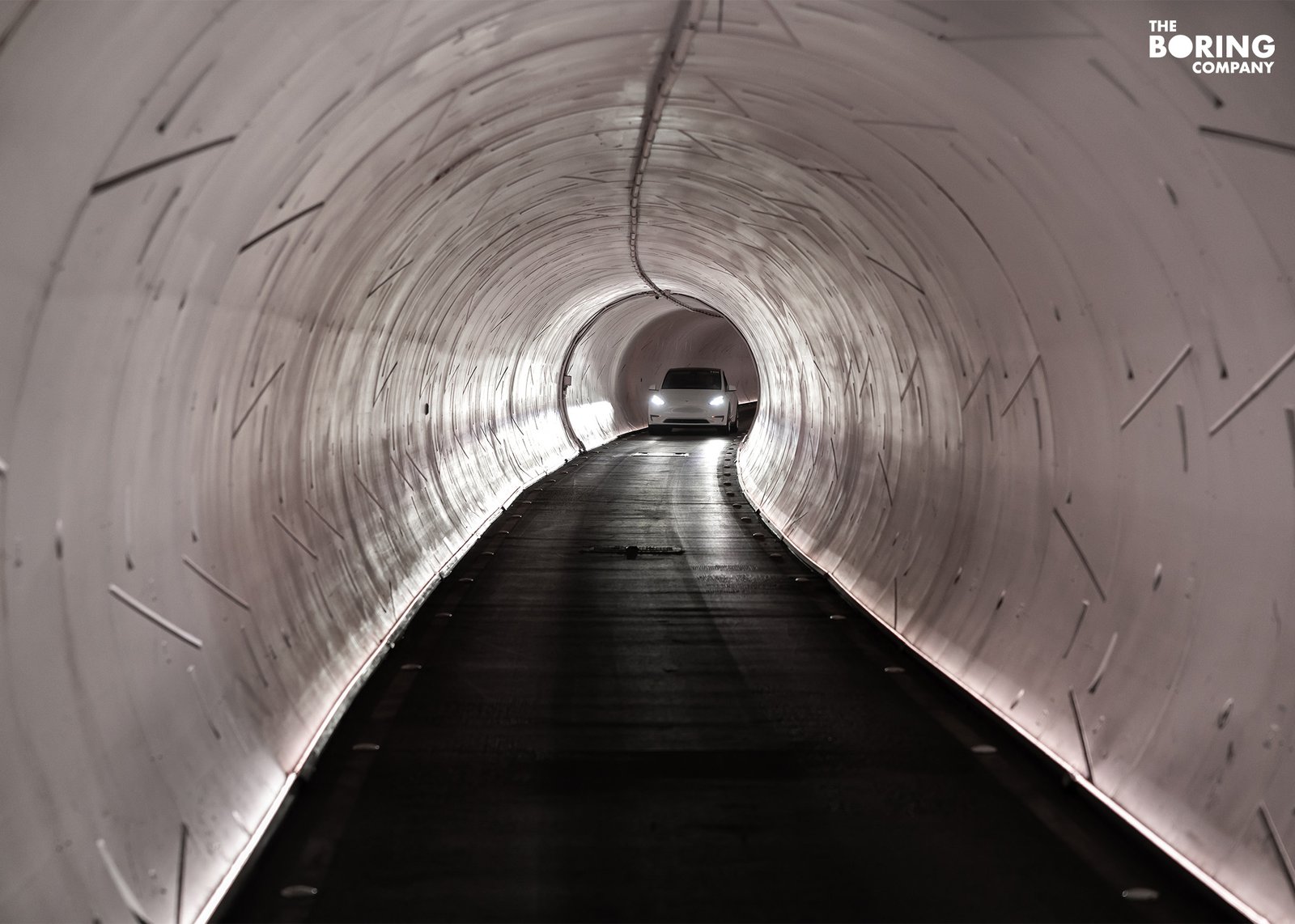
The round valued a tunnel business at more than four times what it was worth four years ago, and the lead check came from the desert. The Boring Company, the tunneling venture owned by Elon Musk, said on September 10 that it raised $3 billion in a Series D round that values the company at $23 billion, with investment led by the United Arab Emirates and related entities.
The company said the money will go toward building underground infrastructure in the UAE, including a tunnel network totaling more than 150 kilometers. The investment builds on a project Boring Company already won: the Dubai Loop, a 6.4-kilometer tunnel with four stations, which is scheduled to break ground by the end of 2026.
The $23 billion valuation compares with roughly $5.7 billion in 2022, according to the company. The jump is a measure of how far the tunnel venture has traveled since its early, heavily mocked days, when the pitch was a narrow system of electric sleds and the first test tunnel under Los Angeles drew more skepticism than customers.
A long list of investors joined the round. Human Capital, Vy Capital, Valor Equity Partners, Sequoia Capital, Andreessen Horowitz, Temasek, Shamal Holding, and Baron Capital were named as core participants, alongside a broad group of new and returning backers. The roster mixes Musk’s most loyal financial supporters with sovereign and institutional money that rarely crosses paths in a single term sheet.
The UAE anchor reflects a deliberate strategy. Gulf states have spent heavily to position themselves as early adopters of flashy infrastructure, and tunneling fits a region where above-ground space in dense cities is scarce and the heat makes surface transit costly to maintain. Analysts said the Dubai Loop gives the company a reference customer in a market that can afford to keep paying.
Boring Company’s pitch has narrowed since its founding. The early vision of city-spanning personal transit networks has given way to a more modest product: short, single-purpose tunnels for shuttles and utility corridors. Las Vegas, where the company runs a loop beneath the convention center, remains its most visible operating system. The Dubai project would be its largest overseas commitment.
The Series D arrives while Musk’s other companies dominate headlines, from Tesla’s robotaxi push to SpaceX’s launch cadence. The Boring Company has operated in their shadow, raising money in smaller, quieter rounds. A $3 billion raise changes that profile, and the UAE’s involvement gives the venture a sovereign endorsement that private investors alone could not supply.
The company’s finances are less visible than its ambitions. It has disclosed little about revenue or unit economics, and its projects have tended to start with one anchor client rather than a broad customer base. That concentration is part of what makes the UAE relationship valuable: a single government can fund an entire network, which is exactly the kind of counterpart the company’s business model favors.
Building underground is expensive and slow even under the best conditions. Analysts cautioned that tunnel projects routinely run over budget and behind schedule, and a 150-kilometer network is a multi-year commitment measured in billions. The Series D money is a down payment on capacity, not proof that the tunnels will carry the traffic they are designed for.
The round also carries political weight. Musk’s ties to Gulf leadership have deepened across his companies, from SpaceX’s Starlink to early Tesla discussions in the region. The Boring Company investment extends that pattern to infrastructure, a sector where foreign capital has historically been welcomed but scrutinized.
For now, the company’s valuation rests on a promise: that the same cities that struggle with surface congestion will eventually pay to move people and freight below ground. The Dubai Loop is the test. Whether it runs on time and at what cost will determine whether the $23 billion figure looks prescient or inflated.
The Las Vegas loop has given the company its steadiest operating record. The system under the convention center has carried millions of passengers since it opened, and the city has approved an expansion to dozens of stations. It is a modest business by Musk’s standards, but it is the proof point that the company’s tunnels can move people on schedule.
The UAE bet extends that proof point to a much larger scale. The 150-kilometer network would connect parts of the Emirates with tunnels designed for the company’s vehicles, and the government’s involvement means permitting and funding move faster than they would in most Western cities. The trade-off is that the company’s fortunes there depend on a single client’s continued enthusiasm.
The company gave no timeline for when the broader UAE network would be completed, and it did not say how much of the $3 billion had already been drawn. What it did make clear is that its next chapter will be written largely in the Gulf, far from the Los Angeles test tunnel where it began.