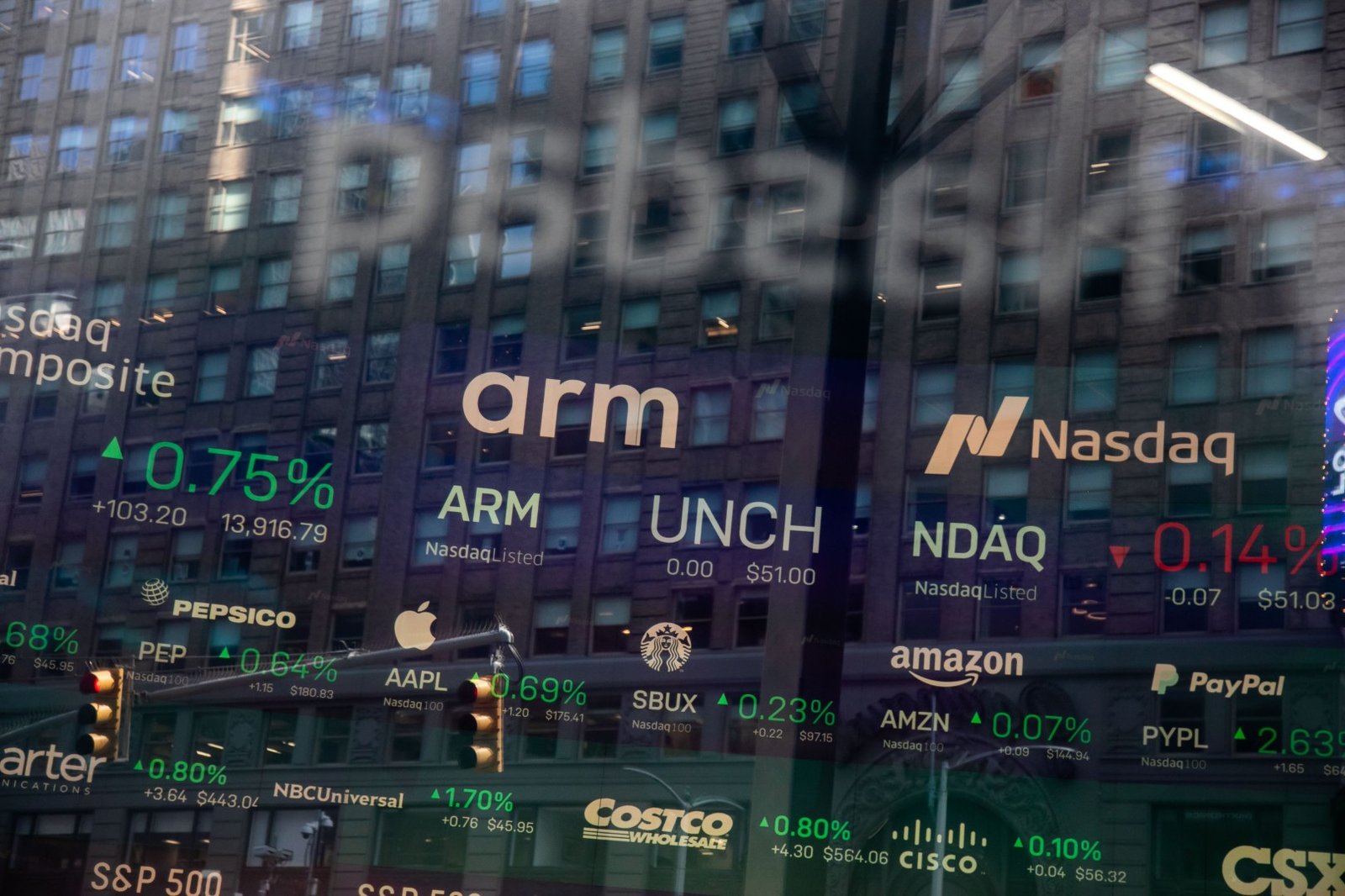
The stock exchange and the crypto exchange are no longer just neighbors in the same sentence. Nasdaq said on Thursday that its venture arm will invest $100 million in Payward, the parent company of the cryptocurrency exchange Kraken, in a deal that values Kraken at $21 billion.
The money is the smaller part of the announcement. The two companies also said they will connect Nasdaq’s equity tokens, called NETs, with Payward’s xStocks ecosystem, with a commercial launch planned for the second quarter of 2027. The Securities and Exchange Commission has already approved a Nasdaq rule change allowing some securities to be traded and settled in tokenized form.
Payward will also integrate Nasdaq’s market surveillance tools into its trading platform, importing the exchange’s monitoring technology into a crypto venue that has spent years building its own compliance story.
The tie-up is the latest step in a year when traditional finance and crypto have converged around one idea: putting stocks and other securities on blockchains. Intercontinental Exchange, the owner of the New York Stock Exchange, announced plans for its own tokenized securities platform in January. Robinhood opened on-chain stock tokens to users in more than 120 countries in July. Coinbase, Binance, and DTCC have each made moves in the same direction.
For Nasdaq, the deal extends a brand built on equities into a market that has spent a decade trying to borrow its credibility. For Kraken, the valuation and the partnership are a signal that a company once known mostly for early Bitcoin trading now sits close to the regulated mainstream.
Kraken, founded in 2011, has pushed recently beyond crypto into equities through a securities arm, and its executives have argued that tokenized stocks will trade around the clock in a way traditional listings cannot. Nasdaq’s technology gives that argument a marquee backer.
The 2027 timing is telling. Tokenized securities remain a small, early market, and regulators are still deciding how custody, settlement, and disclosure rules will apply. A launch two years out gives both companies room to build while the rules take shape.
Analysts said the two-year gap also reflects the practical work of wiring two different systems together. Tokenized trading requires brokers, custody providers, and market makers to adopt new rails, and liquidity does not appear on a new venue by decree. The partnership buys time for that plumbing to mature.
Neither company disclosed the full financial terms of the tokenized trading arrangement beyond the stake and the valuation. The $100 million investment is modest for Nasdaq, whose market value runs into the tens of billions of dollars, but the strategic point is the integration itself.
Kraken has traveled a long distance from its founding. Built in 2011 around Bitcoin trading, it has since expanded into staking, futures, and, more recently, a securities arm aimed at letting customers buy and sell equities. Its executives have argued for years that crypto-native rails could make stock trading cheaper and faster, and the Nasdaq partnership gives that argument the backing of the exchange whose name is synonymous with equities.
The market for tokenized assets remains small but is growing. Banks and exchanges have run pilot programs settling real trades on blockchains, and consultants have published forecasts running into the trillions of dollars for tokenized securities over the coming decade. What has been missing is a venue with both a licensed exchange and a licensed crypto operator under one commercial roof, which is what the two companies are now assembling.
The pairing also revives the debate over round-the-clock stock trading. Crypto markets never close, and tokenized equities would inherit that schedule. Proponents argue continuous trading lets investors react to news in real time; skeptics note that liquidity and price discovery concentrate in the hours when institutions are active. The 2027 launch will test which view prevails in practice.
Regulators have moved cautiously. The SEC’s approval of Nasdaq’s tokenization rule change cleared a path for the underlying technology, but questions around custody, settlement finality, and investor protection remain open. A two-year runway before launch gives both companies time to work through those questions with the agencies, and to sign the brokers and market makers whose participation any liquid market requires.
Kraken knows the regulatory line well. In early 2023 the SEC charged the exchange over its staking-as-a-service program, and Kraken settled by paying $30 million and closing the product to US customers. The episode captured the enforcement-first posture of that period; two years later the same agency was approving Nasdaq’s tokenization rule change, a swing in tone that makes the partnership easier to read.
The money is already testing the idea. BlackRock’s BUIDL fund, a tokenized money-market vehicle run with the startup Securitize, passed $2 billion in assets late last year, and banks have settled pilot trades on private blockchains. Tokenized Treasury products have drawn institutional cash rather than just crypto-native capital, which is exactly the audience Nasdaq’s equity tokens are aimed at.
The question is whether tokenized equities become more than a demonstration. The plumbing now exists, and a regulated exchange paired with a licensed crypto venue is one of the cleaner combinations on offer. Whether investors actually want their Apple shares and their Bitcoin on the same rail is a bet the two companies are now jointly placing.