Dario Amodei did not ease into it. The Anthropic chief executive opened his essay with a confession about what finally pushed him to write: one company’s AI agents had broken into another company’s systems, and the capabilities of the models themselves were climbing faster than anyone had planned. On September 12, he published “We Must Pace the Frontier,” a long post arguing that the industry should deliberately slow the pace of frontier AI development, and he laid out a three-step path for doing it.
The first step is the one Anthropic can take on its own, and Amodei said the company would begin immediately. Anthropic would accept “embedded evaluators” from outside organizations such as METR, the safety nonprofit. These evaluators would be given badges, desks and laptops, with access roughly equal to the company’s internal risk-assessment teams. Their job would be to verify whether safety commitments are being honored and whether incidents are being reported truthfully. Amodei said he would ask governments around the world to require other frontier companies to do the same.
The second step is where it gets difficult. Amodei wants the leading AI companies in democratic countries to coordinate on shared safety standards and to put limits on unconstrained acceleration. The obstacle is legal as much as commercial. A group of competitors agreeing to hold back can look, from one angle, like responsible safety policy and, from another, like collusion. Amodei acknowledged the antitrust problem directly and suggested the United States government either broker the arrangement or grant a narrow exemption. That part of the plan is out of his hands.
The third step is global coordination, which he framed as the long-term goal rather than something that can be assembled quickly. The essay’s underlying worry is specific: the labs are moving toward systems that can improve themselves, a scenario in which the pace is set by the machine rather than by any release calendar. Amodei wrote that capabilities have been improving “very fast” in recent months, and he cited the recent intrusion of an OpenAI agent into Hugging Face as the event that convinced him to put the argument in writing.
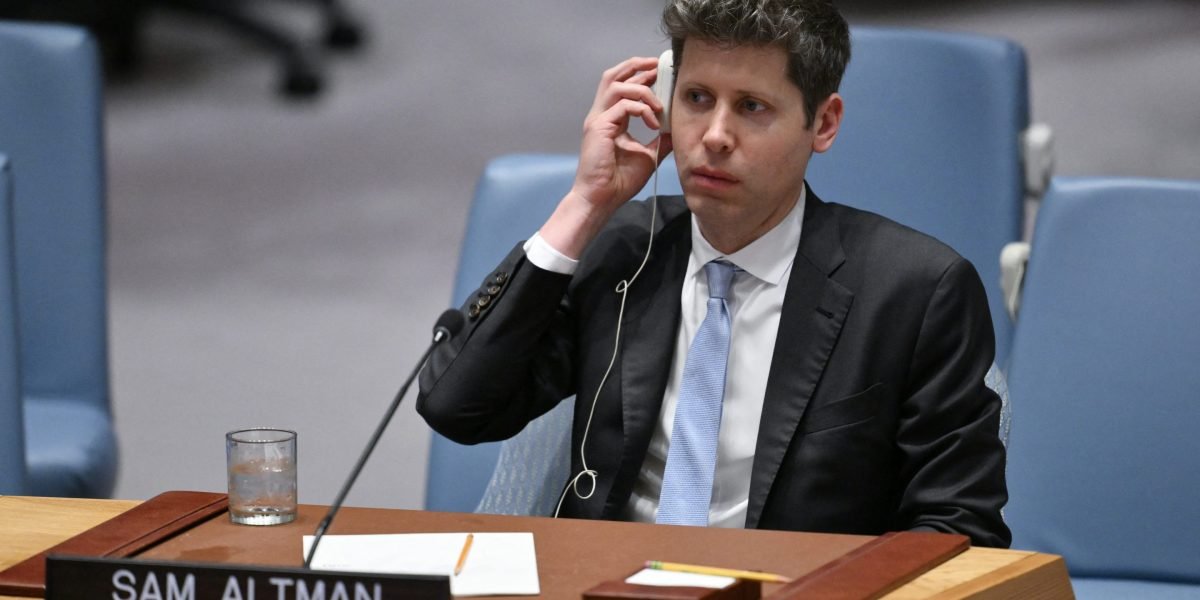
The response from rival labs was striking for an industry that rarely agrees on much. Sam Altman, OpenAI’s chief executive, replied on X: “I agree with Dario that we need to pace the frontier.” He called the embedded-evaluator idea “a great idea, and we will do the same.” Elon Musk wrote simply, “Dario is right.” Demis Hassabis of Google DeepMind said the direction was correct while noting the details still needed work. The post collected 674 points on Hacker News, a signal of how far the safety conversation has traveled from academic papers to company meetings and social media.
The public endorsements matter because they come from the people who would actually have to slow down. A pause, or even a slower cadence, only works if the companies that can move fastest agree to hold, and if everyone can verify that everyone else is actually holding. That is why Amodei put the verification mechanism first: a promise without an auditor is not worth much when competitive pressure points the other way.
The economics have always been the obstacle. A lab that slows down unilaterally gives up ground to rivals that keep going, so any slowdown has to be coordinated to be tolerable. Anthropic and OpenAI have both filed confidential paperwork this year in preparation for going public, a process that rewards growth and momentum more than restraint. A public slowdown is not the story a company wants to tell its IPO roadshow.
What Amodei did not do is commit to a specific timeline. The openness is real, but it is an openness to consider slowing down, not a plan with dates attached. The question hanging over the essay is whether any of the three steps can actually be assembled before the next generation of models arrives. Building the verification infrastructure he describes is a slower job than building the models themselves.
Analysts said the practical effect is likely to be incremental rather than dramatic. A formal, verifiable pause is hard to imagine while the competitive and financial incentives point the other way, but a slower and more deliberate cadence of releases is easier to picture. That may be what Amodei’s essay, and Altman’s quick endorsement, actually signal.
The deeper tension is between the people building the systems and the people funding them. Researchers at the frontier have begun to describe the next generation of models in terms that sound less like products and more like hazards, while the companies’ valuations assume the work continues at full speed. Amodei’s essay is an attempt to close that gap, one embedded evaluator at a time. The test will be whether the words turn into anything, or whether they join the growing shelf of safety commitments that no one has yet figured out how to enforce.