Larry Ellison set up the plan on June 22, and it was not public until September 11. The Oracle executive chairman had arranged, through a 10b5-1 trading plan, to sell up to 50 million shares, a stake worth roughly $7.5 billion at the prior Friday’s closing price. The plan was scheduled to run until October 24. On September 12, one day after the disclosure, he canceled it.
Oracle said the plan had not sold a single share, and that Ellison has no other selling plans. The cancellation removes a block of supply that had been hanging over the stock from the moment it was disclosed. The timing of the reversal, a day after the plan became public, is the detail that drew the most attention, because it is unusual for a pre-arranged selling plan to be unwound so quickly.
A 10b5-1 plan is designed to protect executives from insider-trading claims by scheduling sales in advance, so the trades happen regardless of what the executive knows at the time they execute. The fact that Ellison set one up in June and canceled it in September could simply reflect a change of mind about selling, but it landed in a market that reads every signal from the largest holders.
The stake involved was not trivial, but it was also not his position. Ellison owns roughly 40 percent of Oracle, and the 50 million shares covered by the plan represented about 1.65 percent of the shares outstanding. The sale would have been a rounding error against his total holdings, which is part of why the cancellation reads more as a statement than as a financial event.
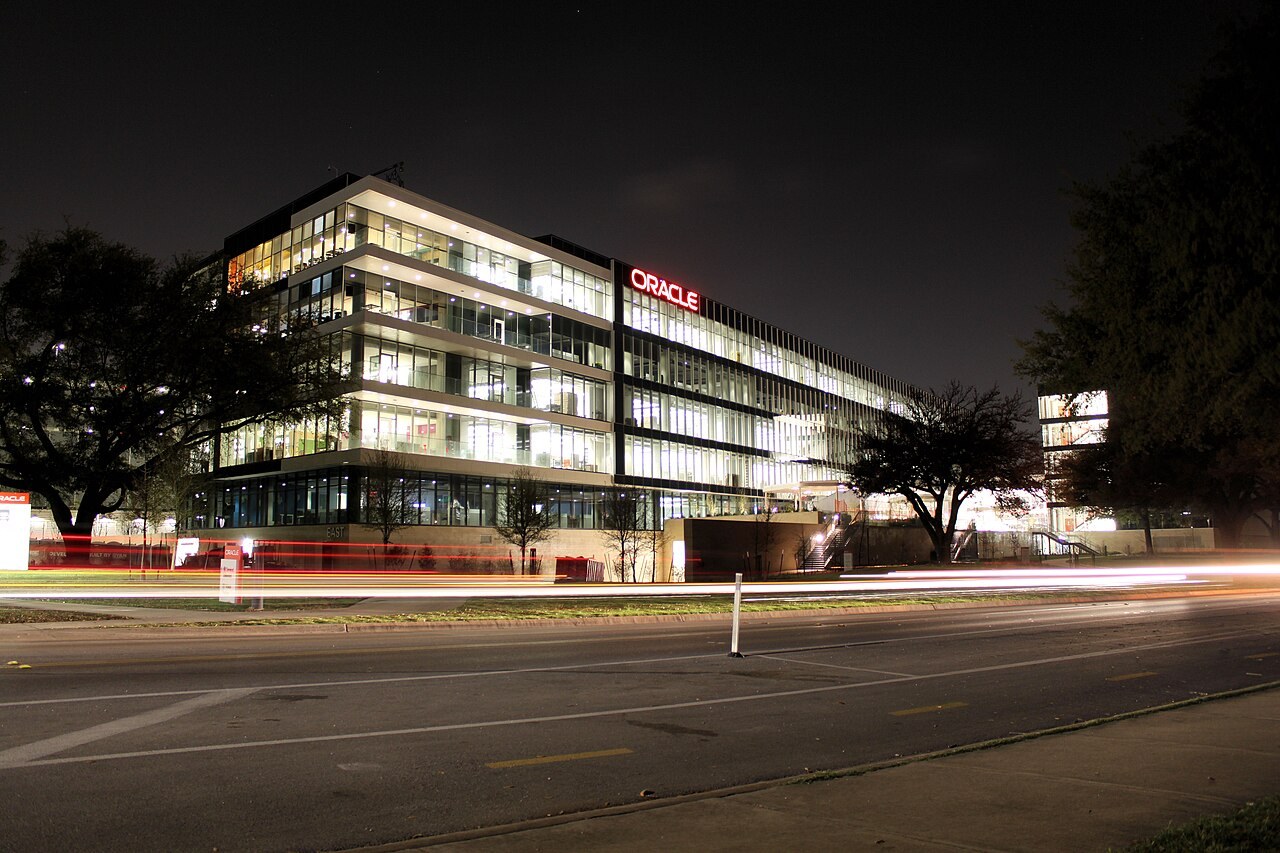
The statement matters because of what Oracle is doing with its balance sheet. The company plans to raise about $40 billion this fiscal year and another $45 billion to $50 billion in 2026, on top of roughly $125 billion in existing debt, all to fund the build-out of AI cloud capacity. Oracle has become one of the most aggressive spenders in the AI infrastructure race, and the capital structure is stretched as a result.
In that context, a founder selling shares would have been easy to misread. If the largest shareholder is selling while the company is borrowing heavily to build data centers, the market might reasonably ask whether the two signals point in different directions. By canceling the plan, Ellison removed that question before it could settle into the stock price.
The AI build-out is the story behind the story. Oracle has bet its future on renting out cloud capacity to AI companies, a business that requires enormous upfront spending on chips and data centers before the revenue shows up. The debt it has taken on to fund that bet is the largest in its history, and investors have been weighing the promise of AI demand against the weight of the borrowings. A founder’s sale, even a modest one, would have fed the bear case.
Analysts said the cancellation removes an overhang, which is a modest but real positive for the shares. The bigger story remains the debt. Oracle’s AI cloud ambitions require money at a scale the company has never attempted, and the market’s willingness to keep financing that build-out will matter far more to the stock than one canceled selling plan.
Ellison has been Oracle’s largest shareholder and most durable figure for four decades, and his selling plans have always been read as a barometer of his own confidence. A canceled plan sends the opposite signal: that the founder, at least for now, wants to stay fully exposed to the company’s AI gamble. That is the message the market received, and it is one the stock was glad to take.
Ellison has been the company’s dominant shareholder and spiritual center since he co-founded Oracle in 1977, and his stake has made him one of the richest people in the world. Sales by a figure like that are never purely financial events; they are read as judgments about the company’s prospects, which is why even a plan that sold nothing, canceled a day after disclosure, moved the stock.
Oracle’s shares have become a proxy for the AI-infrastructure trade, rising and falling with the market’s changing view of how much cloud capacity AI companies will actually rent. In that environment, any founder selling would be read as a hedge against the very bet the company is making with borrowed money. Removing that signal, even for a few weeks, is worth something to investors who are already uneasy about the debt.
The question is how long the signal holds. The 10b5-1 plan was set to expire in October, and Ellison could file a new one at any time. For the moment, though, the largest holder of one of the most indebted companies in the AI race has decided not to sell, and Oracle has one fewer question to answer as it continues to borrow its way into the cloud future.