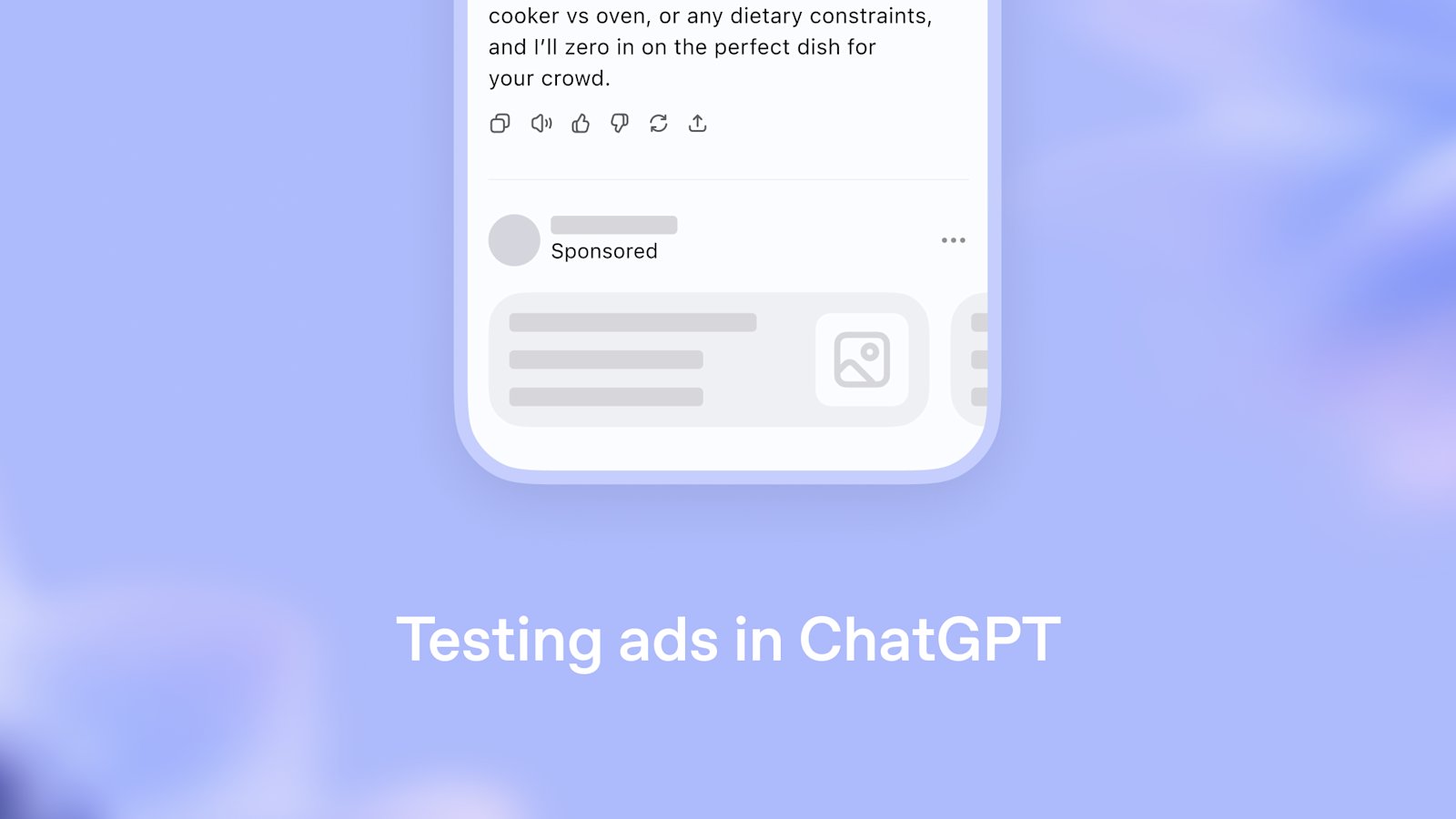
The ad appeared inside a conversation, not beside it. On September 16, OpenAI began testing agents sponsored by advertisers, a move that Reuters reported first and that the company confirmed the same day with a blog post titled “Reimagining advertising with AI.” The company’s advertising tools inside ChatGPT were expanded alongside the test, signaling that the experiment is more than a technical trial.
The announcement adds a second revenue curve to a business that has lived almost entirely on subscriptions. ChatGPT’s paying users have funded the company’s enormous compute bill, but advertising offers something subscriptions cannot: a way to earn from the hundreds of millions of people who use the product without paying. That pool is where the growth is.
The mechanics are delicate. An advertiser-sponsored agent is not a banner ad; it is a commercial presence inside the very interface where people ask questions. The model that answers a user’s query about, say, laptops could also, in some sponsored form, carry a manufacturer’s pitch. Where the line is drawn between neutral answer and paid placement is the question the test is designed to answer.
The company is aware of the risk. Neutrality has been one of ChatGPT’s selling points since launch, and inserting commercial content into a conversational interface revives an old complaint: that a model’s answers can be bought. OpenAI has said little about how sponsored content will be labeled, and the absence of detail is itself being read by critics as an answer.
On the same day, the company turned to the other side of its product line and announced an ending. GPT-5.5 will be retired on October 14, OpenAI said, and users of ChatGPT, the API, and Codex will need to migrate to newer models. The move compresses the company’s model lineup at a time when the number of models in circulation had become a source of confusion for developers.
The two announcements point in the same direction: consolidation. OpenAI is narrowing its products while widening its revenue, pairing a cleaner model lineup with a new commercial stream. The company has spent two years adding models and features at a pace that outpaced its own documentation, and the October cutoff is an attempt to impose order.
Analysts said the ad push matters more than the model retirement. Model deprecations are routine for AI companies, and developers expect them. Advertising is different: it changes what ChatGPT is for, and it is the kind of shift that either unlocks a large new market or erodes the trust the product has spent years building.
The financial pressure explains the timing. OpenAI is in the middle of fundraising talks that could value it above $1.2 trillion, and the investors in those talks are looking for evidence that revenue can keep compounding. Subscriptions alone have limits; advertising is the industry’s most reliable way to turn attention into money at scale.
Competition sharpens the point. Google and Meta have spent years proving that conversational and feed-based products can carry advertising without collapsing, and both are now integrating their AI assistants into the same ad machinery. OpenAI is arriving late to a game those companies have already mastered, and the test is whether its brand of neutrality survives the attempt to catch up.
The model-neutrality debate is not new to OpenAI’s leadership. The company has resisted advertising inside ChatGPT for years, in part because its executives worried about the exact conflict the test now raises. That it is moving ahead anyway is a measure of how much the revenue question has come to outweigh the philosophical one.
For users, the change will be subtle at first. Sponsored agents will arrive slowly, in limited contexts, and the company has promised that the core experience will not change overnight. But the direction is set, and the history of advertising on the internet suggests that once a platform opens the door, the ads tend to walk further in.
The company is not starting from zero. It hired a team of advertising veterans from Google and Meta over the past year, and the blog post framed the effort as a redesign of the ad itself rather than a bolt-on. The language was deliberate: the company wants to sell the idea that an AI-native ad is not an interruption but an answer, tailored in real time to a question a person just asked.
Whether that framing survives contact with a skeptical public is the open question. Regulators in Europe and the United States have spent the year scrutinizing exactly this kind of commercial placement inside AI products, and a sponsored agent that recommends one brand over another raises disclosure questions that a banner ad never had to answer.
The October 14 date gives the company a clean break. Developers and API customers have been given a month to migrate, and the retirement of GPT-5.5 clears the field for the newer models that carry the advertising and the subscriptions alike. The two announcements, taken together, describe a company trading an era of pure research for one of ordinary business discipline.