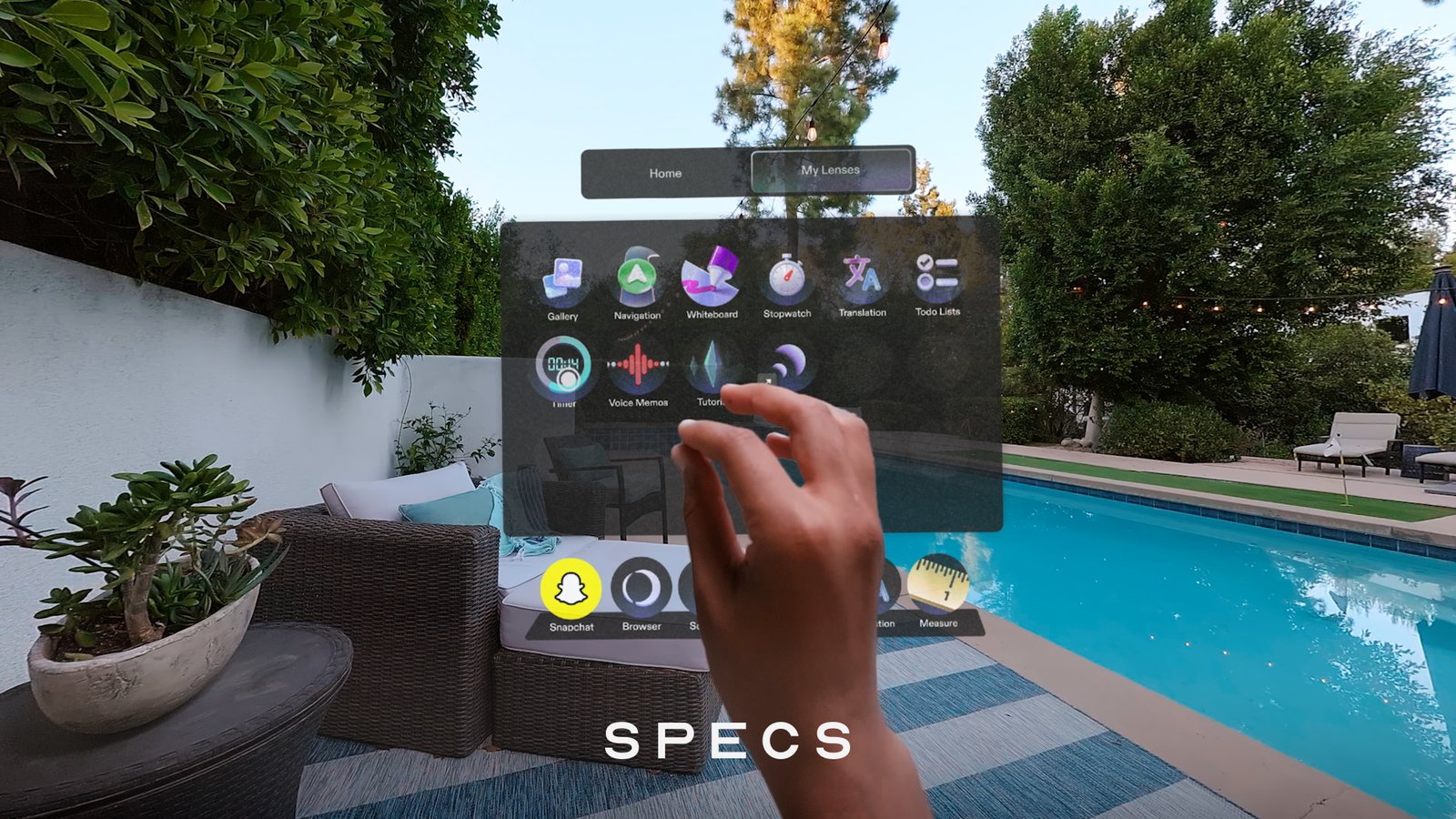
Evan Spiegel opened with a correction. Standing before a room of partners on September 16, the Snap chief executive said the company needed people to understand that Specs, its $2,195 augmented-reality glasses, is a computer and not a pair of smart glasses for taking pictures. The distinction is the whole pitch.
The announcement attached three names to that pitch: Nvidia, Amazon Web Services, and Salesforce. Snap said it would work with the three companies to push Specs into the enterprise market, steering the device toward remote assistance and field-work scenarios rather than the consumer crowd that greeted it with skepticism in June.
The June launch had been rough. When Specs was unveiled, the price and the design drew criticism, and Snap’s stock fell sharply in the following days. The device, which overlays digital imagery on the wearer’s view, looked to many observers like a product in search of a use case.
The enterprise pivot is an attempt to find that use case in a place where the math is friendlier. A technician whose hands are full, or a field worker who needs instructions overlaid on a machine, will pay more for a tool than a shopper will pay for a novelty. The partners supply the software and cloud muscle to make that argument credible.
Nvidia brings the computing platform and its enterprise reach, AWS the cloud infrastructure that connects the glasses to corporate systems, and Salesforce the customer base in sales and service roles where guided, hands-free interaction has obvious value. Snap supplies the device and the display technology.
The collaboration also includes new AI tools, with versions arriving on iOS and the Mac at the same time. The aim, according to the company, is to let the glasses tie into the workflows businesses already run rather than existing as a standalone gadget.
The move places Snap in a race that has swallowed far larger companies. Apple, Google, and Meta have all poured money into head-worn computing, and none has yet found the mass market that the technology’s boosters have promised for a decade. Snap is betting that the enterprise door will open before the consumer one does.
Analysts said the pivot is pragmatic. Snap’s core advertising business has been squeezed by shifts in the digital-ad market, and the company has spent years trying to diversify into hardware. A product that businesses buy by the fleet would give the hardware division a revenue line that the consumer version has not produced.
The challenge is distribution. Selling glasses to consumers means shelves and online carts; selling to enterprises means sales teams, support contracts, and integration work. Snap is a software company first, and the partners are meant to fill the gap it cannot fill alone.
Spiegel has framed Specs as a bet on a computing shift rather than a hardware gamble. His argument, repeated in interviews, is that the phone’s dominance will eventually give way to displays worn on the face, and that the companies that build for that moment will inherit the next platform.
The $2,195 price, which looked steep for a consumer device, sits differently in an enterprise budget. A headset that saves a technician an hour of downtime pays for itself quickly, and that arithmetic is the message Snap is now carrying to procurement departments instead of mall shoppers.
The timing matters for morale. Snap’s shares have been under pressure, and a credible enterprise story gives investors something beyond the advertising business to value. The partners’ names lend the effort a seriousness that a lone hardware launch lacked.
The risk is that the enterprise market for AR is itself unproven. Companies have piloted headsets for years without committing at scale, and the promised productivity gains have often evaporated in the details of deployment, training, and device management.
Snap’s answer is to lean on the software it already has. The company’s camera and messaging tools are used by hundreds of millions of people, and the glasses tie into an ecosystem that businesses’ employees already know. The partners extend that familiarity into the systems where work actually happens.
What Snap has not said is how many Specs units it has sold, or what revenue it expects from the enterprise push. The announcement was about alliances rather than orders, and the gap between a partnership and a purchase order is where most hardware ventures stall.
For Nvidia, AWS, and Salesforce, the upside is access to a new form factor without building one. Each has reason to be present wherever the next computing platform is decided, and the cost of the alliance is small relative to the option value of being early.
The enterprise pivot also lets Snap reposition the June criticism. What looked like an overpriced toy becomes, in the company’s framing, an underpriced tool, and the partners are there to certify the difference.
The test will come in the field. If companies deploy Specs to their technicians and the devices survive the wear and tear of real work, the enterprise story hardens into a business. If the pilots stall, Snap will have added three famous names to a product that still needs a market.
Spiegel’s correction, in the end, is the thesis. A computer can be sold on what it does; a pair of glasses has to be sold on how it looks. The enterprise market buys the first, and Snap is betting that is enough.