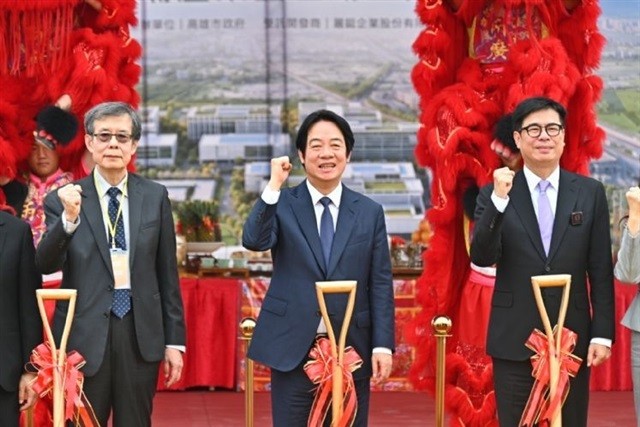
On September 21, Taiwan held a groundbreaking ceremony in Kaohsiung for a new industrial park devoted to a single purpose: advanced chip packaging. TSMC will set up technology validation and talent training facilities inside the park, a decision that treats a process long treated as an afterthought to the main factory floor as infrastructure in its own right.
The move is a response to a bottleneck that has defined the AI chip boom. Advanced packaging, and specifically TSMC’s CoWoS technology, has for years been the tightest link in the chain that puts Nvidia’s accelerators into customers’ hands. Chips could be made faster than they could be packaged, and the packaging shortage, not the silicon shortage, was often what constrained how many systems could ship.
Separating packaging into its own park is an acknowledgment of how the balance has shifted. For decades, packaging was the humble last step, the part of the process that enclosed a finished chip in a protective case. Advanced packaging has changed that. Today the way chips are stacked and connected determines much of their performance, and the facilities that do the work have become as critical as the fabs that print the silicon.
The Kaohsiung park is built around that reality. By giving packaging a dedicated campus, Taiwan is signaling that the bottleneck position — the part of the supply chain where the world’s AI ambitions most often wait — will be treated as a strategic asset to be expanded deliberately, rather than a constraint to be worked around.
TSMC’s role in the park extends beyond manufacturing. The technology validation facilities suggest the company wants a place to prove out new packaging techniques before they reach volume, and the talent training facilities point to a problem that has nothing to do with machines. Packaging engineers are scarce, and a park that trains them is a bet that the constraint, in the long run, is people as much as equipment.
The broader context is Taiwan’s deepening concentration of the chip industry’s most critical steps. The island already makes the vast majority of the world’s most advanced logic chips. By consolidating advanced packaging there as well, it is extending its grip on a second, equally vital stage of the supply chain, one that customers on three continents depend on and cannot easily substitute.
The political dimension is never far from any announcement in the chip industry, and this one is no exception. Every nation building its own chip capacity is watching how far the industry’s dependence on Taiwan can stretch, and a dedicated packaging park is a statement that the island intends to remain indispensable, not just in fabrication but in the assembly that follows.
For Nvidia and its customers, the development is unambiguously welcome. More packaging capacity, brought online in a dedicated park, is a direct answer to the shortage that has kept demand outstripping supply. Every additional CoWoS line translates, with a lag, into more accelerators shipped, more data centers filled, and more of the AI buildout completed on schedule.
Analysts said the park’s significance is partly symbolic and partly concrete. The concrete part is capacity: a dedicated campus can grow faster than packaging lines shoehorned into existing fab sites. The symbolic part is the elevation of packaging from a back-end cost center to a front-line strategic asset, a reordering of priorities that reflects where the actual scarcity now lies.
The groundbreaking itself is a beginning, not an end. Parks take years to fill, and the facilities announced on September 21 will not ease the CoWoS shortage this quarter or next. What the ceremony marks is a decision about where to invest next, made by the one company and the one government best positioned to know where the supply chain hurts.
Demand for CoWoS has run ahead of supply for so long that customers have had to plan their product schedules around TSMC’s packaging capacity rather than the other way around. Nvidia has publicly acknowledged the constraint, and each quarter of accelerator sales has been shaped in part by how many packaged chips TSMC could deliver. That dynamic has made packaging capacity a strategic variable, the kind of thing governments and companies track the way they once tracked refinery output or wafer starts. A dedicated park is, in effect, a promise to add capacity at the point where the shortage is most acute.
In that sense, the Kaohsiung park is a read on the state of AI itself. You do not build a dedicated campus for advanced packaging unless you believe the demand for it will persist for years. Taiwan is making a large bet, poured in concrete, that the AI boom’s most stubborn bottleneck is worth building for — and that whoever controls it controls the pace of the entire industry.