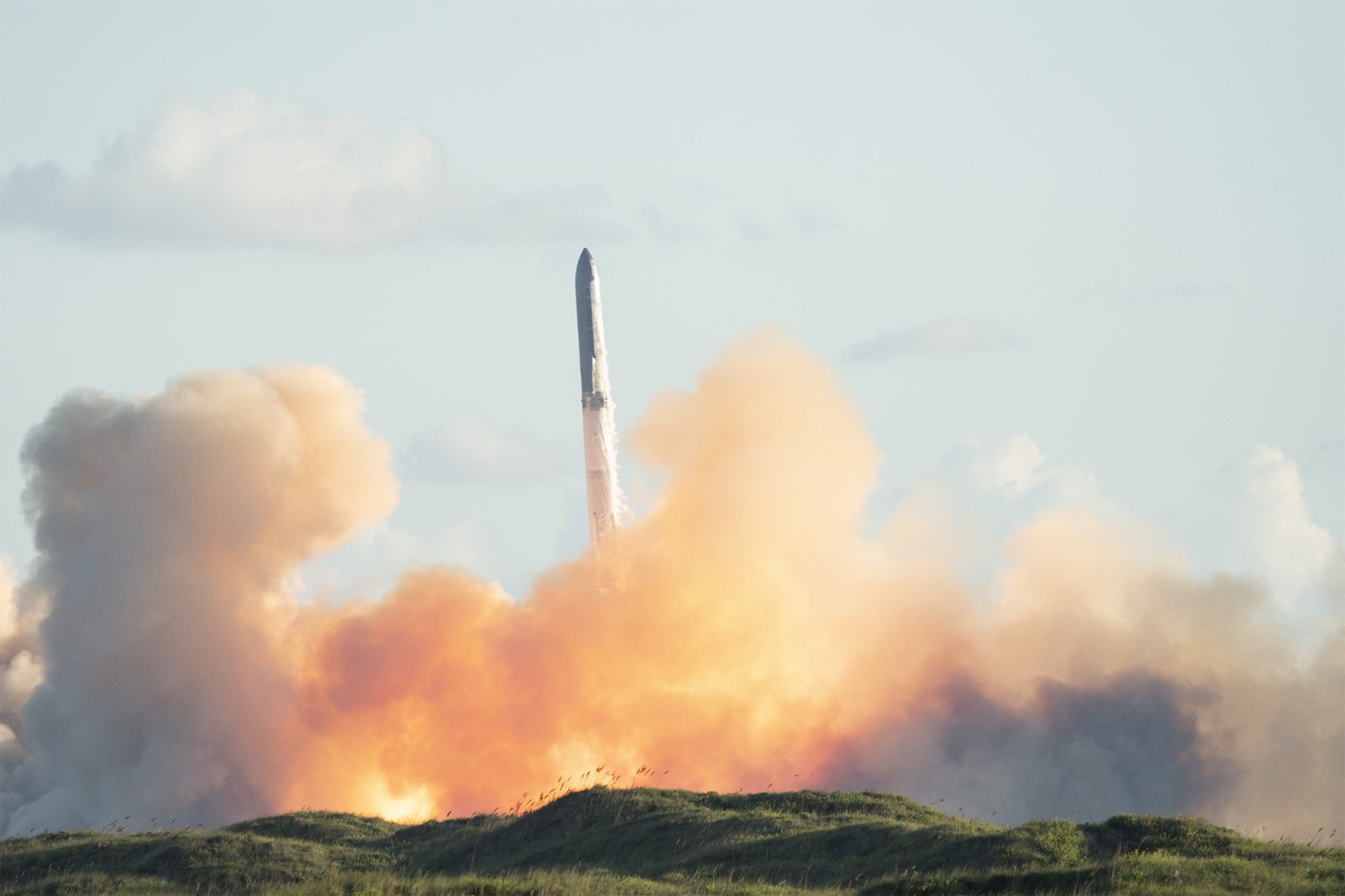
For years, satellite operators planning a launch a few years out could simply call SpaceX and secure a spot on a Falcon 9. That option is now closing.
SpaceX has stopped accepting new bookings for Falcon 9 launches scheduled after 2028, according to people familiar with the matter. The decision reflects a bet by Elon Musk’s company that its next-generation Starship rocket will take over most of its missions by then. It also removes from the market the vehicle that carried out nearly half of all orbital launches on Earth in 2025.
The change has begun to ripple through an industry that built its plans around the Falcon 9’s reliability and its roughly $70 million list price. Planet Labs, the earth-imaging company, told investors on a recent earnings call that SpaceX had restricted new Falcon 9 and rideshare bookings beyond 2028. Its chief executive, Will Marshall, said launch prices had been rising as smaller operators scrambled to secure slots.
The Falcon 9 earned its place at the center of the market the hard way. It first flew in 2010, and in December 2015 SpaceX landed the rocket’s first stage back on a pad, proving that the most expensive part of a launch could be reused. Since then the vehicle has flown hundreds of times, carried astronauts to the International Space Station, and become the standard against which every other provider is measured. Its low cost and steady cadence reshaped the economics of the entire industry.
The squeeze comes from within SpaceX itself. The company’s own Starlink constellation now consumes the large majority of Falcon 9 capacity, leaving less room for outside customers. The more launches SpaceX reserves for its broadband network, the fewer it can sell, and the more expensive the remaining seats become.
Government officials and industry executives have warned that the phase-out could leave global launch capacity short of demand before 2030. A rocket that once gave the market a reliable, reusable workhorse is being pulled toward retirement just as satellites are proliferating. Constellations, defense programs and national security payloads all compete for the same limited capacity.
The response is unfolding along three lines. Some companies are developing their own rockets rather than depend on a supplier that is redirecting its fleet. Others are weighing whether to acquire a launch provider outright, in part to guarantee their schedules. And the existing challengers to SpaceX, including Rocket Lab, Blue Origin and United Launch Alliance, are expanding their facilities and raising money to absorb the orders SpaceX no longer wants.
Rocket Lab has spent the year moving toward a larger vehicle that could carry more substantial payloads, while Blue Origin has worked to turn its New Glenn rocket into a reliable alternative. None of them yet flies at the cadence SpaceX achieved with the Falcon 9, which has launched more than a hundred times a year. Analysts said closing that gap will take years and billions of dollars.
The U.S. government is watching closely. The military and intelligence agencies are among the largest buyers of launches, and any shortfall in commercial capacity reaches them quickly. The Space Force already splits its most sensitive missions among multiple providers under its national security launch program, a structure designed in part to ensure no single company becomes indispensable. Officials have warned that a dominant provider shifting its fleet creates risk that no customer, public or private, wants to carry alone.
The transition carries particular weight for the Pentagon and NASA. Both agencies have built their near-term schedules around Falcon 9 for crewed and cargo flights, and Starship has flown only in tests so far, with work still ahead before it can be certified for the most demanding missions. That leaves a gap, and it is the gap officials keep pointing to when they warn of a shortfall before 2030.
SpaceX has its own reasons to move fast. Starship is the center of Musk’s plan to reach Mars, and the company needs flight history on the new rocket before it can be certified for the commercial and government customers that now rely on Falcon 9. Every Falcon 9 launch is, in some measure, a launch not being used to mature Starship.
For customers, the practical question is timing. A satellite ordered today might not reach orbit for several years, and the vehicle that carries it may not be the one its operator budgeted for. The price increases Marshall described are one symptom. Analysts said launch contracts signed over the next two years are likely to carry higher prices and less flexibility than those of the past five.
SpaceX has not said publicly when it will stop selling Falcon 9 rides outright, only that bookings after 2028 are no longer being accepted. The message to the rest of the industry is clear enough: find another ride, or build your own.