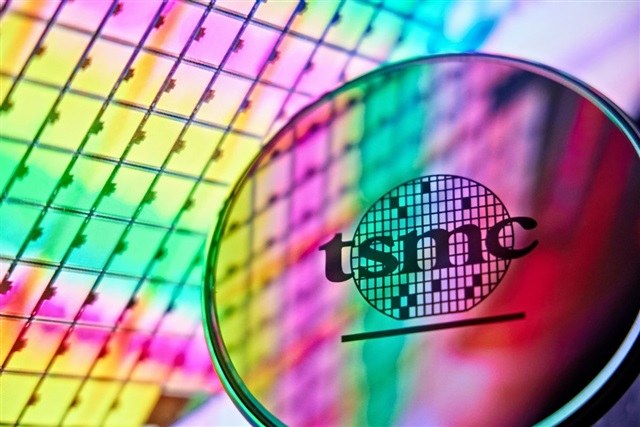
For the biggest chip buyers on Earth, there is no real alternative. That is why the pricing notices that ripple through the semiconductor supply chain each year start with Apple and Nvidia, the customers most dependent on Taiwan Semiconductor Manufacturing Company’s most advanced plants.
TSMC has locked in wafer-price increases of 3 percent to 6 percent for 2027, effective in January, according to the Taiwanese trade publication DigiTimes, which cited supply-chain sources. Advanced nodes, the cutting-edge 2-nanometer and 3-nanometer processes, will carry the steepest increases, the report said. TSMC did not comment, its usual practice with pricing reports.
The increases land on a foundry already running flat out. Capacity utilization at TSMC’s 8-inch fabs exceeds 100 percent, processes below 45 nanometers are fully loaded, and the company’s order visibility now extends to 2030, according to the sources. When a supplier can see demand four years out, its customers have little room to push back on price.
The customers who need TSMC most are the ones least able to resist. Apple and Nvidia, the two largest consumers of leading-edge wafers, face the smallest negotiating room, people familiar with the matter said, and the cost of an increase flows straight down their supply chains and eventually into the price of phones and AI accelerators. Mature and specialty processes will be priced individually, negotiated case by case based on product, utilization and customer standing.
The pricing power reflects a boom with few precedents. TSMC reported its first month ever above NT$500 billion in revenue in August, up 53.3 percent from a year earlier, driven by demand for chips that train and run artificial-intelligence models. The company’s customers, Nvidia, AMD, Apple and a widening circle of cloud giants designing their own silicon, are all chasing the same scarce leading-edge capacity.
The surge traces to a single force: artificial intelligence. The GPUs and custom accelerators that power AI models are among the largest, most complex chips ever made, and nearly all of them are fabricated by TSMC. Nvidia’s newest accelerators, Apple’s iPhone processors and the custom silicon designed by Amazon, Microsoft and Google all depend on the company’s leading-edge capacity, which has been booked solid for years.
The constraint is no longer just the wafer itself. Advanced packaging, the process of stacking and connecting chiplets into the giant modules AI systems require, has become a second bottleneck, and TSMC dominates that step as well. The company has said it will keep expanding packaging capacity, and the cost of that build-out, analysts said, is one reason the price increases keep coming.
The hikes help fund an expansion that has become a matter of industrial policy as much as business. TSMC is pouring tens of billions of dollars into new plants in Arizona and Japan and into advanced packaging for AI chips. Every price increase compounds the cost of that build-out, and every buyer of leading-edge silicon ultimately shares it.
Rivals have little immediate relief to offer. Samsung and Intel have struggled to match TSMC’s yield and cadence on the most advanced nodes, and analysts said the gap keeps them from acting as a real counterweight in price negotiations. The result is a market in which the most important component in computing is sold by one company that can name its price.
TSMC’s position is hard to overstate. The company fabricates roughly 60 percent of the world’s contract-manufactured chips, and analysts estimate it produces nearly all of the most advanced logic chips, the kind found in the latest smartphones and AI accelerators. For the leading edge, there is essentially no second source, and that scarcity is the foundation of its pricing power.
The increases also carry a political dimension. Governments in the United States, Japan and Europe have paid TSMC to build fabs on their soil, and those plants are more expensive to run than the company’s base in Taiwan. Analysts said some of that cost works its way back into the prices TSMC charges across its customer base, spreading the expense of geographic diversification.
For the wider economy, the increases are a small but real input to the cost of everything that runs on advanced chips, from data centers to flagship phones to the AI models companies are racing to deploy. Analysts said the pass-through will show up gradually, in hardware prices and in the capital budgets of the cloud providers, rather than all at once.
The customers absorbing the increases are themselves in an extraordinary spending cycle. Amazon, Microsoft, Alphabet, Meta and Oracle are projected to spend trillions of dollars combined on data-center infrastructure through 2029, and a large share of that flows to the chips TSMC fabricates. Every rise in wafer prices, analysts said, compounds a bill that is already growing faster than any in the industry’s history.