For a quarter century, Jeff Bezos has funded Blue Origin almost entirely out of his own pocket, selling Amazon stock to keep the rocket company alive. On Wednesday, the company let someone else help pay the bill for the first time.
Blue Origin raised about $10 billion from outside investors at a valuation of roughly $140 billion, according to The Wall Street Journal, completing the first external funding round in the company’s 26-year history.
Bezos himself put $2 billion into the round, people familiar with the matter said, bringing his cumulative investment in the company since 2020 to about $30 billion. Hedge fund Coatue Management contributed roughly $4 billion, and the remainder drew demand from a roster of large investors.
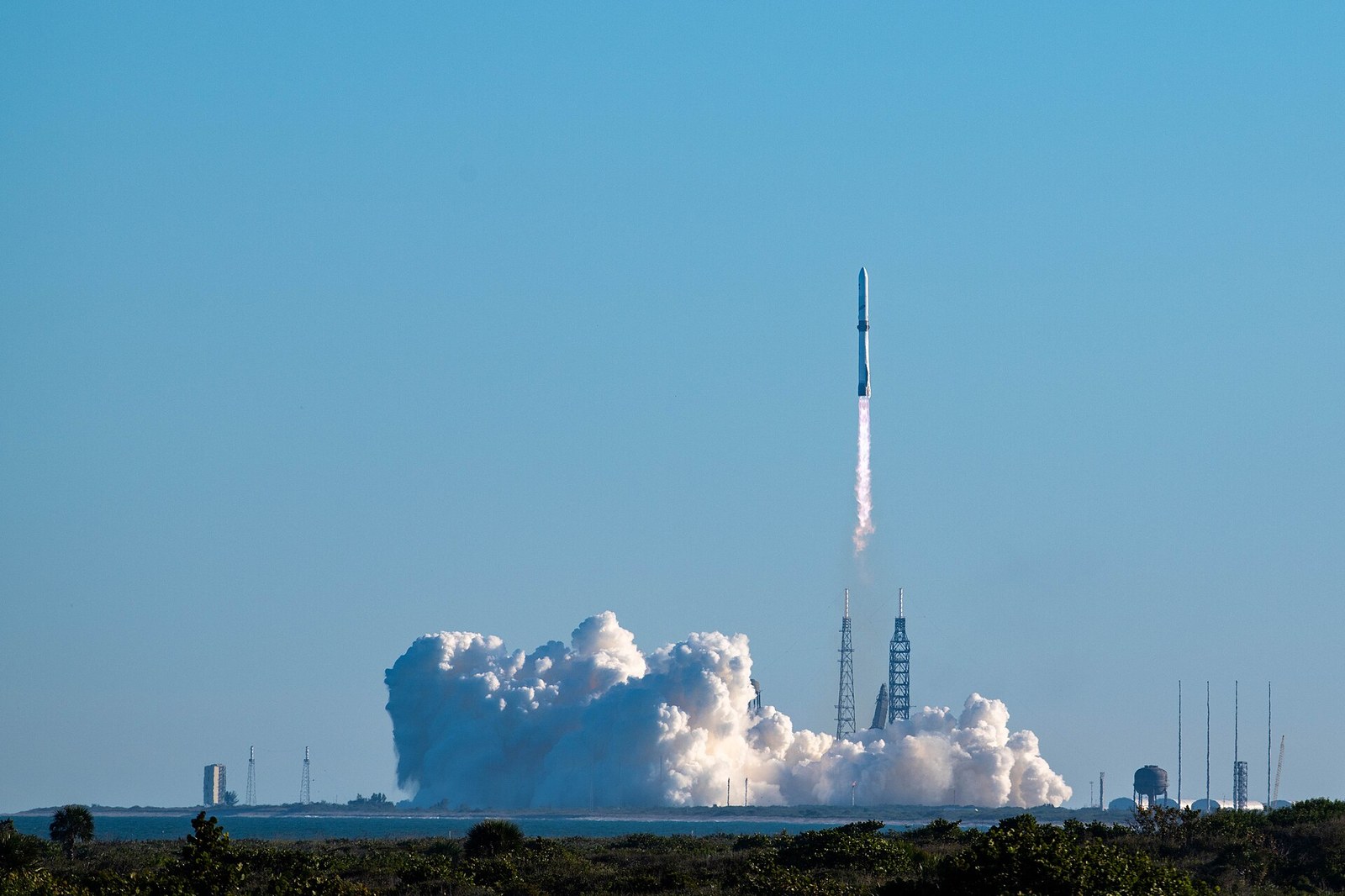
The raise arrives at a delicate moment for the company. In late May, one of its New Glenn rockets exploded on a Florida launch pad during a static hot-fire test, a setback that has kept the flagship heavy-lift rocket grounded while Blue Origin rebuilds the damaged pad and works to determine the cause.
Blue Origin’s chief executive, Dave Limp, has said the company aims to return New Glenn to flight before the end of the year. The rocket carries missions for NASA and for commercial customers including Amazon’s Project Kuiper satellite constellation and AST SpaceMobile.
The new capital will go toward rockets, satellites and government contracts, the company has said, as it tries to narrow the gap with Elon Musk’s SpaceX across heavy-lift launch, lunar landers and satellite internet.
The round lands against the backdrop of SpaceX’s blockbuster public debut. SpaceX raised nearly $86 billion in its initial public offering earlier this year, the largest on record, which valued Musk’s company at about $2 trillion.
Blue Origin’s finances remain small by that measure. The company generated about $800 million in revenue in 2025 and expects about $1.4 billion this year, according to figures reported by the Journal.
Blue Origin was founded in 2000 in Kent, Washington, and spent its early years in near-silence, developing the New Shepard suborbital vehicle that first carried a crew, including Bezos, in 2021. Its BE-4 engines power United Launch Alliance’s Vulcan rocket, a source of revenue that has helped finance the heavier ambitions built around New Glenn.
The New Glenn rocket, named for the astronaut John Glenn, is the centerpiece of the company’s push into orbital launch. It is the vehicle Blue Origin needs to fly repeatedly to serve the constellation customers and government payloads that would justify its valuation, and its grounding since May has put that schedule in question.
The company also holds a roughly $3.4 billion NASA contract to build a lunar lander for the Artemis program, a reminder of how much of its future is tied to government work rather than the commercial market alone. That pipeline of missions is part of what investors are buying into at the new valuation.
Bezos, who founded Amazon and stepped down as its chief executive in 2021, has said he expects Blue Origin to one day be a bigger company than Amazon. Bringing in outside investors marks a shift in how he is willing to fund that ambition, and a partial answer to how the company finances itself once he steps back.
Analysts said the round gives the company a war chest for the capital-intensive work of building and flying rockets at scale, while diluting Bezos’s control only modestly. He retains an overwhelming majority of the company.
For the investors, the bet is that Blue Origin can turn its engineering into a business, flying New Glenn repeatedly, delivering satellites on schedule, and winning a share of the government work that has long flowed to its rival. That is a bet the company has yet to prove it can deliver.
Bezos has bankrolled the company almost single-handedly for a quarter century, historically selling roughly $1 billion of Amazon stock at a time to fund it. His willingness to accept outside money now reflects both the scale of the capital the company needs and a desire to line up long-term partners as the business matures.
The gap with SpaceX remains wide. Musk’s company dominates orbital launch, flying the vast majority of the world’s payloads, and holds a lead in satellite internet through Starlink. Blue Origin’s path to closing that gap runs through New Glenn, which has flown successfully but not yet at the cadence the company needs.
The valuation also prices in work the company has not yet delivered. Its suborbital New Shepard tourism business has flown a handful of crews, and its engine sales to United Launch Alliance generate steady revenue, but the largest sources of future income, the lunar lander and orbital launch, remain ahead of it.
The round also signals how the financing of the space economy has shifted. What was once a sector funded by billionaires and government grants now draws institutional capital at valuations once reserved for the largest technology companies, as investors look for exposure to a market they expect to keep expanding.
The company has spent years promising that its patient, incremental approach would pay off. A $10 billion round of outside money is the first time Wall Street and its peers have been asked to vote on that promise with their own capital.