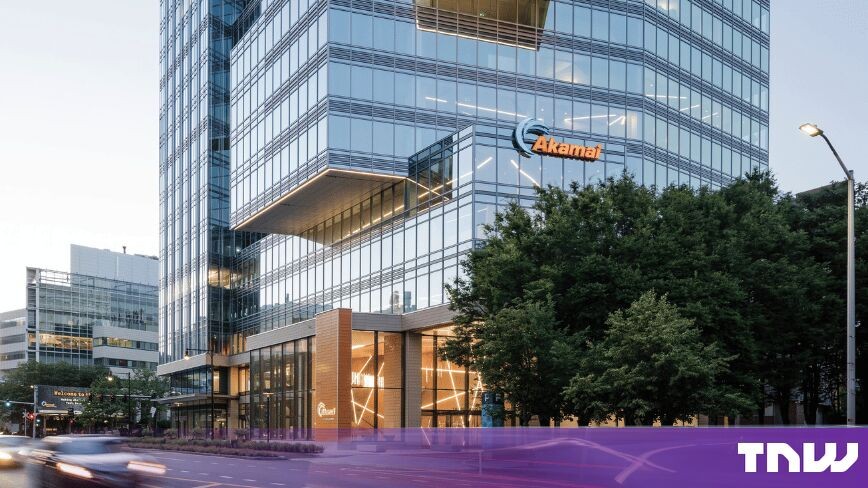
The announcement came after the closing bell on September 24, and it was not the kind Akamai Technologies usually makes. Anthropic, the artificial intelligence developer, had committed to buy $11.6 billion of the company’s cloud services over seven years, more than six times the value of an $1.8 billion agreement the two signed in May, and the largest contract in Akamai’s history.
What made the deal stranger was the direction of the money. In most of this year’s large AI infrastructure agreements, a supplier takes equity in its customer, a circular arrangement that has drawn scrutiny from analysts and auditors. Akamai went the other way and issued Anthropic a warrant to buy 7.7 million of its own shares at $111.33 each, equal to as much as about 5 percent of the shares outstanding.
The warrant vests in stages. Roughly 2 percent of it converts after the first payment. Each additional $3 billion of committed spending unlocks about another percentage point, and the contract allows Anthropic to add as much as $9 billion in purchases, which would take the total to roughly $20 billion and the warrant to its cap.
“We view this as a serious move,” Chief Executive Tom Leighton said, a description that fits both the warrant and the commitment behind it. Akamai has spent several years pitching its cloud and security business as a second act, sold alongside the content delivery network that made it prominent in the early commercial internet. The company was founded in 1998 by Mr. Leighton, then an MIT professor, and the late Danny Lewin.
The sales pitch is that a network built to move web traffic to users wherever they are can also run AI inference close to those users. That argument has produced growth, but not at the pace investors have rewarded elsewhere in the sector, which is part of why the contract mattered so much on Thursday night.
The costs arrive well before the revenue. Akamai said it expects to invest about $5.5 billion in capital expenditures to build capacity for the order, and to prepay roughly $1.7 billion this year for memory and other components. That second figure is a bet on supply as much as on demand, at a moment when AI builders are competing for the same chips, memory modules and enclosures.
Revenue timing compounds the wait. Akamai expects to recognize only $15 million to $30 million from the contract in 2027, when deliveries begin in the second half of the year, and roughly $1.7 billion on an annualized basis by the end of 2028. The company is, in effect, asking investors to underwrite three years of spending on the strength of a customer’s promise.
Investors responded immediately. The stock rose more than 16 percent in after-hours trading and extended the gain past 20 percent in early trading on Friday. The move revived a valuation argument that had been slipping as growth in the older delivery business slowed.
Analysts said the warrant is best understood as insurance rather than a gift. If Anthropic scales back its purchases, Akamai ends up holding a stake in a large AI customer. If Anthropic honors the commitment, Akamai has given away roughly a twentieth of itself for a relationship that may define its cloud franchise.
The structure also creates an alignment that is easy to describe and hard to unwind. Anthropic gains a financial interest in Akamai’s share price, and Akamai gains an interest in Anthropic’s willingness to keep spending. Whether that helps or muddies the companies’ bargaining in later negotiations is an open question.
The contract is not unconditional. Akamai must meet delivery and service availability requirements, according to its disclosure, and both sides can terminate under specified conditions. Large infrastructure agreements in this market routinely carry such escape hatches, a hedge against power constraints, permitting delays and any cooling in demand for AI capacity.
There is a governance question buried in the filing as well. A warrant that vests against purchase thresholds gives the customer a reason to keep ordering even if its own needs change, and gives the supplier a reason to accept pricing it might otherwise refuse. Neither company has described how the two companies will handle a dispute if one side decides the deal no longer works.
The broader pattern is that AI developers are signing compute commitments far larger than their current revenue while vendors agree to build for them on credit. Anthropic alone has announced compute agreements worth hundreds of billions of dollars over the past year, spread across chip suppliers, data center operators and cloud providers. Its spending plans now exceed the revenue of most companies that supply it.
For Akamai, the question is whether this deal marks the moment its cloud business became real or the moment it took on a customer risk it cannot easily manage. The company has not said how much of its capacity the contract will absorb, or what happens to that capacity if the arrangement ends early. Nor has it said how the $5.5 billion in construction will be financed.
Mr. Leighton has said the warrant signals confidence. What the company has not said is what it intends to do with those shares if Anthropic one day wants to convert them, or what Akamai’s balance sheet looks like if it does not.