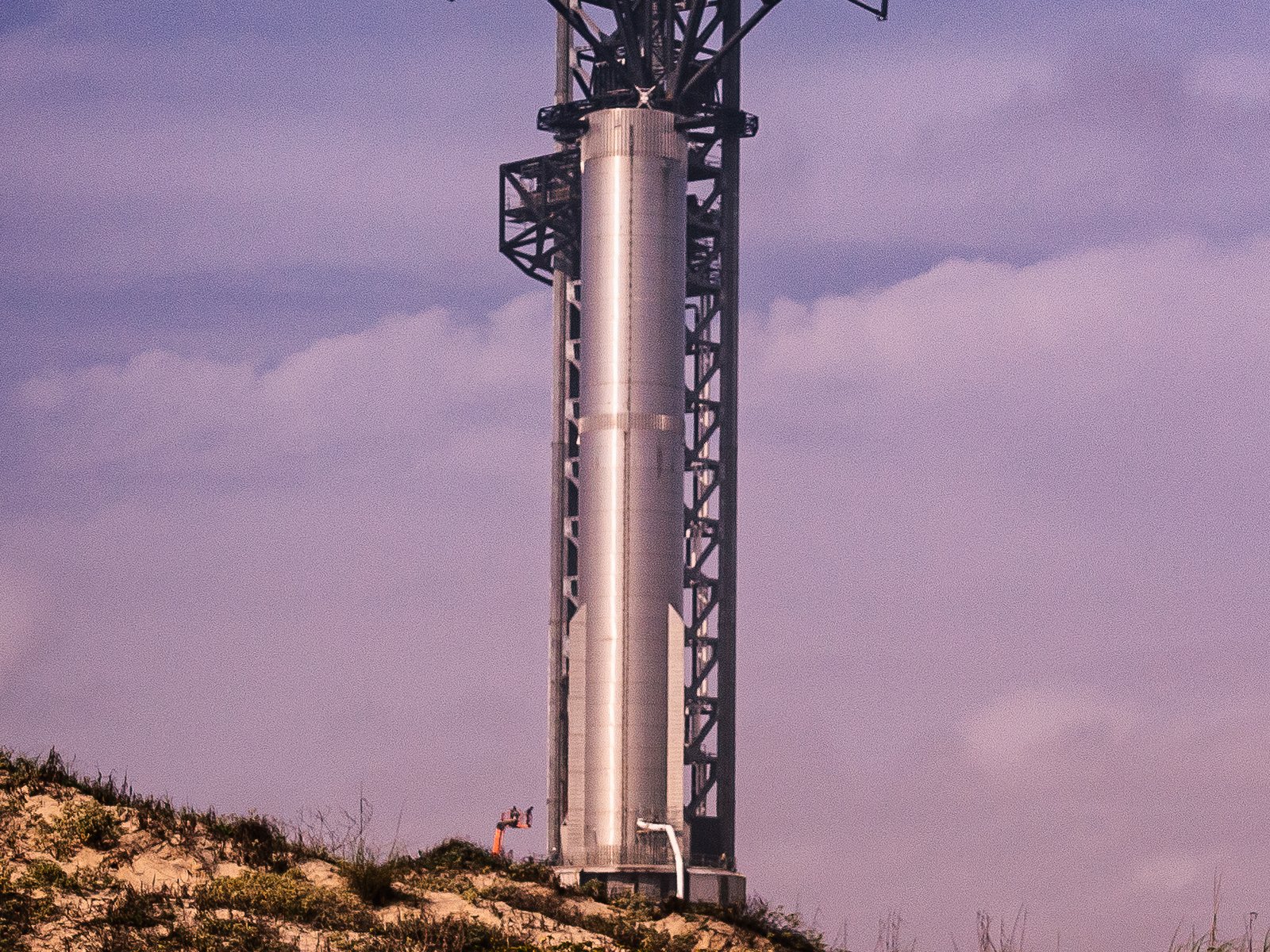
For more than three years, SpaceX has launched Starship, the largest rocket ever built, thirteen times from its Texas coast launch site, and every one of those flights ended short of orbit. The fourteenth attempt, scheduled for September 28, is meant to change that. A 75-minute launch window opens at 8:15 a.m. Eastern time at the Starbase facility near Boca Chica, and if the flight goes as planned, the 124-meter vehicle will reach orbit for the first time, deploy a batch of next-generation Starlink satellites, and then attempt to come back down.
The Federal Aviation Administration cleared the way on September 26, issuing the launch and reentry license for the mission, according to CNBC. The flight, designated Starship Flight 14 and carrying the Starlink Group 31-1 payload, has a longer chore list than any previous test. Besides reaching orbit, Starship is to release twenty-six Starlink V3 satellites, the first operational units of a new generation the company says will carry far more capacity than the ones already in service. The whole flight, from liftoff through an engine burn in space to a controlled reentry, is expected to run roughly ten hours.
The stakes are practical. SpaceX’s Starlink business has been limited by how many satellites it can launch at once, and the V3 design is built around Starship’s enormous payload bay. Reaching orbit, and deploying satellites from it, is the step that turns Starship from a test vehicle into a working launcher. The timing of every future Starlink expansion, and SpaceX’s plans for larger, heavier versions of the constellation, has been tied to this flight.
The path here has been slow and, at times, explosive. Starship first flew in April 2023, when the vehicle tumbled and was destroyed minutes into the flight. Subsequent attempts climbed higher, separated stages, and landed more cleanly, and the booster has been caught back at the launch tower on later flights, a feat the company once described as essential to making the system reusable. Thirteen flights have produced a mix of outcomes, and by mid-2026 the tally stood at eight successes and five failures across three versions of the vehicle. But none of them reached orbit, the capability the whole program has been working toward.
Those earlier flights were not without purpose. They tested in-space engine relights, opened and closed the payload bay door, moved propellant between tanks, and progressively hardened the heat shield that protects the ship on the way down. Each test retired a risk for the day when the company would try the full sequence in one flight. That day is what Flight 14 represents.
The distinction matters. A suborbital flight climbs to space and falls back to Earth without completing a loop. An orbital flight carries enough velocity to circle the planet, and it is the difference between a demonstration and a delivery. SpaceX has said for months that the jump to orbit would come with the V3 generation of satellites, and the company pushed the launch date back from September 22 to the end of the month as it completed the necessary approvals and checks.
The V3 satellites are a step change for the network. They are designed to be larger and more capable than the models Starship has flown before, and SpaceX has said the full V3 constellation will depend on Starship’s ability to carry them in bulk. For a company whose private valuation analysts have tied in part to the growth of Starlink, the flight reads less as a test than as a revenue question.
The launch is also a test of the company’s relationship with its regulator. SpaceX and the FAA have traded criticism over the pace of licensing, and the company has pushed for faster approval as its flight cadence has climbed. The license that arrived on September 26 came just two days before the window opened, a timeline SpaceX has argued is too slow for a vehicle it wants to fly dozens of times a year.
The flight will be watched for more than the payload. A Starship reentry, bringing the vehicle back through the atmosphere at orbital speed, is a test the company has not yet run from a full orbit. The heat shielding and the control surfaces that steer the ship on the way down have been refined through thirteen flights, but every previous reentry began from a lower, slower state. Coming home from orbit is a harder problem, and how the ship handles it will shape how quickly SpaceX can fly again.
As of the morning of September 28, the outcome was not known. The launch window was open, the weather in South Texas was part of the decision, and SpaceX’s own webcast was the only place to see the result in real time. What was certain was the scale of the attempt: the first orbital flight of the largest rocket ever built, carrying a payload that represents the commercial future of the company’s satellite business, on a flight that will take most of the day to complete.