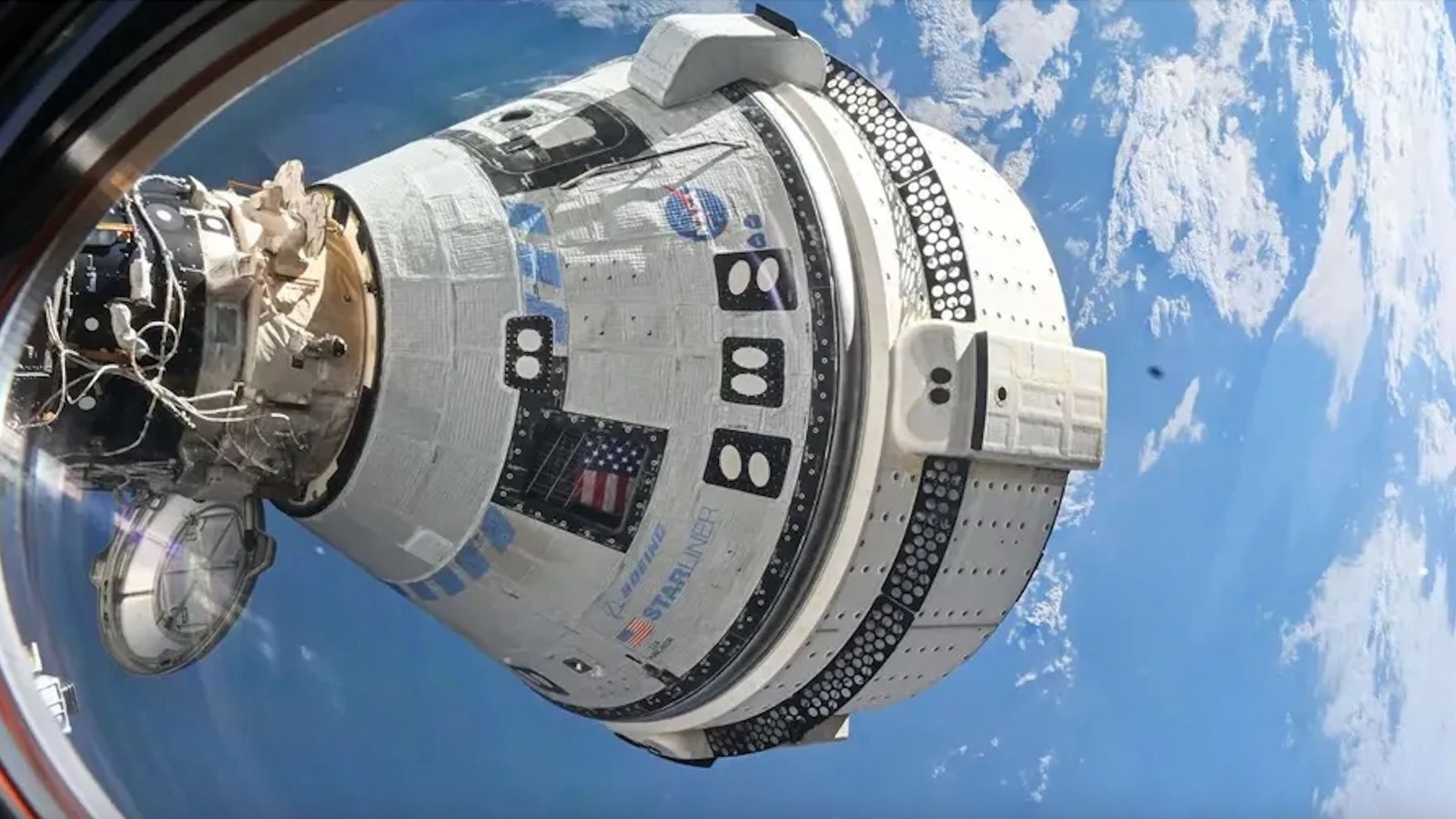
The announcement was tucked inside the kind of statement NASA issues when it wants a hard decision to read as routine. On September 28, the agency said it would keep flying Boeing’s Starliner to the International Space Station — without a crew, and only after the spacecraft’s design is fixed.
For the engineers who have spent years trying to make Starliner the second American ride to orbit, the message was a reprieve and a demotion at the same time. The capsule stays in the program. Its astronauts do not.
The reason dates to February, when NASA released an investigation report on the capsule’s first crewed flight. The agency classified the failures on that mission as a “Class A” accident, its most severe category. The Challenger and Columbia shuttle disasters sit under the same label.
The classification carried weight because NASA hands it out sparingly. A Class A accident is one that could have destroyed the spacecraft or killed its crew, and the label has been attached to only a handful of events in the agency’s history. Challenger, lost in 1986, and Columbia, lost in 2003, are the two most famous.
Starliner’s troubles began before it ever carried a person. The program was born in 2014, when NASA awarded Boeing a $4.2 billion contract and SpaceX a $2.6 billion contract to build two competing ways to reach the station. Boeing was the incumbent, the safe bet; SpaceX was the upstart.
The upstart won the race. SpaceX began flying crews in 2020. Starliner’s first uncrewed test, in December 2019, failed when a clock error left the capsule in the wrong orbit and it never reached the station. A second uncrewed flight docked successfully in May 2022, but years had been lost.
The crewed test finally lifted off in June 2024 with NASA astronauts Butch Wilmore and Suni Williams aboard. As the capsule neared the station, thrusters began to fail and engineers found helium leaking from the propulsion system. Wilmore had to take manual control at one point to keep the approach alive.
NASA kept the two astronauts on the station for months while it debated whether the capsule was safe enough to bring them home. In the end, it was not. Starliner returned empty in September 2024, landing in the New Mexico desert, and Wilmore and Williams came back on a SpaceX Crew Dragon in March 2025.
That outcome — two astronauts waiting in orbit while a rival’s spacecraft did the job — settled the near-term question. SpaceX now carries NASA crews on a regular rotation. Starliner’s role, if it has one, is freight.
What NASA announced this week preserves exactly that narrow part. The agency will use Starliner for uncrewed flights to the station, the missions that keep supplies and experiments moving. New astronaut flights will wait for what NASA called an “improved design.”
People familiar with the deliberations said the wording was chosen deliberately. “Improved design” is not a schedule; it is a condition, and it leaves Boeing with a list of fixes and no date for the return of astronauts.
The February report gave that list its urgency. Its findings pointed back to the same systems that failed in 2024 — the thrusters and the helium seals that were supposed to keep the capsule controllable. Fixing them is a design problem, not a maintenance one.
Boeing has paid for the delay in dollars as well as time. The company has booked more than $1.5 billion in charges on Starliner, a drag on a defense and space business that was once among its most reliable. Analysts said the program has become a case study in how a fixed-price government contract can turn into a liability.
The stakes run wider than one capsule. NASA has spent more than a decade trying to guarantee two independent ways to reach the station so a single failure cannot strand American astronauts. Boeing was supposed to be the second. Instead, SpaceX has carried the crewed load alone for years.
That single-source dependence is what keeps Starliner alive. As long as only one company can launch astronauts from American soil, a problem with that company’s hardware leaves NASA with no backup. Keeping Starliner in the fleet, even uncrewed, preserves a path back to redundancy.
The commercial crew program’s original bargain was that competition would keep both providers honest and lower costs. Boeing’s struggles have shown the limits of that bargain. One provider became indispensable; the other became a backup that cannot yet fly people.
For Wilmore and Williams, who spent roughly nine months in orbit instead of the week they had planned, the episode became a symbol of the cost of a design that was not ready. Their mission, once a routine certification flight, is now the accident the February report is built around.
Analysts said NASA’s decision to keep the capsule flying at all is a bet that the investment is not yet a write-off. Canceling outright would have meant walking away from years of engineering and admitting the second provider was never going to arrive.
What the agency did not say this week was when, or whether, Starliner will carry people again. The capsule will keep flying to the station without a crew while the fixes proceed. But the question that has followed the program since its first flight — whether it can be trusted with lives — was left, once again, unanswered.