Diogo Almeida spent September shipping Jev, a model that answers by picking from a list of options instead of composing long passages. Then OpenAI shipped something that looks a lot like it. The TypeSafe chief executive, a former OpenAI engineer, went on X and joked that the “clone wars” had begun.
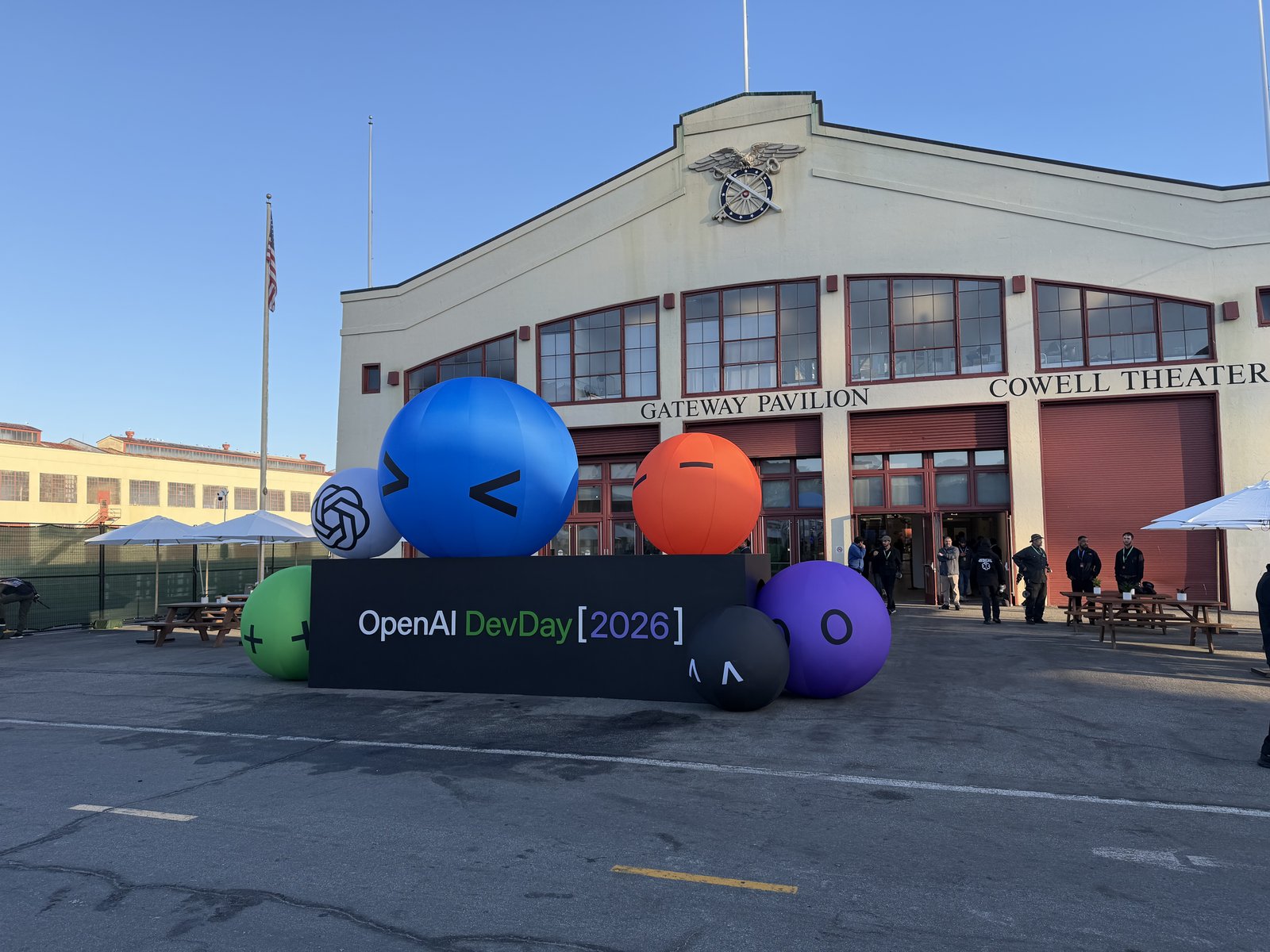
The OpenAI product is the Decisions API, announced at the company’s DevDay on Sept. 29 and now in limited preview. It hands a model a set of preset options and asks it to return an answer in probabilistic form, quickly, rather than generate prose. The company said it suits image classification and the moment-to-moment action selection an AI agent has to make.
Sam Altman framed the design as a bet on speed through constraint. Focus a model on choosing from predefined options, he said, and it can run extremely fast while keeping the capabilities that matter: image understanding, support for multiple languages, and the safety guardrails OpenAI has built around its models. The trade is that the model stops composing and starts deciding.
The contrast is with the reasoning models OpenAI has spent the past two years promoting, which think through a problem in many steps before answering and carry a higher price and longer wait. Decisions sits at the other end of the spectrum: the model does not deliberate, it discriminates.
The idea is not new to the people building this class of software. TypeSafe launched Jev this month in early access and calls it the first “System One” model, borrowing the psychologist Daniel Kahneman’s distinction between fast, intuitive thinking and slow, deliberate reasoning. A System One model answers in one parallel pass instead of thinking step by step, which is what makes it cheap and quick enough to sit inside software that has to act many times a second.
Almeida, who once worked at OpenAI and co-invented a reinforcement-learning technique that shaped the field, read the move as validation. OpenAI building a decisions product, he argued, signals that the System One approach is where the industry is heading, not a side project. The joke about clone wars carried the same message with a smile: the startup’s alumni had beaten the parent to the punch.
The background is a complaint developers have been voicing for a year. General-purpose large models are powerful but slow and expensive when asked to do software automation, where an agent might need to classify an image or choose the next action thousands of times a day. A model that returns a probability over a handful of choices in a few hundred milliseconds fits that loop in a way a full reasoning model does not.
The naming is deliberate. In Kahneman’s framework, System One is the fast, automatic mind that recognizes a face or catches a falling glass, and System Two is the slow, effortful mind that solves a math problem. Reasoning models are the industry’s System Two; TypeSafe and now OpenAI are betting that much of what agents do is closer to catching the glass.
TypeSafe’s pitch is that speed and price change what software can do. Its Jev API takes text, JSON or string arrays as input and returns answers for a few question types, with per-option probabilities the calling code can act on. Batching many questions in a single request costs little extra time, the company says, which lets an agent ask everything up front and let the code decide what mattered.
The two companies now sit in the same lane, which is awkward only in the usual Silicon Valley way. OpenAI is a heavily funded incumbent racing to ship the same primitive as a startup run by people who used to work there, while TypeSafe argues that its narrower focus lets it move faster and cheaper. Early comparisons found the two close on accuracy, with each faster on different task types.
For OpenAI, the Decisions API is also a defense. If the next wave of software agents wants fast, cheap decisions rather than long reasoning, a company that only sells expensive reasoning models would watch that market pass to smaller rivals. Shipping a decisions endpoint lets OpenAI meet that demand with its own models and keep developers on its platform.
What the two products share is a thesis about how AI will be used at scale: not as a writer but as a switch. A model that classifies, scores and picks is useful inside pipelines where a full generation would be wasted, and both companies are betting that much of the coming demand looks like that. The clone war, if that is what it is, is a fight over who gets to own the switch.
The Decisions API is in limited preview, with a broader release OpenAI says is coming, and pricing for the endpoint has not been announced. TypeSafe’s Jev is in early access. Neither company has to win the other’s customers outright; the question is whether the market for decision models is big enough for both, and whether the incumbent’s scale can close the gap its alumni opened first.