
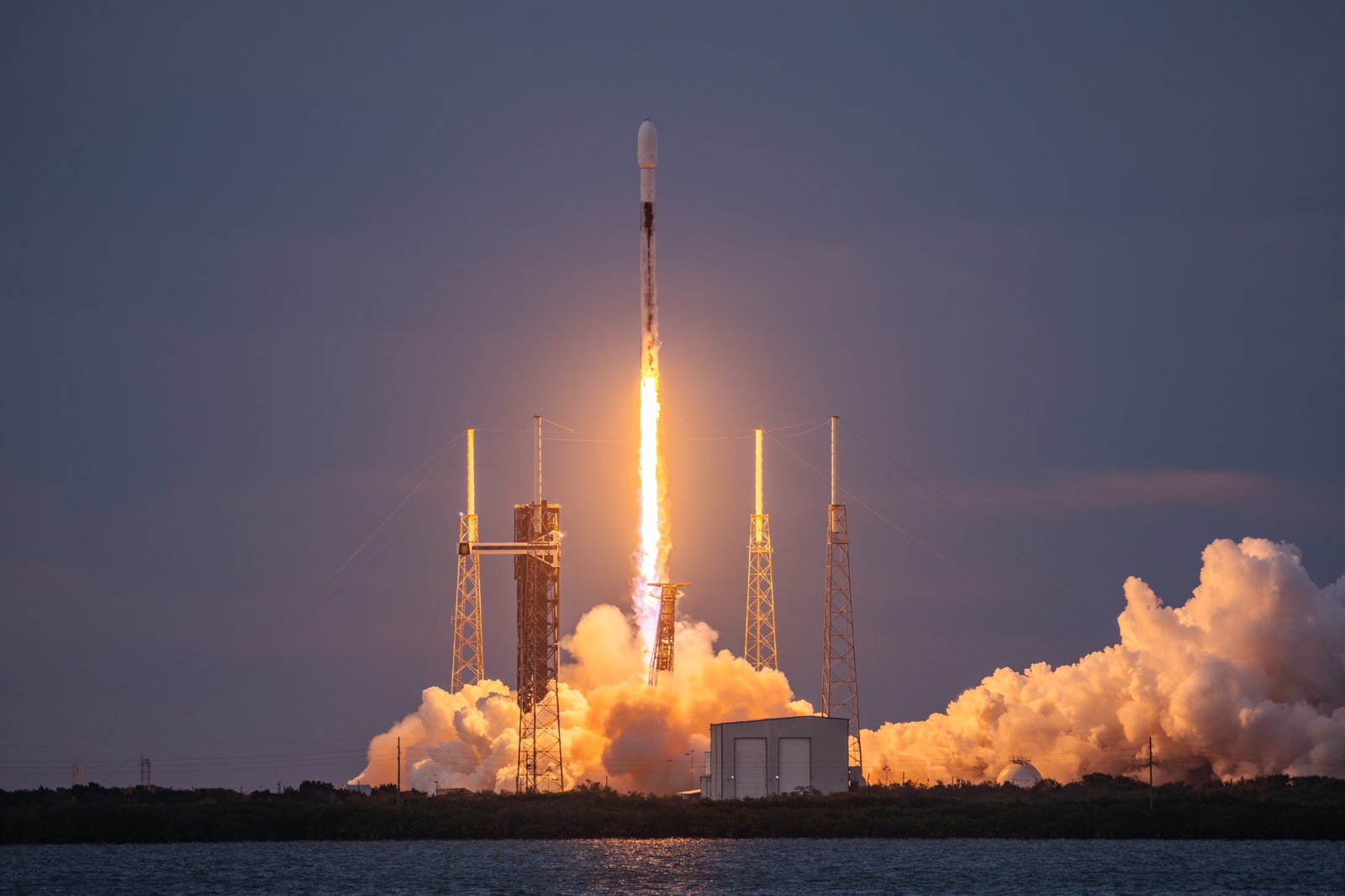
The order from the Federal Communications Commission ran long on technical language — spectrum bands, orbital altitudes, leasing rules. Buried in the middle was a sentence that framed the whole thing. The new constellation, the agency wrote, would help “connect everyone, everywhere to modern communications services.”
On Monday the FCC approved SpaceX’s request to launch and operate 15,000 next-generation satellites for Starlink Mobile, the company’s service for delivering connectivity directly to phones. The application had been filed in September 2025. The approval came with a waiver that lets SpaceX offer wireless service through satellites without first signing a leasing agreement with a ground-based mobile carrier — the arrangement that has long governed how networks share access to customers.
The satellites will fly lower than any of SpaceX’s earlier phone-service craft, between roughly 326 and 335 kilometers above the Earth, an orbit chosen in part to cut latency. They are designed to deliver 5G-like speeds of up to 150 megabits per second to individual users, a step toward making a satellite network a credible rival to the three carriers that dominate American wireless.
SpaceX is assembling the spectrum to do it. The FCC order clears the satellites to use airwaves the company is acquiring from EchoStar, the parent of Boost Mobile, along with frequencies from T-Mobile. The EchoStar transaction is scheduled to close in November 2027. SpaceX already taps T-Mobile spectrum for the current version of Starlink Mobile in the United States.
The phone-direct service began modestly. SpaceX partnered with T-Mobile to launch its first direct-to-cell satellites, and the early offering did little more than carry text messages in areas with no tower coverage, pitched as a safety net for hikers and remote communities. The order moves the ambition several steps beyond that: a full 5G-speed network that could carry calls, data and video across most of the country.
The approval is not without limits. The FCC declined to grant access to some spectrum in U.S. territories and to certain Earth-to-space bands, and the EchoStar frequencies can be tested only until the deal closes. But the central question — whether SpaceX could expand its satellite phone service without the lease agreements that bind terrestrial carriers — was answered in SpaceX’s favor.
The same day, the company’s ambitions came into sharper view. On a space-safety page on its website, SpaceX disclosed plans to operate up to 100,000 Starlink satellites and up to one million “Starmind” AI satellites, described as a response to growing demand for broadband and supercomputing. The FCC accepted a filing for up to one million satellites in February but has not approved it.
The disclosure matters because it shows where Elon Musk is pointing the company. Starlink Mobile is a consumer service, a challenger to AT&T, Verizon and T-Mobile. Starmind is something else — an orbital computing layer tied to the AI ambitions that now run through SpaceX, Tesla and Musk’s other ventures.
The Starmind figure points in the same direction as Musk’s other bets. His artificial-intelligence company, xAI, has built some of the largest supercomputers in the world and relies on a steady pipeline of Nvidia chips to keep them running. An orbital layer of AI-capable satellites, if it ever launches, would extend that computing ambition beyond the data center and into orbit, tying the satellite business to the AI race that now shapes the company’s value.
The FCC’s framing was competitive. The agency said the new satellites would bring “increased competition in the provision of retail wireless services to American consumers,” language that signals it now sees satellite service as a counterweight to a concentrated wireless market. For years direct-to-device satellite was a niche, used mainly for emergency texts in dead zones. The order treats it as a real service that could compete with incumbents on coverage and price.
For the carriers, the approval sharpens a question that has lingered since SpaceX launched its first phone-service satellites: how much of their market a satellite network can take. The three incumbents have their own satellite partnerships, but none matches the constellation SpaceX is now cleared to build. Fifteen thousand low-orbit satellites using purchased spectrum is a different proposition from a handful of craft handling distress messages.
The approval also sets a precedent the rest of the satellite industry will study. Rivals such as AST SpaceMobile and Globalstar are pursuing their own phone-direct services, and the FCC’s willingness to waive the lease requirement removes an obstacle those companies had watched closely. What was a regulatory question is now a matter of engineering and capital.
The road from approval to service is long. SpaceX must build and launch thousands of satellites, close the EchoStar deal and win customers accustomed to terrestrial networks that already reach most of the country. But the regulatory gate, for years the hardest one, has opened. Phone-direct satellite service is no longer a concept waiting for permission; it is a race to launch.



