
The companies spending the most on artificial intelligence are increasingly borrowing to pay for it.
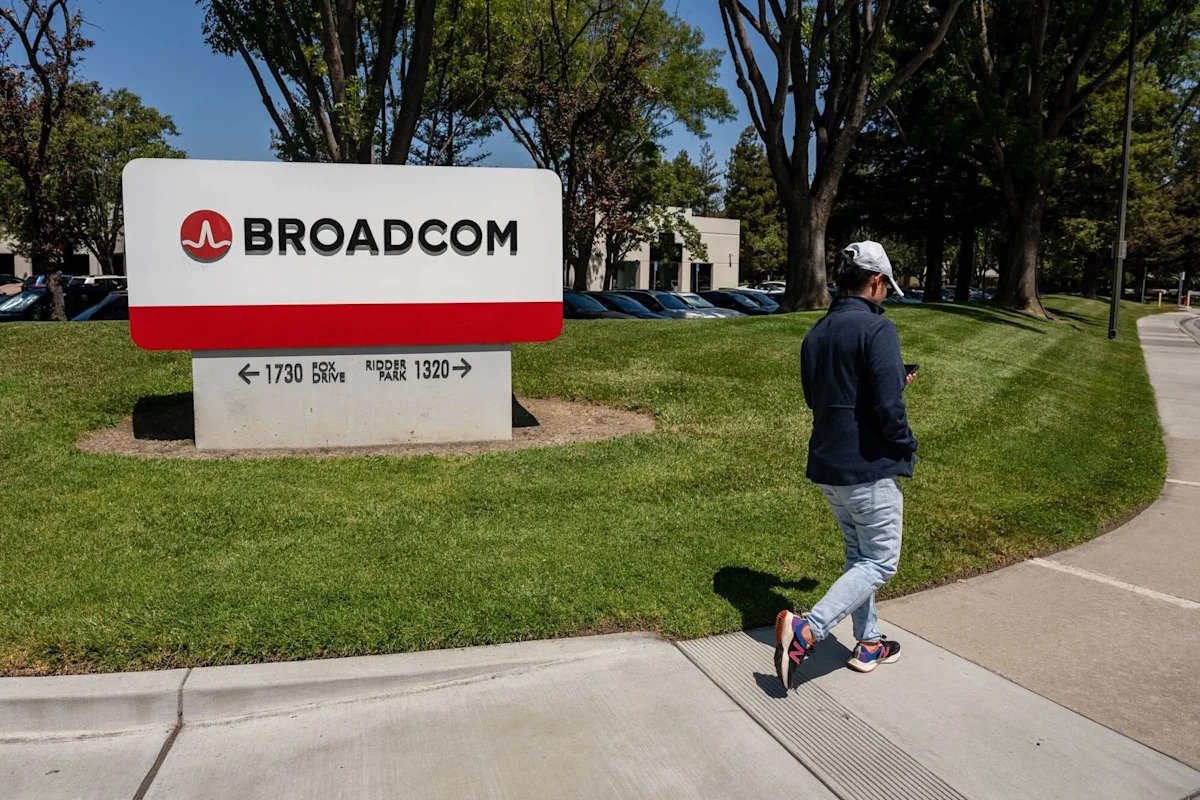
Broadcom Inc. is in talks to arrange financing of more than $50 billion to fund custom AI chips for OpenAI, The Wall Street Journal reported on Oct. 7. The discussions are at an early stage and the final size could change, according to people familiar with the matter.
The Broadcom talks are the latest sign of a broader shift. Oracle Corp. has been raising money through Apollo and Goldman Sachs to buy chips, with its debt load now above $169 billion. SpaceX earlier moved to borrow about $40 billion to purchase Nvidia chips. Three of the biggest spenders in the AI build-out are now financing it with debt rather than equity.
Bloomberg and the Financial Times reported that Apollo Global Management and Blackstone are among the lenders in discussions over the Broadcom financing. Oracle is separately talking with Apollo and Goldman about funding for its chip purchases.
The logic is straightforward. Equity financing dilutes shareholders at a moment when valuations are rich. Debt lets companies keep their upside while paying for the hardware now. But creditors are asking for more: stronger collateral, clearer cash flows, tighter terms. The easy-money phase of the AI boom is giving way to something more negotiated.
The Broadcom-OpenAI arrangement is tied to a specific plan. The two companies are working on a custom AI chip system with a target capacity of 10 gigawatts, to be deployed from the second half of 2026 through the end of 2029. The internal codename is Nexus, and the two chip generations are called Jalapeno and Serrano. The financing could cover several gigawatts of capacity, with a deal expected before the end of the year, according to people familiar with the discussions.
Custom chips are central to OpenAI’s effort to reduce its dependence on Nvidia. The company has turned to Broadcom to design its own accelerators, part of a push to bring down the cost of running its models. Owning the chip design, even when a partner builds it, gives OpenAI more control over the economics of inference.
The sums involved would have been unthinkable for the industry a few years ago. The largest technology companies now spend more on data centers and chips in a single quarter than most corporations are worth, and that spending has to be financed somehow. As the numbers have grown, so has the appeal of borrowing against assets that can be pledged, rather than selling shares in companies whose owners believe are still cheap.
The backdrop is a world of higher interest rates. The era of near-zero borrowing costs that financed the first phase of the cloud build-out is over, and companies now pay real money to borrow. That the largest AI spenders are choosing to do so anyway is a measure of how urgent the chip race has become, and of how little they want to part with equity at current valuations.
The parallels to earlier infrastructure booms are instructive. Railroads, telecoms and fiber networks were all financed in part with debt, and the bills came due whether or not the demand materialized. The AI build-out now looks similar: enormous capital commitments, made on the assumption of future demand, increasingly carried on balance sheets rather than spread across equity holders.
For the chipmakers and the companies buying from them, the shift is convenient while it lasts. Debt lets them scale without diluting the founders and investors who own the upside. The bill, when it arrives, will be paid by whoever is left holding the assets if the growth that was supposed to repay the borrowing falls short.
That is the risk. Debt has to be serviced regardless of how the technology performs. A company that borrows heavily to buy chips it may not need is locked into paying for them either way. The difference between a boom financed by equity and one financed by bonds is that the bonds keep coming due.
Creditors are not fools, and their demands are already visible in the terms being discussed. Collateral, cash-flow covenants and the priority of repayment are all being negotiated more carefully than they were when AI startups raised at ever-higher valuations. The lenders are willing to fund the boom; they are no longer willing to do so on the faith that the boom never ends.
The shift from equity to debt is a sign of the market maturing, and a sign of it straining. When the buyers of AI’s future start demanding collateral and cash flow rather than a share of the upside, the boom has entered a new phase, one in which the optimism is being priced by people whose first job is to get their money back.



