
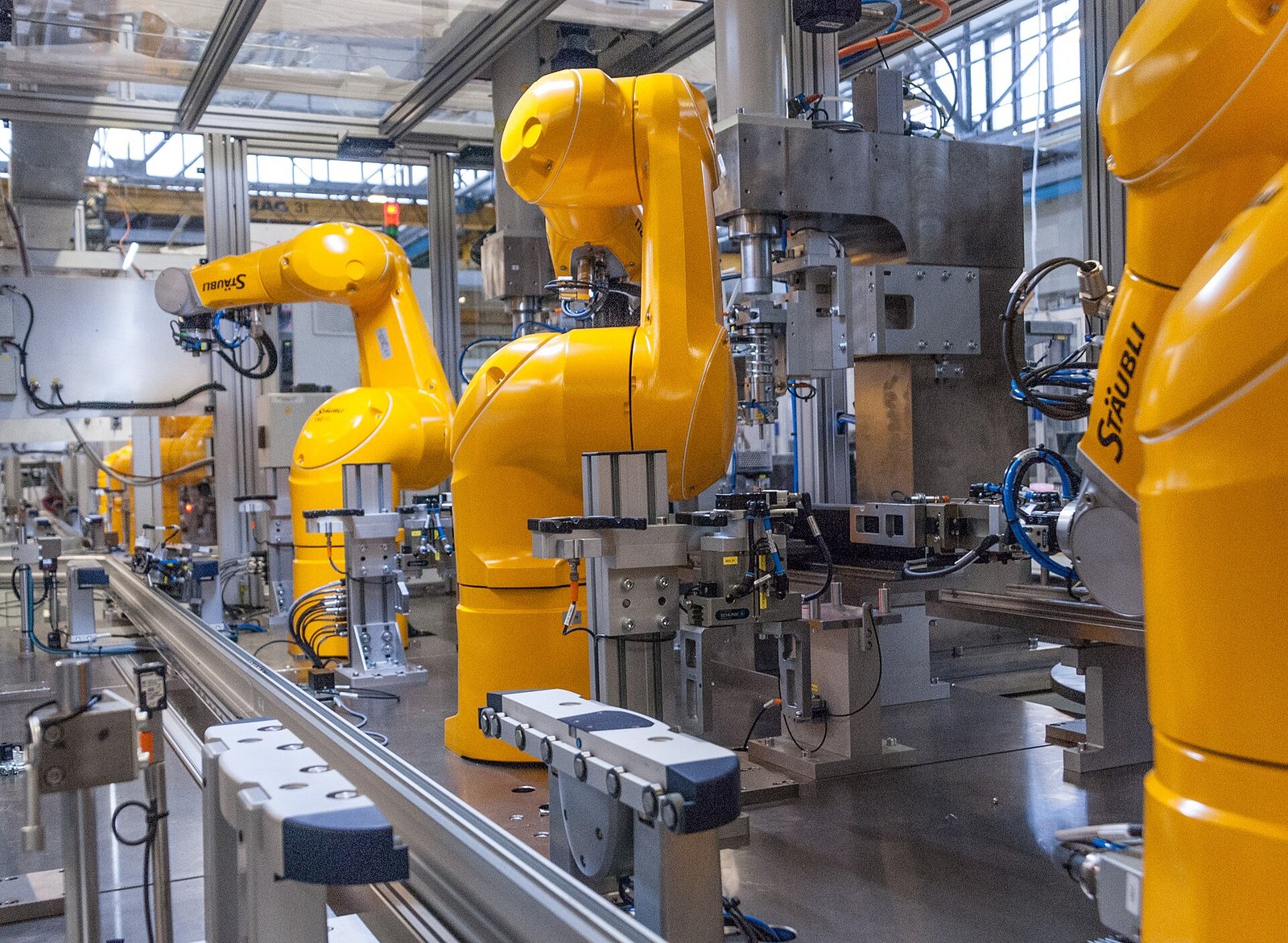
Ashish Kumar spent years teaching Tesla’s Optimus humanoid robot how to think. Now he is leaving the human shape behind. Kumar has co-founded a San Francisco startup, Intelligent Machines, that builds robots without arms and legs, machines designed for factory work rather than for walking among people, according to two people with direct knowledge of the matter.
The company has already recruited several former members of the Optimus team, the people said, and is raising a seed round that could reach about $100 million. Its focus for now is software, though its leadership is also weighing whether to build its own hardware.
The bet is simple enough to state and hard to execute: the most valuable robots of the next decade will not look like people. Manufacturing and aerospace have a long list of jobs that require precise, repetitive motion and the judgment to handle variation, work that today demands highly skilled technicians. A machine that can do that work does not need legs.
Kumar’s background points in the same direction. His doctorate at the University of California, Berkeley was in reinforcement learning, the technique of teaching a machine by rewarding it when it reaches a goal and penalizing it when it errs. Intelligent Machines is applying the same method to train robots for complex tasks, the two people said.
Reinforcement learning is the reason the approach is interesting. Rather than programming every motion by hand, the technique lets a robot learn through trial and error, the way a human apprentice would, and it has become the standard method for the newest generation of robot startups. Kumar’s time at Tesla put him at the center of one of the field’s most ambitious projects.
Optimus is the best-known example of the humanoid bet, and it has made Tesla a benchmark for the whole category. Leaving it to start a non-humanoid company is a statement that the field is about to split, with one camp chasing machines that mirror people and another chasing machines that simply do the work.
The market has room for both, at least for now. Humanoid robots have captured the imagination and the bulk of the funding, because investors can picture them and because companies from Tesla to Figure have promised near-term deployment. But a growing number of founders argue the harder problems, and the larger near-term contracts, are in industrial settings where a pair of arms and a camera beat a pair of legs.
Intelligent Machines’ structure reflects that reasoning. The company is starting with software, the part of the stack where reinforcement learning has made the fastest progress, and keeping its hardware options open. That sequencing is common among robotics startups that want to prove their models work before committing to the capital-heavy work of building machines.
The $100 million seed round, if it closes at that size, would put Intelligent Machines among the better-funded robotics startups from the outset. The figure also shows how much capital is now chasing the robotics thesis, a market where a founder’s pedigree can attract a nine-figure check before the product ships.
Analysts said the defection of a senior Optimus leader shows how fluid the robotics talent market has become. Teams that spent years inside Tesla or other large labs are now spinning out into startups, carrying with them the techniques and the recruiting networks that took years to build.
For Tesla, the loss is a cost of being the field’s training ground. The company has trained some of the most experienced robotics engineers in the industry, and it cannot keep all of them. Every departure funds a new competitor, though most will fail, as most startups do.
Optimus has become one of the most watched robotics projects in the world, with Tesla’s chief executive repeatedly describing the humanoid robot as a product that could eventually be worth more than the company’s cars. That ambition has made the project a magnet for talent and a training ground for a generation of robotics engineers, several of whom have now left to start companies of their own.
The non-humanoid approach has been gaining ground among engineers who spent years chasing the human form. Building a robot that walks on two legs and uses two five-fingered hands is enormously difficult, and much of that difficulty adds little to industrial tasks. A wheeled base with a strong arm can weld, fasten, inspect and stack without ever needing to balance, which is why the newer startups are choosing it.
Kumar’s choice of reinforcement learning follows the direction of the whole field. The technique is what made recent advances in robot manipulation possible, letting machines learn skills that were too complex to program by hand. It also plays to Kumar’s academic strength, giving Intelligent Machines a technical identity from the start.
Kumar’s bet is that the machines that matter will not be the ones that look like us. If he is right, the humanoid boom of the past two years will turn out to have been an expensive warm-up for a quieter, more industrial wave of robots that never learned to walk.



