The gas turbine has been the default answer to the data center industry’s power problem. On October 9, a report from the consultancy Wood Mackenzie, covered by TechCrunch, made the case that the default is obsolete: four-hour battery storage now costs less than an open-cycle gas turbine in every one of the 43 markets the firm surveyed, on every continent.
The report lands at a moment when data center developers are leaning on gas harder than ever. Unable to get new grid connections on time, many have turned to on-site generation, and the gas turbine has become the fastest way to switch on a building. Turbine makers are sold out for years, and lead times that used to run months now run several.
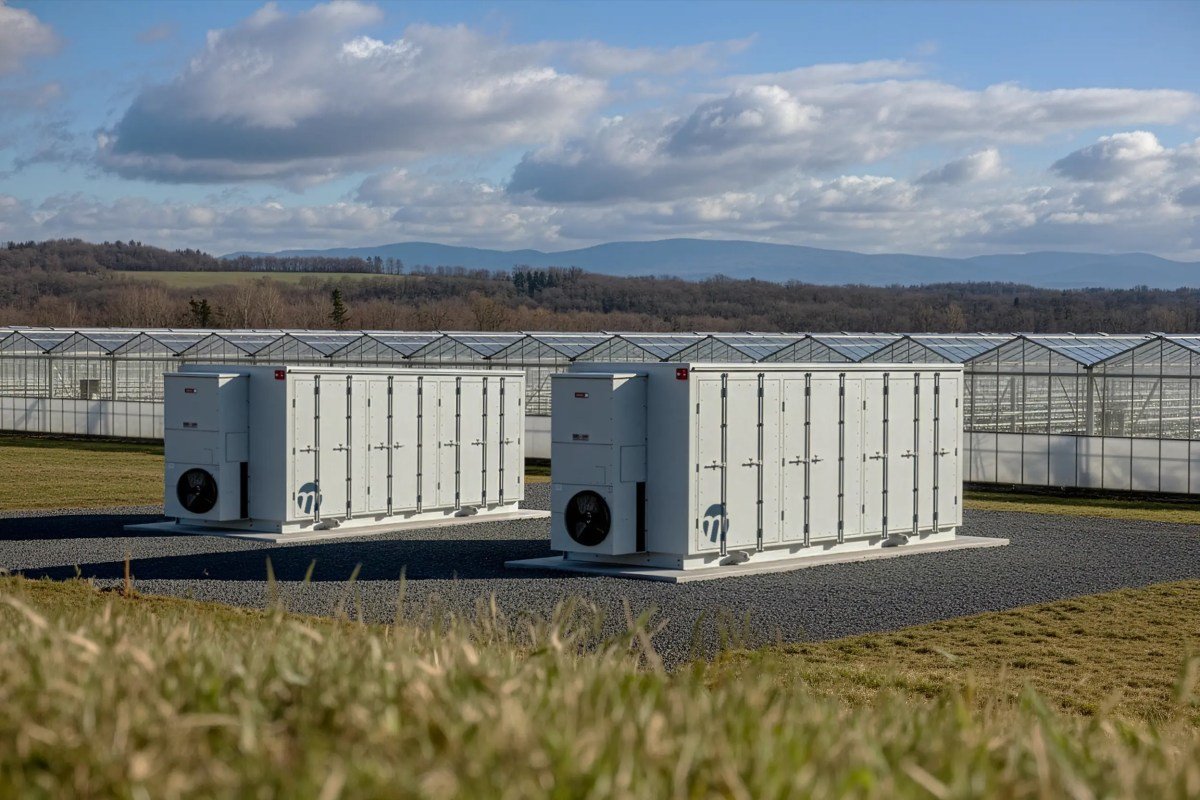
Batteries were long dismissed for that job. They store electricity but do not make it, and a building that needs power around the clock cannot run on storage alone. The comparison that is now flipping is narrower and more specific: for the bursts of generation that a gas turbine is meant to provide, the peaker role, a four-hour battery already beats the turbine on cost.
Wood Mackenzie’s numbers are stark. In the United States, four-hour battery storage is 65% to 75% cheaper than a new open-cycle gas peaker, according to the firm. In the Middle East and Africa, the gap is expected to reach 33% by 2035. In China, storage costs run 55% below those of its neighbors. The consultancy projects that the cost of electricity from batteries will keep falling while electrons from gas turbines only grow more expensive over the coming decades.
Two forces are moving in opposite directions. Lithium-ion battery prices have collapsed over the past decade, pushed down by manufacturing scale that the electric-vehicle industry paid for. Gas turbine prices have moved the other way as the data center buildout has flooded the market with orders, stretched lead times and driven up the cost of the machines and the labor to install them.
The decline has been steep enough to cross a commercial line. Battery pack prices have fallen by more than 90% over the past decade, and grid-scale storage projects that once depended on subsidy now pencil out on their own. Wood Mackenzie’s survey is the clearest sign yet that the crossing is complete in the markets data center developers care about most.
The timing is uncomfortable for the gas-first argument. Developers who signed gas deals two years ago did the math with battery prices that no longer exist. A project that penciled out with turbines at a certain cost now faces a cheaper competitor, and the balance has shifted in enough markets that the report’s authors describe batteries as displacing gas peaking on cost across entire regions.
None of this means batteries replace gas outright. A data center that draws hundreds of megawatts around the clock still needs a source of firm generation, and a battery that discharges in four hours is a complement to that source, not a substitute. What it does mean is that the role of the gas turbine is shrinking at the margins, from the thing that carries the load to the thing that backs up the battery.
The practical advantage is speed. A grid connection can take years, and a turbine order can sit in a backlog just as long. Batteries can be delivered and commissioned far faster, which matters when the binding constraint on a data center is not the price of power but the date it can first turn on.
That has direct consequences for how AI infrastructure gets built. Power has been the single most reliable bottleneck in the data center boom, and anything that shortens the wait to energize a site changes what developers can promise their customers. If a battery bank can carry the early phases of a campus while a turbine or a grid connection is still pending, the project’s timeline stops waiting on the slowest supplier.
The report is a forecast as much as a snapshot. It is betting that battery prices keep falling while gas grows more expensive, and forecasts have a way of being wrong. But the direction of the underlying economics has been consistent for a decade, and the data center boom has only accelerated the part of it that works against gas.
For the gas industry, the stakes are concrete. Its U.S. market will narrow in the coming decade, Wood Mackenzie predicts, and the fastest-growing customer, the data center, has just been shown a cheaper way to cover its bursts of demand. Turbines are not about to disappear from the data center. But the argument that they are the cheapest option has now been tested in 43 markets, and in every one of them the battery won.